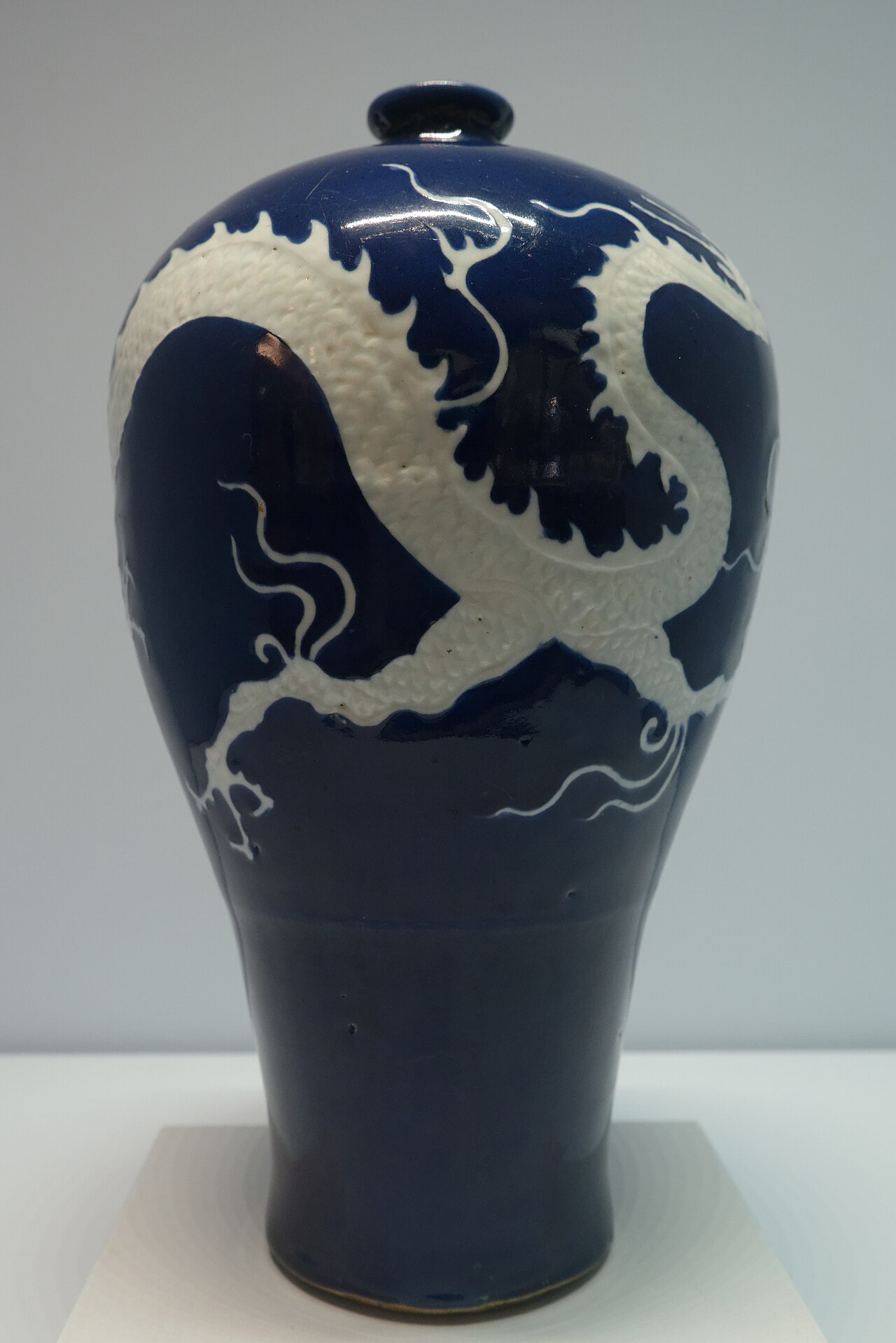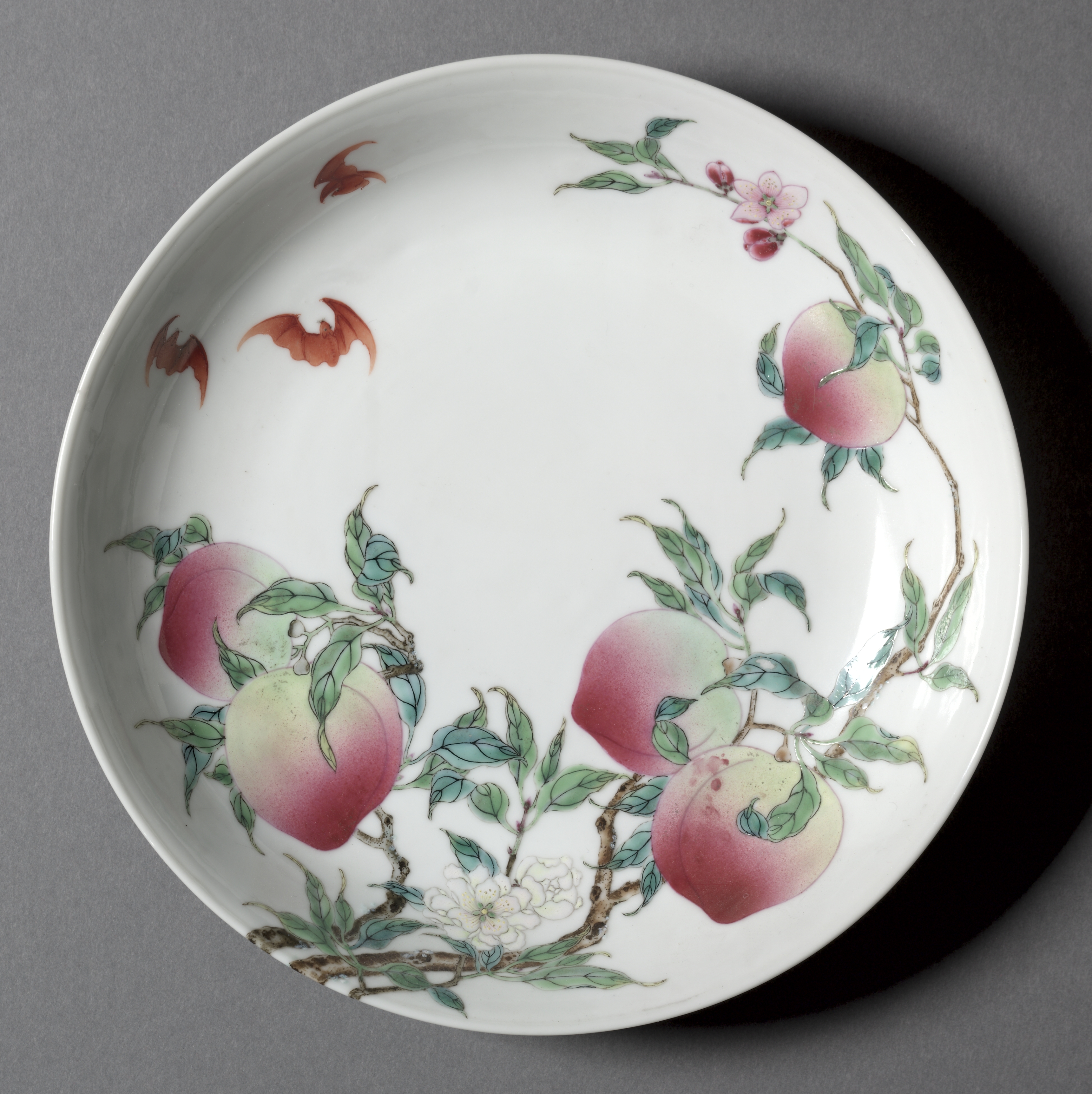
The hand takes hold of the porcelain, turns it over and sets it down upside down. On the base appears a blue circle, and within that circle, six characters. It is the opening gesture of the appraisal shows as much as of the hurried visitor: turn the piece over, look for the mark, and expect it to yield the object’s age. Of all the parts of a vase, it is the one we learn to read first. The reflex is not wrong — the mark does inform — but it stops at the threshold, and takes for a simple label what is first of all a sign.
For at the foot of a porcelain, this inscription has a name: the base mark, 款识 kuǎn shí. It is itself a motif, as much as the dragon painted on the belly — a sign that is read, that is coded, and that moves from reign to reign. It extends into text the grammar that the image deploys in the decor.
The body of the mark: a vocabulary and a syntax
Like a word, a mark has a vocabulary and a syntax. The vocabulary holds in a few families. The reign mark, 年款 nián kuǎn, inscribes the name of the era and of the dynasty. It is the most read, the one taken for a date. The hall mark, 堂款 táng kuǎn, names instead a workshop, a scholar’s studio, or a family. The emblem mark, 图记款 tú jì kuǎn, goes further still, replacing the text with an image lodged in the very circle where an inscription would stand.
Two families complete the lexicon. The votive mark, 供养款 gòng yǎng kuǎn, accompanies pieces commissioned for a temple, with a donor, a prayer, and often a precise date; it is what makes datable one of the most famous blue-and-white vases known, whose inscription bears the year 1351. The auspicious mark, 吉语款 jí yǔ kuǎn, a formula of good omen (“peace under heaven,” “long life and riches”), runs mostly on the porcelains of the civilian kilns, far from court commissions.
The syntax, for its part, holds in three variables that compose the “sentence” of a mark. The script comes first. Regular script, 楷书 kǎi shū, clear and poised, dominates until the middle of the Qing; then seal script, 篆书 zhuàn shū, denser and archaic in aspect, gains the upper hand.
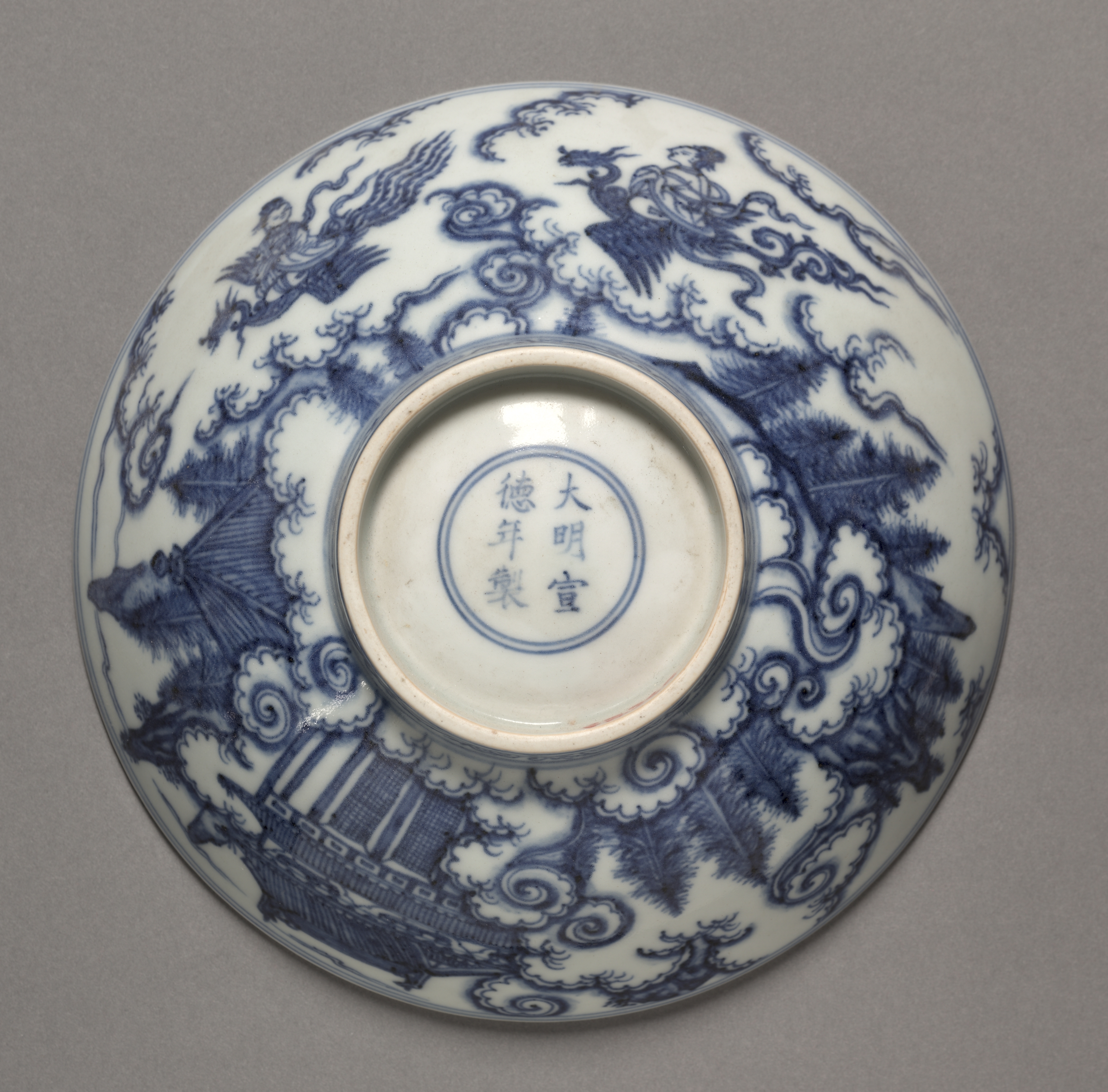
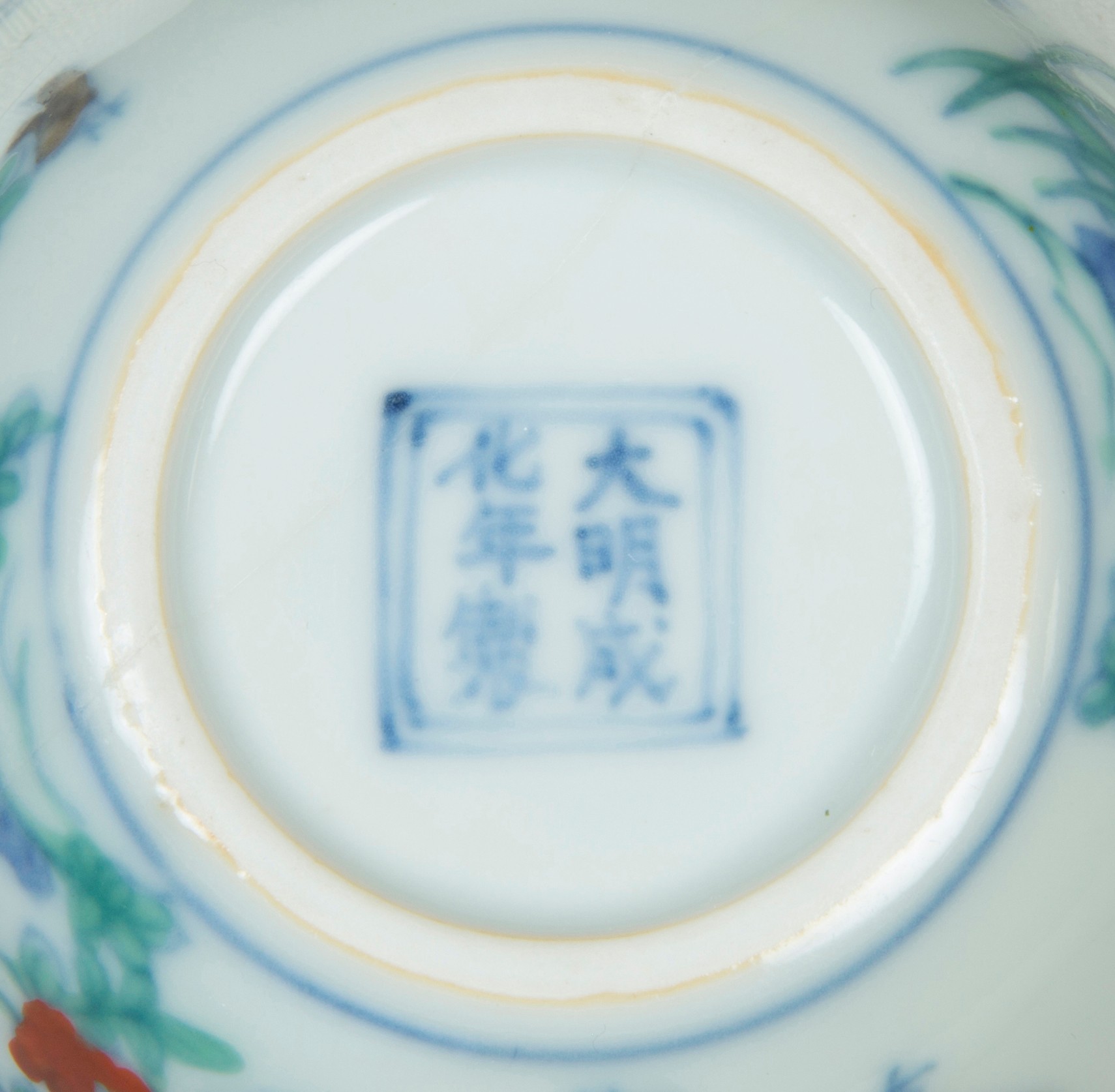
The frame comes next, enclosing the characters and dating them in its own way. The double circle, 双圈 shuāng quān, prevails on court porcelains: the specialist Zhang Dong, 张东 Zhāng Dōng, records its official norm — six characters in two columns, ringed by a double line, from the middle of the Ming to the early Qing. The double square, 双方框 shuāng fāng kuàng, appears as early as Chenghua under the Ming and holds on under the Qing.
Colour comes last, and follows the same period logic. The scholar Xu Zhiheng, 许之衡 Xǔ Zhīhéng, in his remarks on porcelain, drew from it a formula that has remained famous: before Qianlong, regular script goes mostly with underglaze cobalt blue, 青花 qīng huā; after Qianlong, seal script goes mostly with iron red, 矾红 fán hóng. Blue and regular script on one side, red and seal script on the other, separated by a single reign.
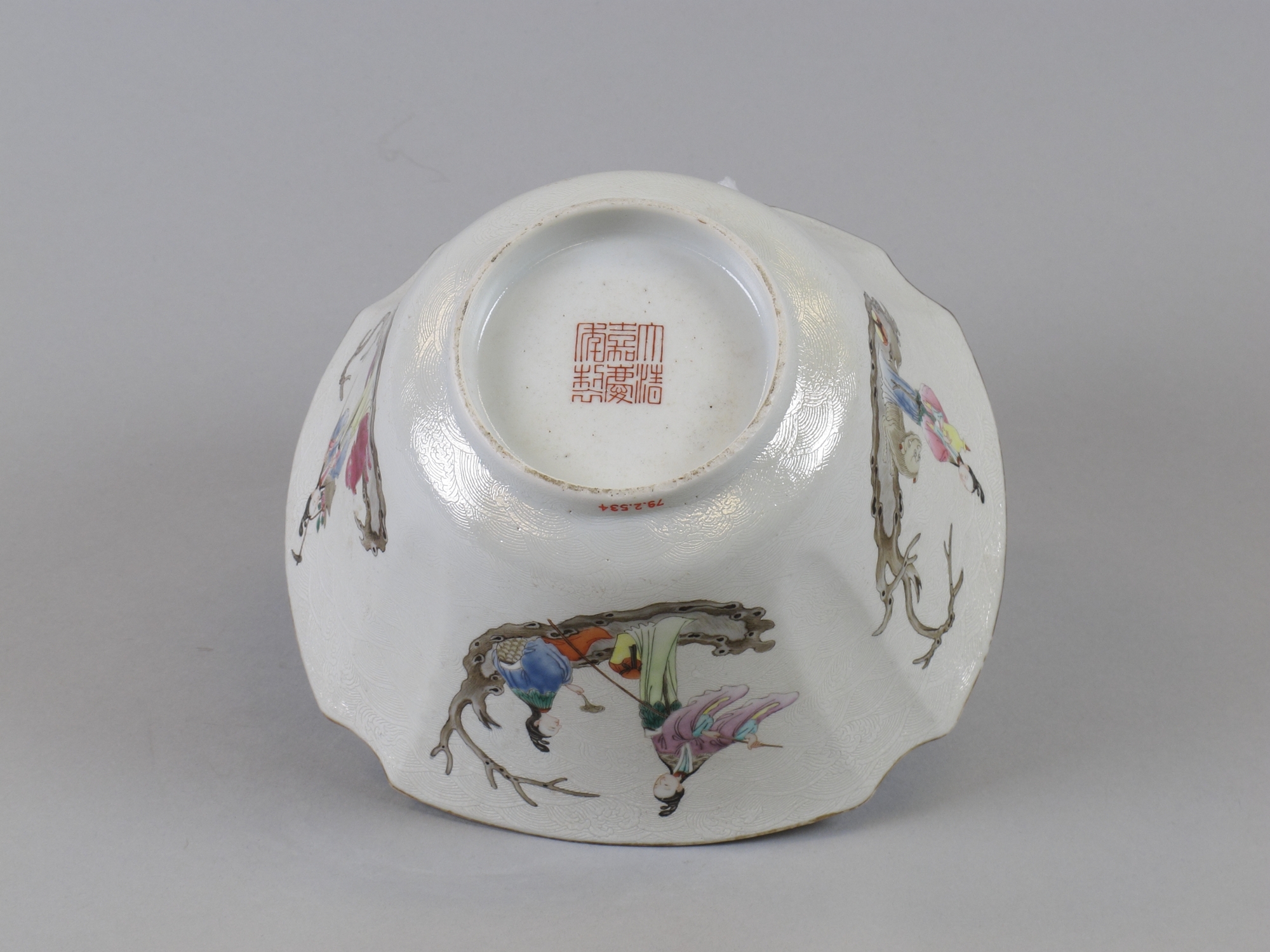
These variables do not move at random. The Ming reign mark in blue regular script and the red seal of the late Qing are not distinguished only by the name they carry: they date the object by the very manner in which they write it. The mark is a calendar as much as a label.
The mark that moves
At the end of the Qing, the hall mark finally breaks the monopoly of the era name. On the porcelains of the empress dowager Cixi, two marks in iron red — 大雅斋 dà yǎ zhāi and 储秀宫 chǔ xiù gōng, named after her apartments — run horizontally, directly on the floral decor, like a signature laid on the motif rather than hidden on the reverse. The mark has left the foot of the vase for its surface, and with it comes an authority that no longer hides.
What the dragon’s silhouette says in the image, the mark says in the text. Each reign leaves a recognisable trace there: cobalt blue and regular script, or seal red and archaic writing. Read as a motif, the mark yields far more than a date; at the foot of the vase can be read the reign that commissioned it, down to the very shape of its script.
Sources
Textual sources
- 许之衡 (Xǔ Zhīhéng), 饮流斋说瓷 (Yǐn liú zhāi shuō cí), 说款识第六 — late Qing — early Republic. The shift from blue regular script to red seal script; the frame (circle / square) deconstructed; official marks distinguished from private ones.
Studies
- 张东 (Zhāng Dōng), 古瓷鉴要 (Gǔ cí jiàn yào) — “Essentials of ancient ceramics connoisseurship,” Zhejiang Sheying chubanshe, Hangzhou, 2007. The reign-by-reign standardisation of the double circle and the double square; the hall marks of the late Qing (储秀宫 / 大雅斋).
- 铁源 (Tiě Yuán, ed.), 江西藏瓷全集·清代(下) (Jiāngxī cáng cí quánjí — Qīngdài, xià) — “Complete collection of Jiangxi ceramics: Qing dynasty, volume 2,” Zhaohua chubanshe, Beijing, 2005. The hall mark as a spatial and literati symbol (九畹山房).
Featured object
- The Cleveland Museum of Art. Cup “Land of Daoist Immortals” (foot: reign mark 大明宣德年製, double circle), Ming dynasty, Xuande era (1426-1435). Accession 1962.260. Jingdezhen porcelain, underglaze cobalt blue (青花). Open Access (CC0).
- The Metropolitan Museum of Art, New York. Cup (foot: reign mark 大明成化年製 in regular script, double square), Ming dynasty, Chenghua era (1465-1487). Accession 1987.85. Jingdezhen porcelain, underglaze cobalt blue and polychrome enamels. Open Access (CC0).
- The Metropolitan Museum of Art, New York. Bowl (foot: reign mark in seal script, iron red, without a frame), Qing dynasty, Jiaqing era (1796-1820). Accession 79.2.534. Jingdezhen porcelain with overglaze enamels. Open Access (CC0).
From blue regular script to red seal script, each reign has its own way of signing.
MOSAÏNK · June 6, 2026