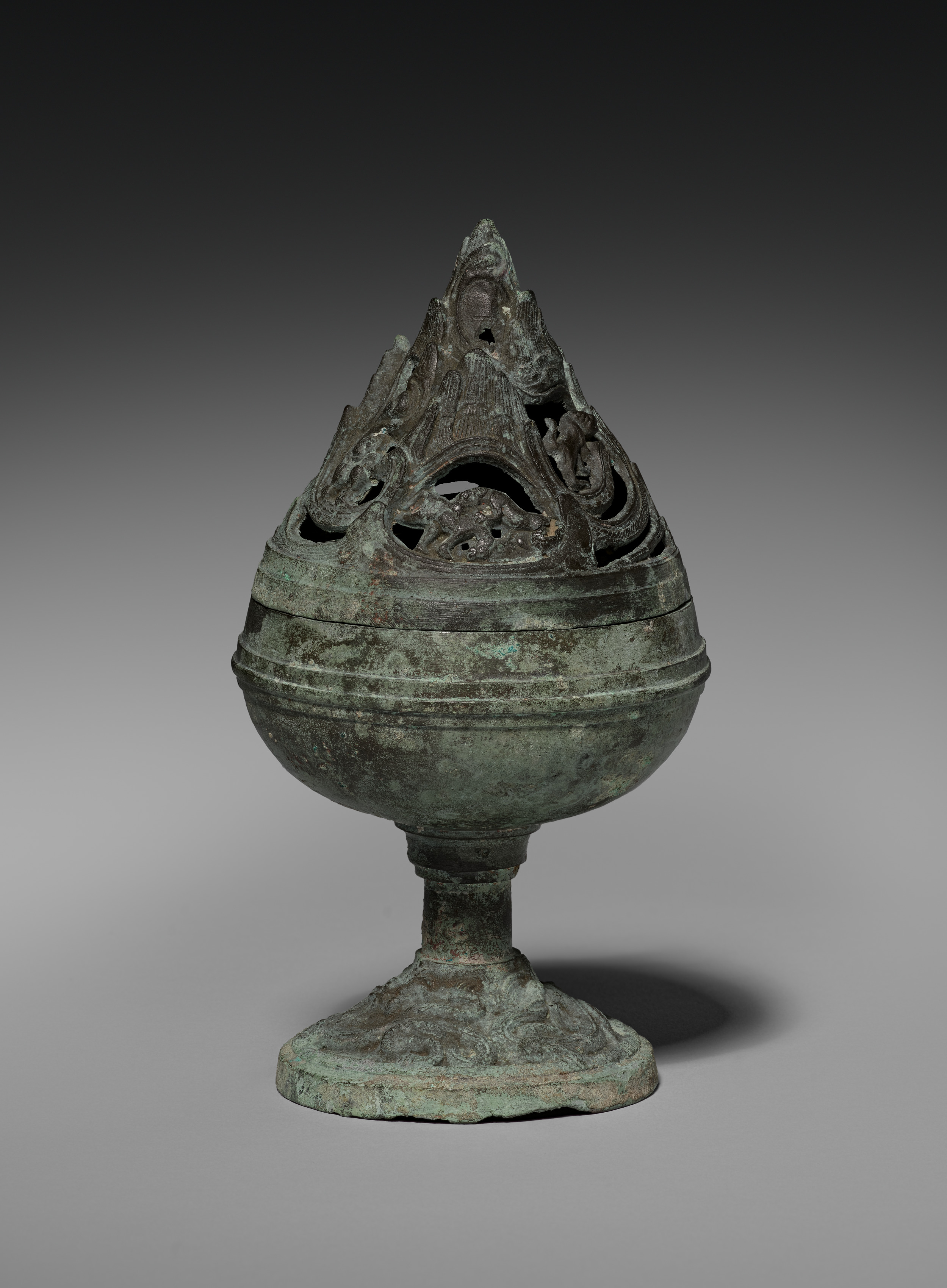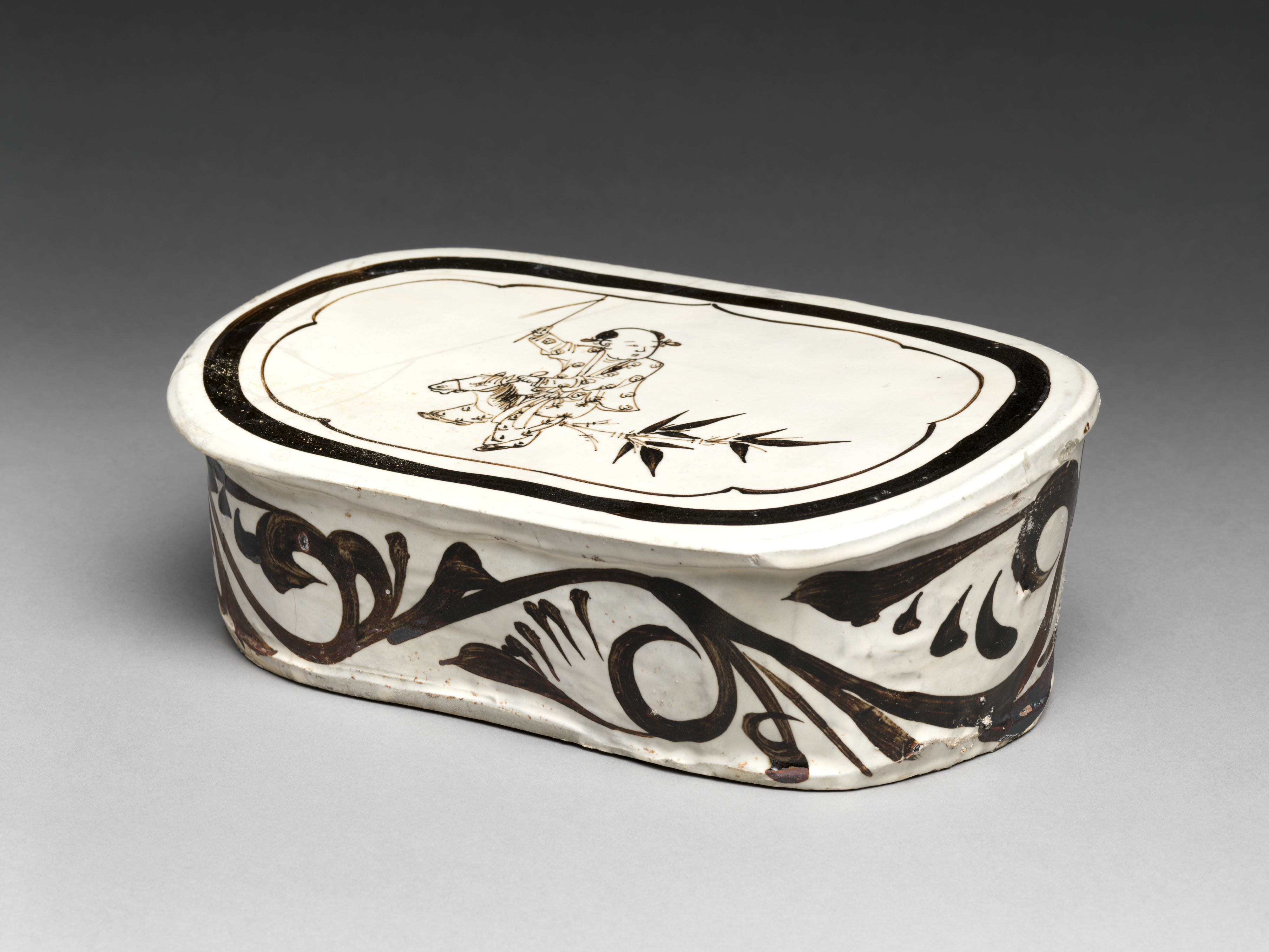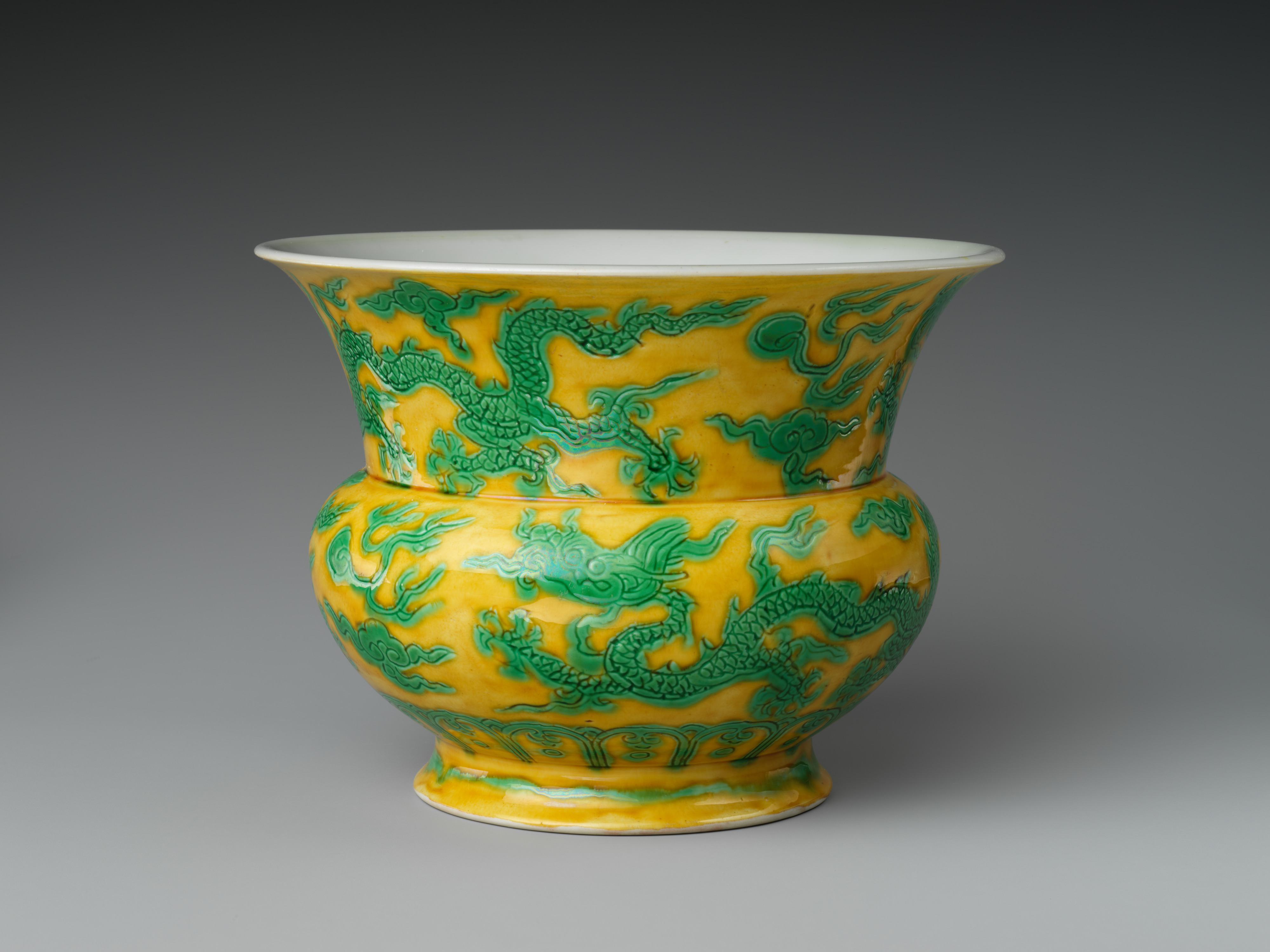
In a vault of the Lü family, at Lantian in Shaanxi, the archaeologist tilts his head over a bronze vessel nine hundred years old — and sees tea in it. At the bottom of a neighbouring bowl, dried leaves; along the wall, a brown streak, there where the liquid ran and then set. The vault belongs to a great family of literati of the Northern Song, buried there generation after generation with what it held worthy of accompanying the dead. The whole service seems to have been waiting, underground, for someone to come back and drink. And yet the object carries a name of refuse: 渣斗 zhā dǒu, the “leys jar” — what one imagines as humblest of all, the receptacle into which one throws what the mouth rejects.
And what if this name were a mistake? The word “is not ancient,” warns 叶英挺 Yè Yīngtǐng, curator of a celadon museum in Zhejiang who has long handled these pieces. It would be the corruption of 奓斗 zhà dǒu, where the character 奓 zhà was once read shē, splendour, or chǐ, excess. In other words, the receptacle for refuse would first have been a vessel of display: a name that spoke of luxury, demoted by the wear of writing into a name for rubbish. The distance between the two words holds in a single brushstroke; it is enough to turn a precious object into a vile utensil.
Rank beneath the name
Three words contest the object, and none prevails: zhā dǒu, zhà dǒu, and 唾盂 tuò yú, the “spittoon.” The specialist himself has changed his mind. In 2015, Yè Yīngtǐng judged it “a grave error” to have called these pieces tuò yú: the true spittoon, he writes, is a distinct object, the earliest known example of which comes from a Han tomb. Years later, he leans back toward this word again. When the one who knows the piece best hesitates between two names, the label weighs less than the object it claims to fix.
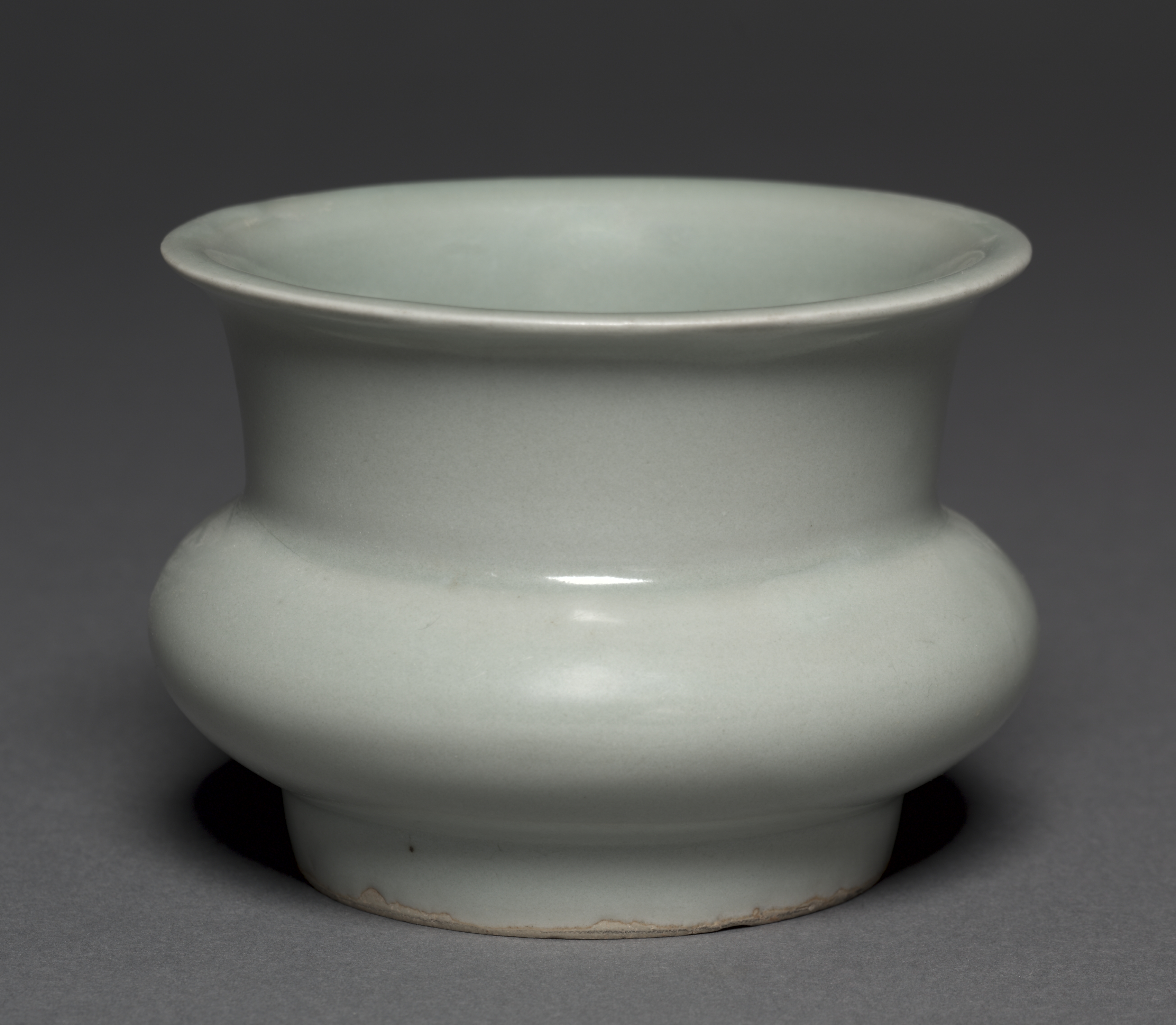
The West, for its part, has frozen the wavering without knowing it. The Cleveland Museum files its Longquan example among “vases,” under the alias Ch’a-tou — a drinking vessel filed in the contemplation-object aisle. The bad name has simply changed language.
If the effaced name once spoke of splendour, the craftsmanship confirms it. The piece, writes Yè Yīngtǐng, “cost more than an ordinary utensil”; it was “an object of the upper classes, the expression of a taste for refinement and luxury.” Nothing of a make-do spittoon, but a studied form, a chosen material, court workmanship.
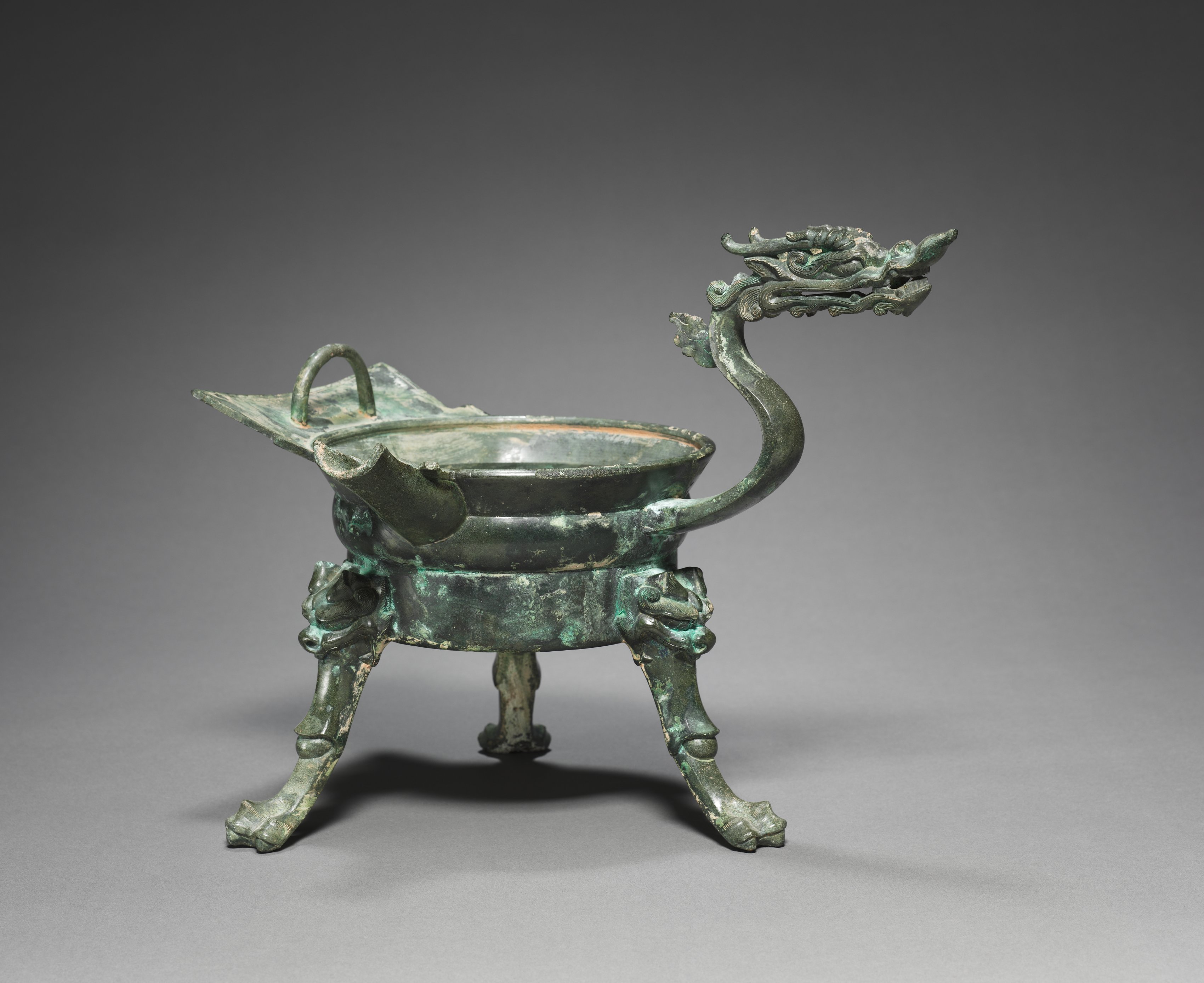
Ceramic examples imitate, moreover, the forms of precious metal — the bronze vessel with the dragon-headed handle is its visible ancestor. And they were drawn from the best kilns: the 定窑 Dìng yáo and its incised white porcelain, the 耀州窑 Yàozhōu yáo and its incised celadon, the 龙泉窑 Lóngquán yáo and its deep green, the lineage reaching back to the imperial workshops. As early as the Tang, this wide-flared neck was a necessary piece of the banquet and of the tea service, wherever the cleanliness of the table mattered. Into it were thrown rinsings and tea-grounds: the vessel received what the mouth set aside, without disturbing the order of the service. A hygiene object, then, but a hygiene object commissioned from the kilns out of which came the pieces of the court.
The name demoted, the rank intact
Born refined, the elegant Tang tea vessel descends, under the Southern Song, to the table of drink. Around 1274, a Hangzhou chronicle, the 梦粱录 Mèng liáng lù, lists the shops of the city: the 滓斗 zǐ dǒu — the same word, another graph — is sold in the wine-accessories aisle, among ewers, tilted cups, and chopstick flasks. The tea vessel has become a banquet vessel, fit to receive what one does not drink: it has followed the drink, from the literati’s whisked tea to the wine of the taverns.
After the Yuan, the piece fades. Whisked tea gives way to simpler gestures, the great houses of the north come undone after the court’s exile to the south, and the object slowly loses the refined use that gave it birth. The noble form slides toward the trivial; but it is the use that falls, not the object.
A coarse name — worse, a corrupted name — has never made a coarse object. The true rank of a piece is read in the kiln that fired it, in the use it served, in the buried sense of its name; not in the damaged word one deciphers underneath. Beneath 渣, the refuse, sleeps 奓, the splendour.
Sources
Textual sources
- 吴自牧 (Wú Zìmù), 《梦粱录》 (Mèng liáng lù), 卷十三 “诸色杂货” — Southern Song (ca. 1274). The 滓斗 sold in the wine-accessories aisle: trace of the object’s passage from tea service to wine service.
Studies
- 叶英挺 (Yè Yīngtǐng), 《“渣斗”考辨》 (“Zhā dǒu” kǎobiàn) — “A critical examination of the term zhā dǒu,” 中国瓷网, 2015. Contested name (渣斗 / 唾盂 / 奓斗); etymology of 奓 = splendour; object of the upper classes imitating precious metal; tea residue observed in the Lü tomb; arc tea → wine → decline.
- 陕西省考古研究院 et al., 《蓝田吕氏家族墓园》 (Lántián Lǚ shì jiāzú mùyuán) — “The cemetery of the Lü family at Lantian,” 文物出版社, 2018. The bronze vessel and its tea residue (anchor §1).
Featured object
- The Metropolitan Museum of Art, New York. Leys Jar, mark and era 正德 (Zhengde, 1506-1521), Ming dynasty. Porcelain, incised dragon decoration under coloured glazes. Accession 1991.253.60. Open Access (CC0).
- The Cleveland Museum of Art. Vase in the Shape of a Grain Measure (alias Ch’a-tou), Longquan kiln, Southern Song (1127-1279). Celadon. Accession 1957.73. Open Access (CC0).
- The Cleveland Museum of Art. Bronze vessel with dragon-headed handle, Northern and Southern Dynasties (6th century). Bronze. Accession 1983.214. Open Access (CC0).
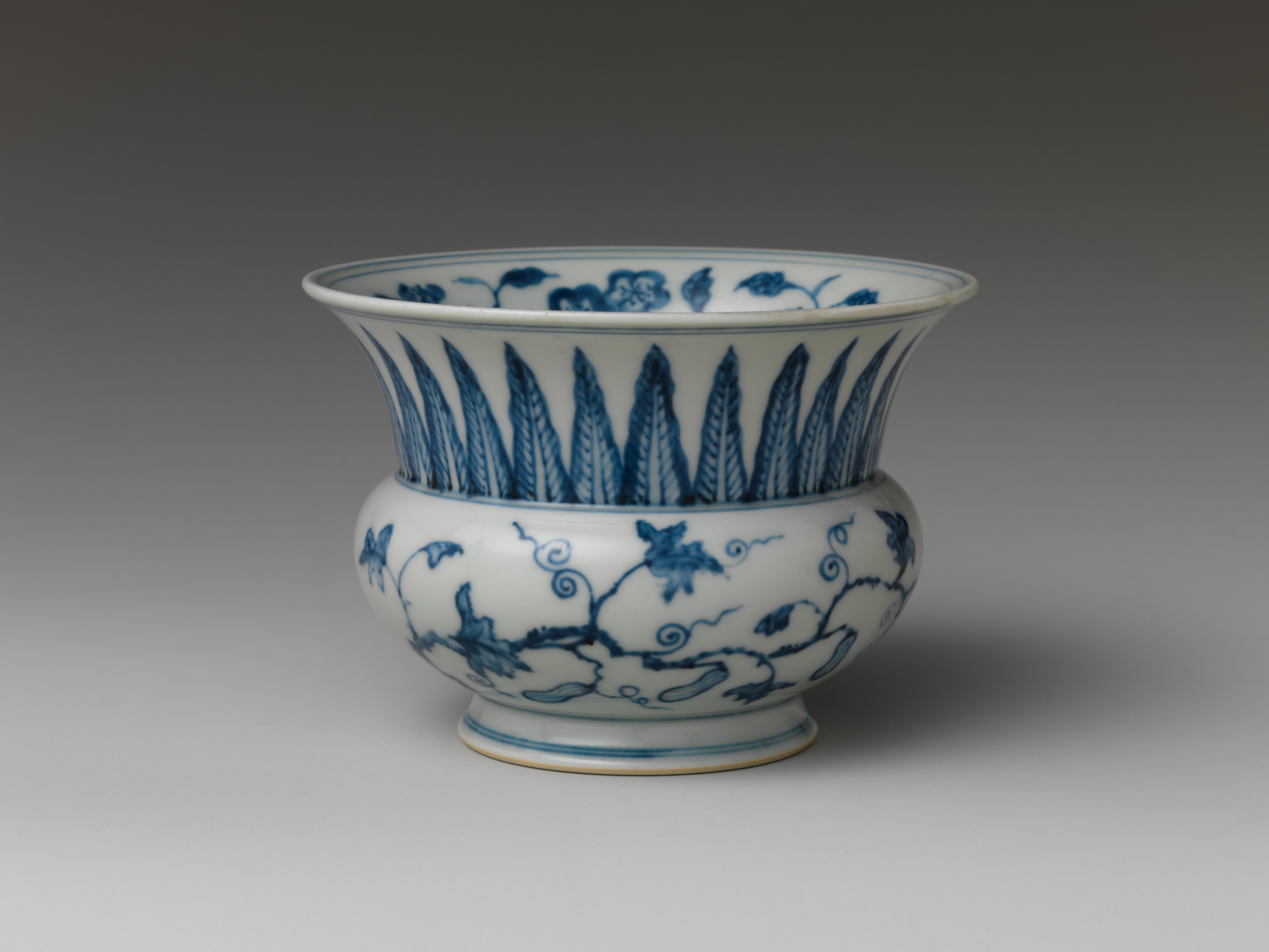
- The Metropolitan Museum of Art, New York. Jar with Scrolling Vine and Gourds, Jingdezhen, blue and white, Ming (15th-16th century). Porcelain. Accession 1986.208.1. Open Access (CC0).
The name was demoted; the kiln itself never was.
MOSAÏNK · June 11, 2026