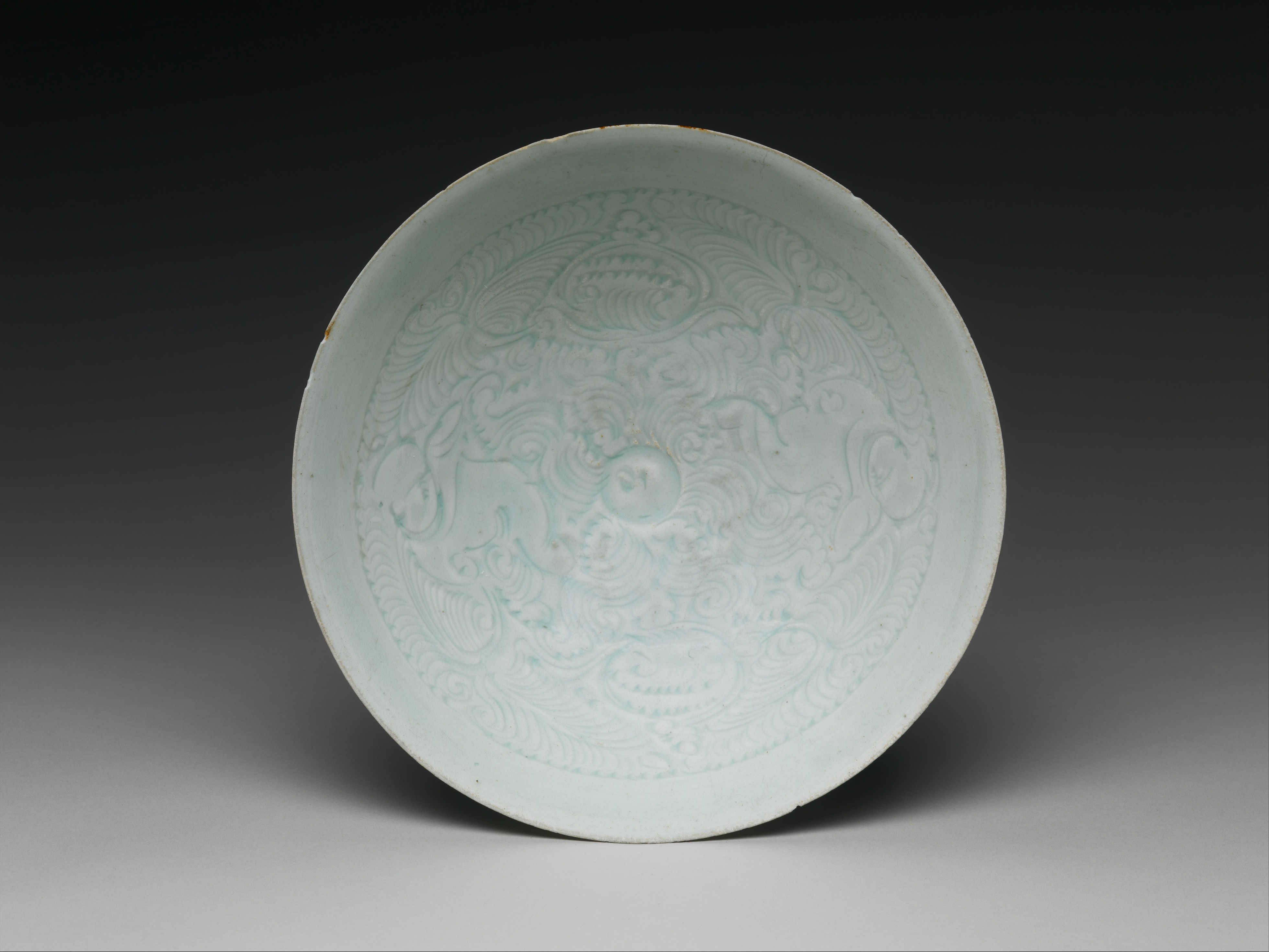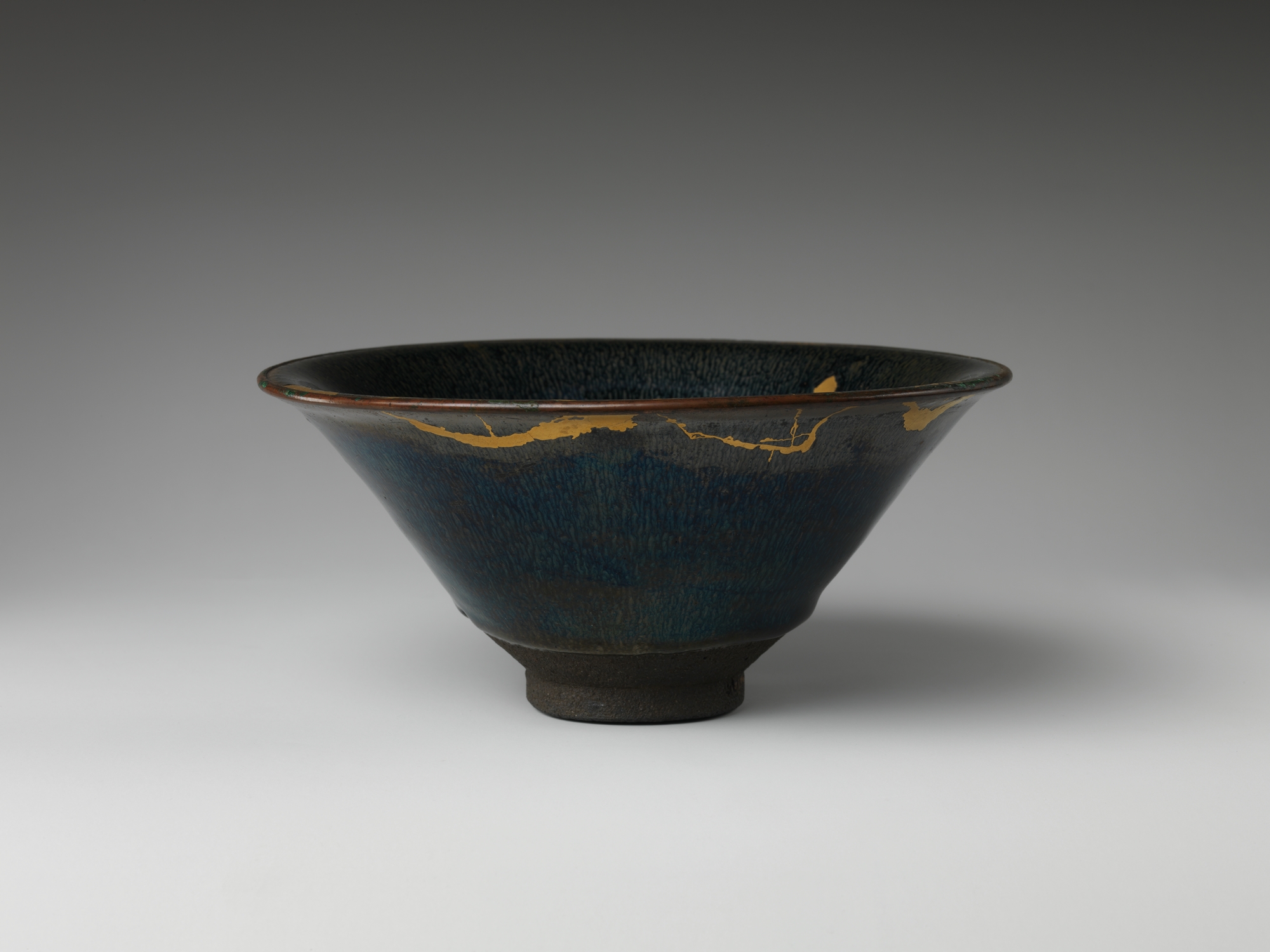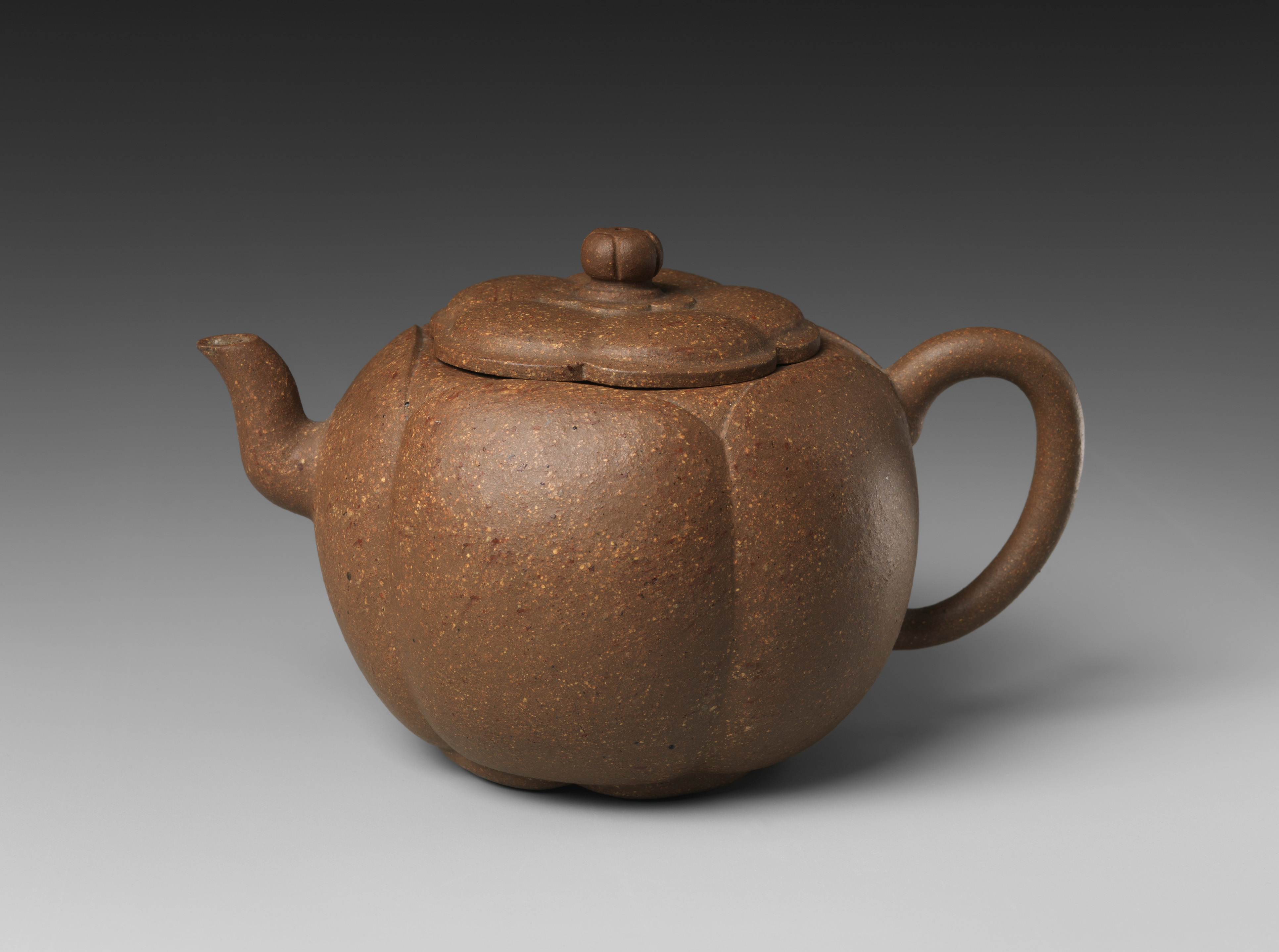
On the palm, a piece of stoneware. The surface is matt, deep red-brown, the wall warm beneath the fingers. It does not shine, does not ring like a porcelain; it absorbs the gesture more than it reflects it. A scientific instrument would measure, on this same wall, a water-absorption rate below two per cent and a porosity that lies between that of common stoneware and that of fine porcelain. The pot seems dry, and it is; yet it transpires, slowly, through its own walls — a measurable breathing, with no visible moisture.
Let us read this breathing: what makes it materially possible — and why a tea, at a precise moment in the sixteenth century, came to lodge itself there. No floral analogy, no aphorism: first the material, then the use, finally the hands that signed.
The chemistry of a clay that breathes
Yixing stoneware, 紫砂 zǐ shā — literally “purple sand” — comes from the Dingshu district, in the eastern province of Jiangsu, some two hundred kilometres northwest of Shanghai. It is a clay, and it is also something more. Under the microscope, it is seen to be composed of an unusual mineral mix: a base paste known as 紫金土 zǐ jīn tǔ — purple iron-rich earth — high in iron oxide, mingled with quartz, hematite, and mica. The proportion of iron is exceptional; it is this that gives, after firing, the characteristic deep red-brown. This particular clay is not reproducible elsewhere: the geological strata that carry it at Dingshu are local, narrow, irregular — a workshop that wished to work this earth outside Yixing would lack, at the root, its raw material.
The firing, precisely. It lies between 1,100 and 1,200°C — above the threshold of common stonewares, below that of fine porcelains. At this temperature, the minerals partially decompose, fuse, contract together. The paste, on leaving the kiln, no longer has the structure of a hardened clay: it has become an assembly with double porosity. On one side, dense, vitrified, welded clusters; on the other, between these clusters, a discontinuous network of microchannels, short and closed, that never traverse the wall from one side to the other.
Reference measurements: the porosity of a fired zisha lies between that of stoneware and that of porcelain; the water-absorption rate, for its part, remains below 2 per cent. Physical consequences, without lyricism: the piece does not leak — water does not traverse the wall — but it lets through a certain volume of air, of internal moisture, and of volatile organic compounds. It also dampens thermal shocks: the sudden gap between boiling water and a cold wall does not crack the pot. And it retains, over time, an organic trace from repeated contact with the same substance.
The formula “clay that breathes” is not a poetic metaphor. It describes a precise chemical apparatus, measurable, verified by the modern laboratory — an apparatus that no ordinary stoneware, and no porcelain, allows itself to replicate.
A tea revolution
The Yixing pot does not appear by chance. It inscribes itself in a precise transformation of Chinese tea practices.
Under the Song and the Yuan, tea was drunk otherwise. The dominant gesture at court and among literati was that of 点茶 diǎn chá — whisked tea: a fine powder of ground leaves, beaten into hot water in a dark-bottomed bowl to froth the brew. Earlier still, under the Tang, leaves were compressed into cakes and decocted, boiled with salt and spices. The vessels suited to these gestures were other: wide dark-bottomed bowls for the contrast of the foam, tall-bodied teapots for the decoction. Yixing stoneware had not yet a dedicated use.
The turn comes at the beginning of the Ming. An imperial edict dated 1391, under the reign of the founder Hongwu, abolishes the tribute of compressed tea: the tributary workshops are henceforth required to deliver the whole leaf, dried, unshaped. The gesture changes with the product. Loose leaves take hold, and with them the infusion in a pot — 散茶 sǎn chá, leaf tea poured into a vessel and drowned in boiling water. The new practice requires a vessel that retains heat without accelerating extraction, that contains without imparting taste, that accumulates without going stale.
Yixing stoneware falls just right. Its double porosity retains, without releasing them into the next pour, a part of the tea’s aromatic compounds; its low absorption rate prevents residual moisture from stagnating and starting a parasitic fermentation; its thermal inertia stabilizes the infusion temperature longer than an ordinary stoneware. The old experience, cited by modern manuals, formulates it soberly: “with a Yixing pot, tea does not turn even in full summer, at a night’s interval”; a long-used pot, rinsed only in clear water, “still renders the aroma of tea.” The observation is empirical, attested by use before being formalized. The kiln’s signature does not precede use — it follows it.
Three named hands — a century of signatures
Yixing stoneware could stop there. A precise clay, a tea that changes, an object that imposes itself. But it has also, from the sixteenth century onward, another singularity — less frequent in the history of Chinese ceramics, and which demands, in order to be read, a shift.
Yixing produces a documented chain in which each hand remains named upon the piece.
The first name retained is that of 供春 Gōng chūn, mid-sixteenth century, under the Zhengde reign of the Ming. Tradition reports that he was the servant of a literatus who came to study in a local Buddhist monastery, and that he learned there from the monks the basic gestures — beating the paste with a wooden paddle, polishing by hand with the tool. Taking up these methods, he brings them out again as an object of writing. The literatus 周高起 Zhōu Gāoqǐ, who assembles around 1640 a repertoire of the Yixing potters in his 阳羡茗壶系 Yángxiàn Mínghú Xì — the Genealogy of the teapots of Yangxian — retains Gongchun’s pot for its colour: “dark chestnut, like ancient metal.” The praise fixes an aesthetic. It is not decorative — it judges the object by its earth, bare, without glaze, with a metallic effect. The pot is worth what it is, not what is added to it.
A generation later, 时大彬 Shí Dàbīn refines the material. His contribution, late sixteenth and early seventeenth century under Wanli, lies in a dosage: he incorporates into the kneading an adjusted quantity of fine aggregates, which stabilizes the form during firing and permits thinner walls without loss of structure. The gesture remains artisanal, but it now circulates in a milieu of literati — copies, purchases, commissions, correspondences. The signature Shí Dàbīn, stamped into the raw clay before firing, becomes from now on part of the apparatus. The piece carries the name of the one who made it.
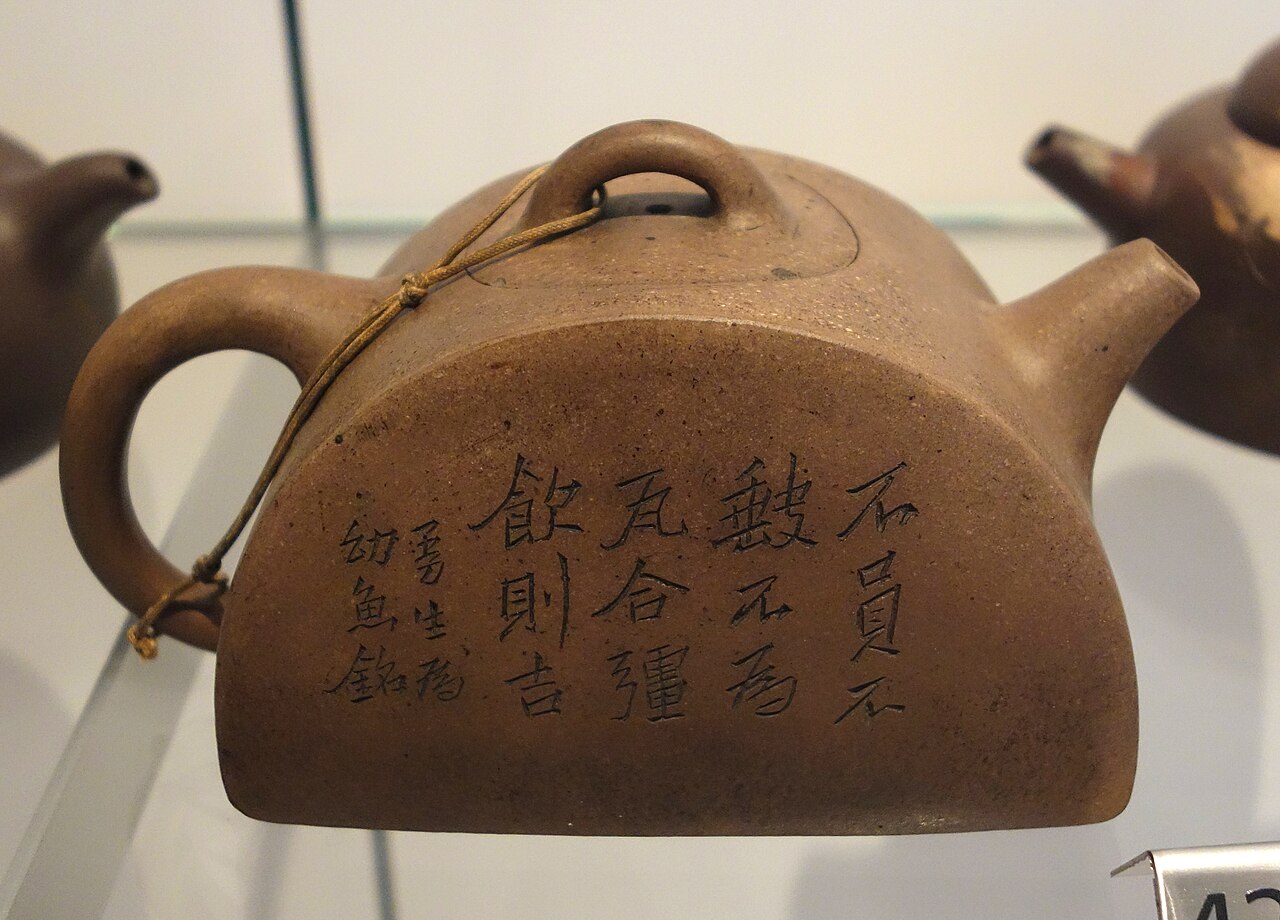
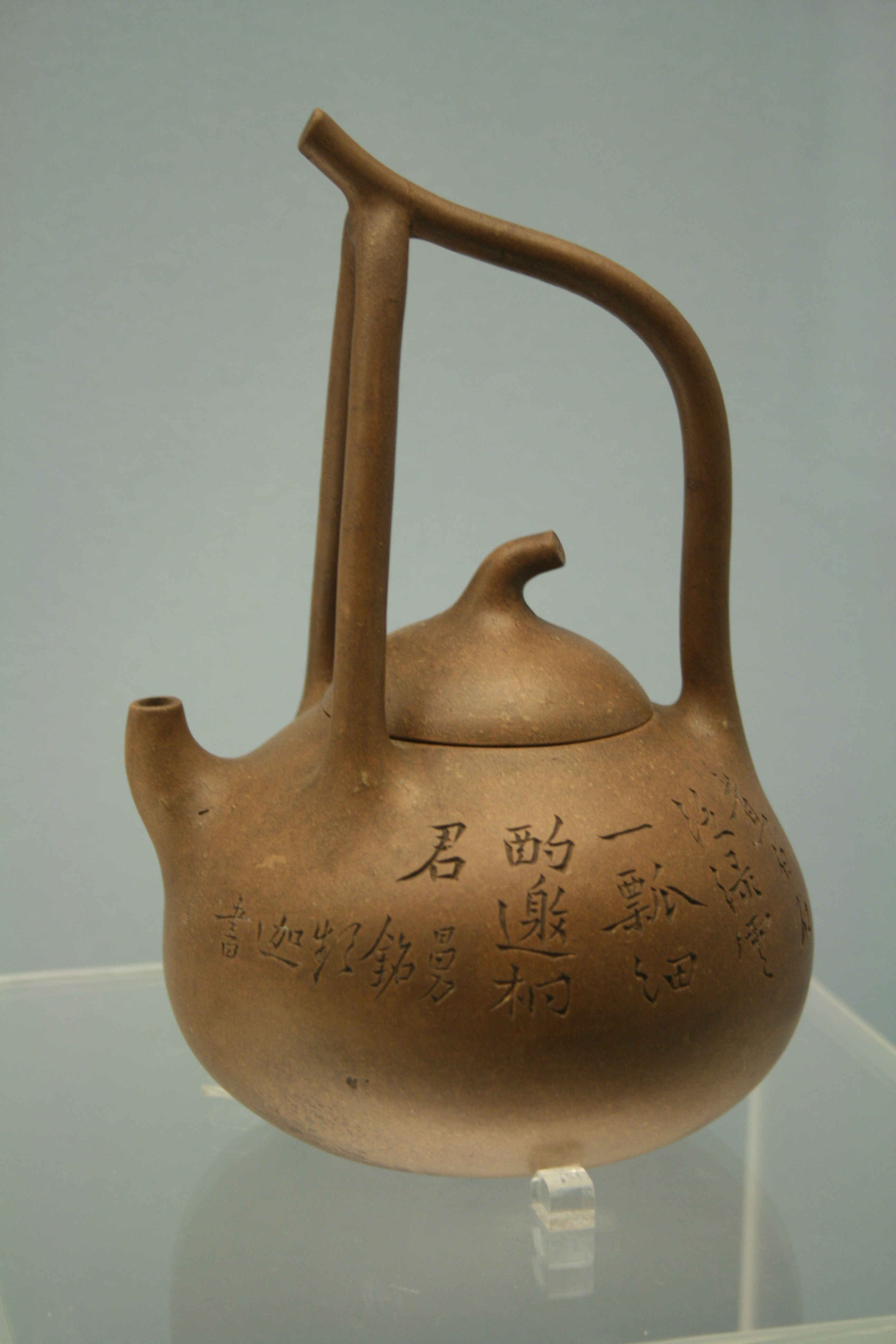
Then comes the key moment. Beginning of the nineteenth century, under the Jiaqing and Daoguang reigns of the Qing. 陈鸿寿 Chén Hóngshòu — literatus, painter, calligrapher, and seal-cutter, known above all under his sobriquet 曼生 Mànshēng — draws with his own hand the templates: a dozen pure outlines, stripped down, refusing ornament. He entrusts them to 杨彭年 Yáng Péngnián and his sibling-artisans, who execute them. On the finished piece, two marks cohabit. At the foot, a seal 阿曼陀室 Ā mán tuó shì — the Amantuo studio — which designates Chen’s workshop. Under the handle, an engraved seal Péngnián. On the flanks, inscriptions calligraphed by burin by Chen and his entourage: sometimes a few characters, sometimes two lines of verse.
This distribution is not a parlour refinement. It inscribes, on the very object, the chain of credits that brought it into being: drawn template, potter’s execution, literary engraving — each one named, each one marked. No imperial porcelain of the same century names both its literatus designer and its artisan executant, seals side by side; the reign mark, on court porcelain, absorbs all the rest. The Mansheng pot is not a connoisseur’s work; it is an object where the literatus and the artisan sign side by side, without either name effacing the other.
Beyond the bare pot
Yixing stoneware owes its modern reputation to the unglazed pot, with bare wall and slow patina. But the kiln is broader.
From the Ming onward, its workshops develop an extended grammar of surface. Tool-incised engraving — 陶刻 táo kè — runs poems and flowers across the raw wall. Slip painting lays a coloured decoration on the stoneware. Applied reliefs, tin or copper inlays, blended pastes known as 绞胎 jiǎo tāi — where several coloured clays are kneaded and then drawn out in spirals — compose a range of procedures that the drinking teapot alone does not let one see.
The bare Yixing pot, which fixed the kiln’s reputation in the modern imagination, is a point of balance in a larger workshop. And the lesson, mirroring the three preceding sections, remains sober: what circulates under the name zisha is not an essence nor a climate — it is a system, measured, dated, signed. A precise clay. A tea that changes. Hands that remain named. The breath of the clay, the signature of the hand.
Sources
Textual sources
- 周高起 (Zhōu Gāoqǐ), 《阳羡茗壶系》 (Yángxiàn Mínghú Xì) — “Genealogy of the teapots of Yangxian,” Ming dynasty, c. 1640. Cited after Zhōngguó gǔ táocí túdiǎn, 1998. Aesthetics of the bare material, judgment by the earth.
- Archives on the 曼生 (Mànshēng) teapot of Chen Hongshou (Chén Hóngshòu) and Yang Pengnian (Yáng Péngnián), Qing dynasty, Jiaqing–Daoguang reigns (early nineteenth century). Cited after Zhōngguó gǔ táocí túdiǎn, 1998. Documented chain of credits — template, execution, dual seal.
Studies
- 冯先铭 (Féng Xiānmíng) (ed.), 《中国古陶瓷图典》 (Zhōngguó gǔ táocí túdiǎn) — “Illustrated dictionary of ancient Chinese ceramics,” Beijing, Wenwu chubanshe, 1998. Material reference: mineralogical composition, double porosity, absorption rate.
- 陈德富 (Chén Défù), 《中国古陶瓷鉴定基础》 (Zhōngguó gǔ táocí jiàndìng jīchǔ) — “Foundations for the expertise of ancient Chinese ceramics,” Sichuan University Press, 1993. For the use of the pot in loose-leaf infusion and the conservation of aromas.
Featured object
- Plum-blossom-form teapot attributed to 时大彬 (Shí Dàbīn, active c. 1620–1640), Yixing stoneware, late Ming — Wanli–Chongzhen reigns (early seventeenth century). Mark “大彬” (Dà bīn) stamped at the base. Height 9.5 cm. The Metropolitan Museum of Art, New York, accession 1982.362a, b. Open Access (CC0). URL: https://www.metmuseum.org/art/collection/search/42323
The breath of the clay, the signature of the hand.
MOSAÏNK · May 2, 2026