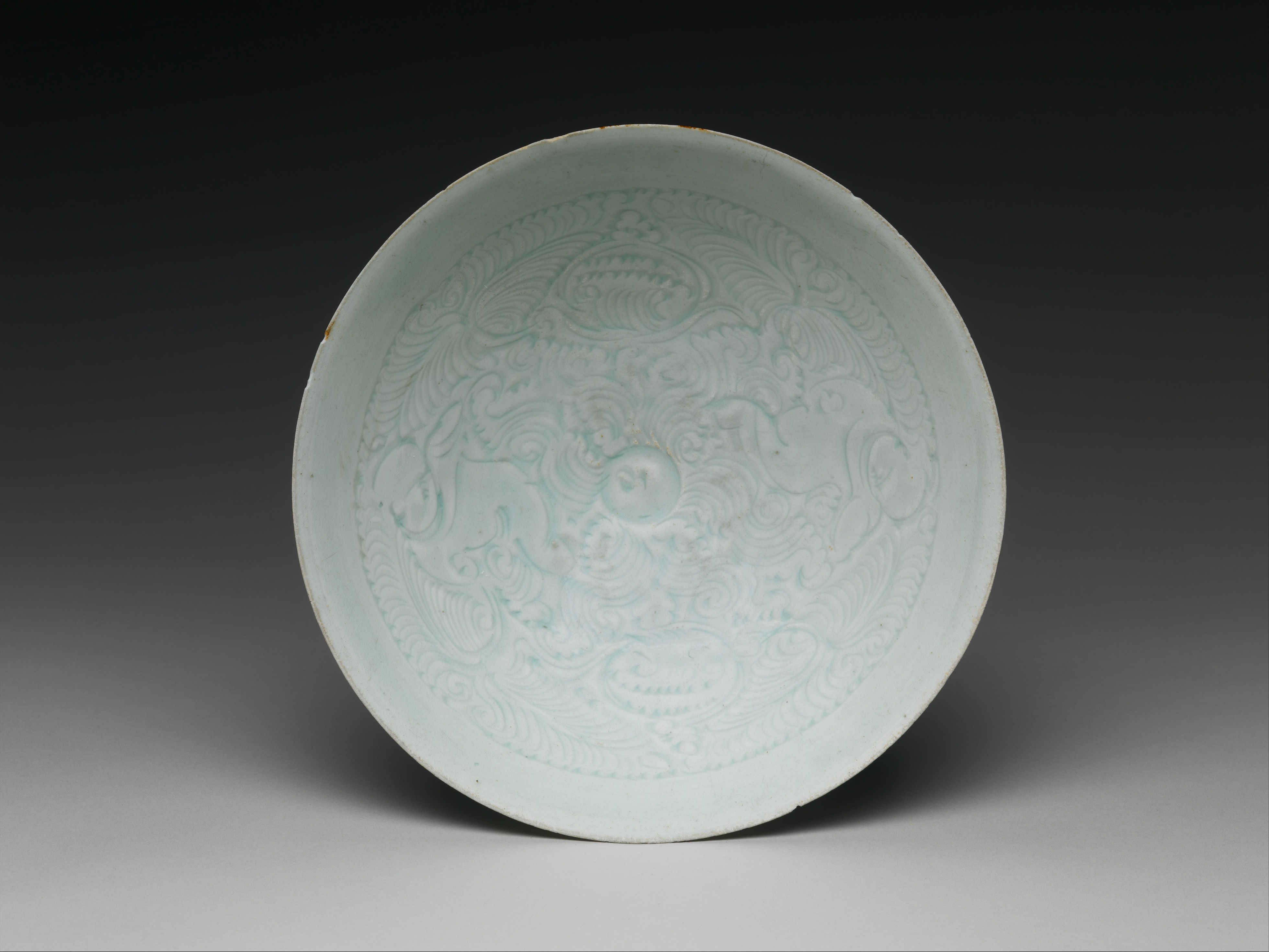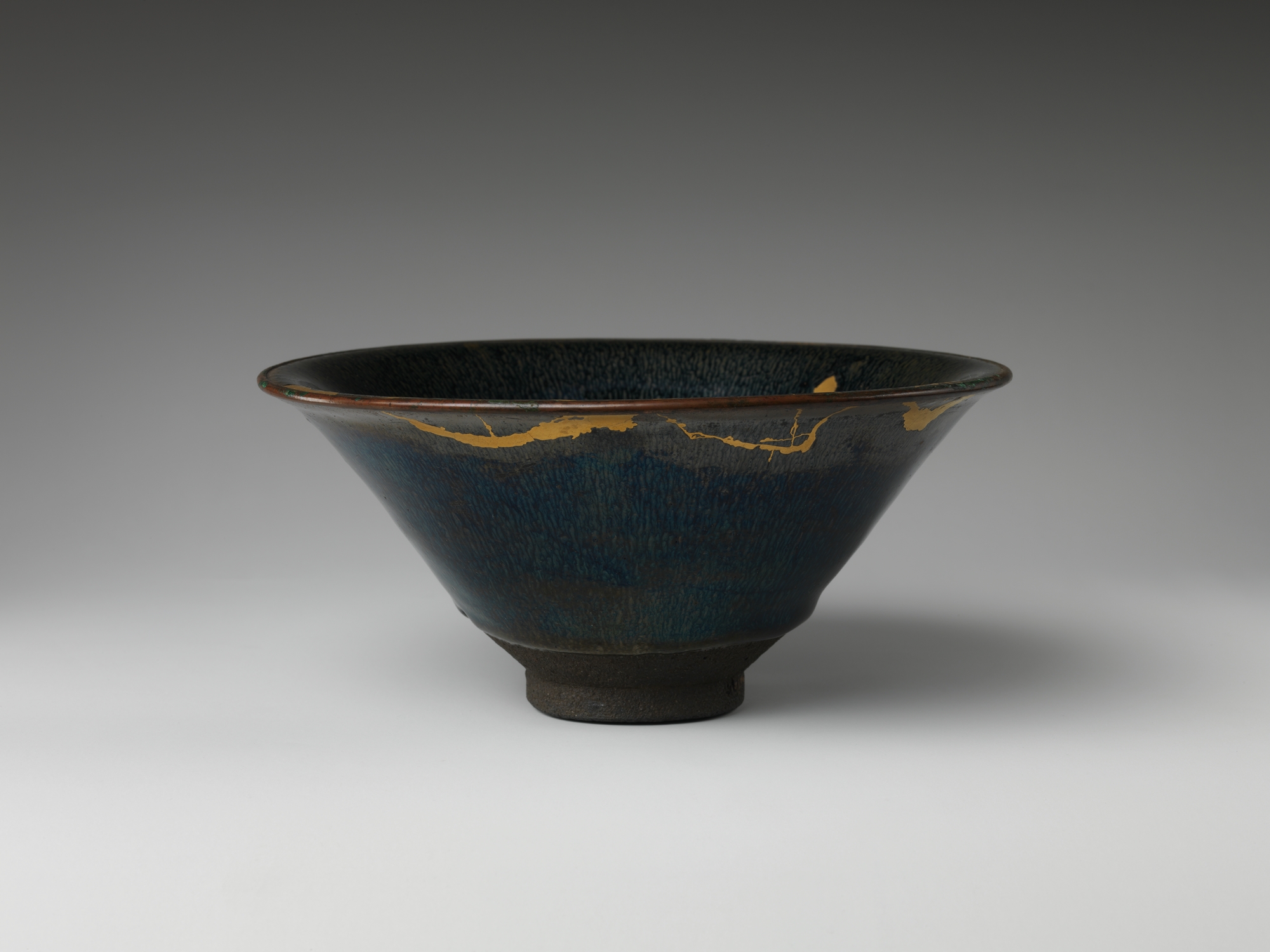
First a thin sizzling, like insects at the foot of a flight of steps. Then a rumbling, as of a thousand carts drawing near. Finally a steady rush: the wind in the pines, a torrent at the bottom of a ravine. Anyone who has left a kettle on the fire knows this rise. In Song China it became a body of knowledge, something to be learned and argued over.
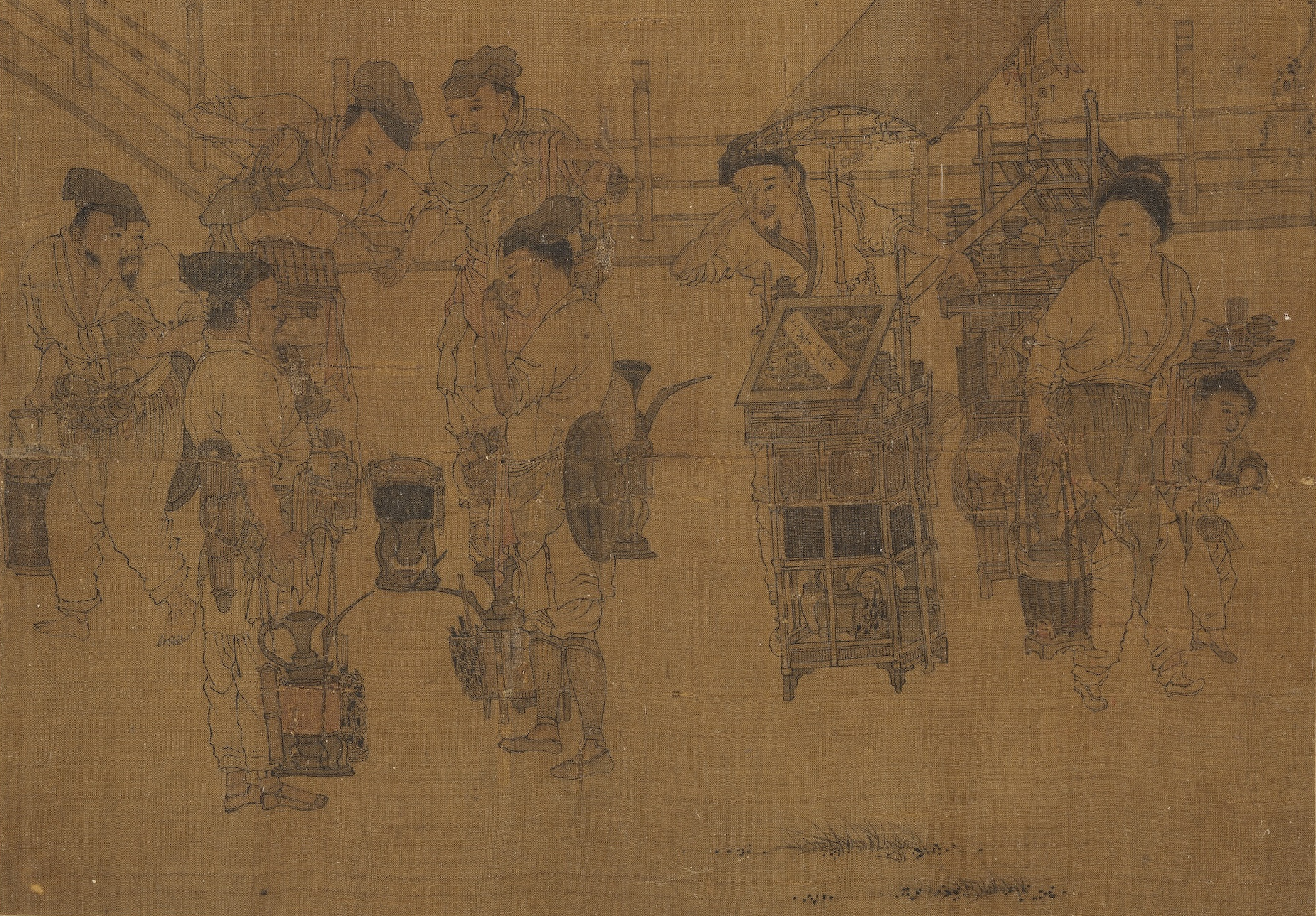
The scene takes place beside a small stove, between the 11th and the 13th century, among scholars preparing tea. On the embers a narrow-necked vessel is heating, the 汤瓶 tāng píng — the “hot-water ewer.” The act performed there has a name, 候汤 hòu tāng: watching for the water, catching the moment it is ready.
What is best known of this tea is the dark-glazed bowl. It was prepared as 点茶 diǎn chá, whisked tea: a powder beaten in the bowl, with the water poured over it. Yet the most delicate step came before the bowl, in the ewer. And the ewer hid the water.
A vessel that hides the water
Under the Tang, water was still judged by eye. 陆羽 Lù Yǔ, in his 茶经 Chá jīng, the 8th-century “Classic of Tea,” boils it in an open cauldron, the 鍑 fù. He tells three boils apart by their look: bubbles like fish eyes, then pearls rising in strings along the rim, and finally rolling waves. Beyond that the water is “old,” unfit for tea.
Under the Song, water is heated more and more often in a vessel. 蔡襄 Cài Xiāng, scholar and high official, draws the consequence in the mid-11th century, in the 茶录 Chá lù, “Notes on tea” presented to the emperor. Watching for the water, he writes, is the hardest part. Not hot enough, it leaves the froth floating; too hot, it makes the tea sink. What earlier writers called “crab eyes,” he reclassifies as water already boiled too long. And above all, inside the vessel, nothing can be made out.
Two centuries later, the scholar 罗大经 Luó Dàjīng records an answer in his collection of notes, the 鹤林玉露 Hè lín yù lù. It comes from a fellow candidate who passed the examinations in the same year as he did.
This fellow graduate, 李南金 Lǐ Nánjīn, starts from the same observation: in a vessel, water is hard to watch. So the three boils must be recognized by sound. The insects, the carts, the wind in the pines and the torrent: that is his scale, which he set in verse. At the last stage, he has the cups brought.
Luo Dajing disputes not the ear, but the moment. At the first rush of wind in the pines, he replies in a quatrain, the vessel must be taken off the fire; one must wait until every sound has died away, and only then pour. Listening has its rules and its disagreements, like any technique. The vessel had withdrawn the water from sight; people had learned to hear it.
A spout for a single thread
Between Cai Xiang and Luo Dajing, early in the 12th century, Emperor 徽宗 Huīzōng writes a treatise, the 大观茶论 Dàguān chá lùn. He gives a section to the ewer, and that section speaks almost entirely of the spout: whether the pour succeeds or fails, he says, depends on the spout alone. A geometry follows. At the base the spout should be a little wider, and straight, so that the water leaves firmly without scattering; at the tip, round, small and cleanly cut, so that it can be measured out and nothing drips.
The same treatise describes the gesture this spout must serve. At the second pouring, the water circles over the surface of the tea “in a single line.” On size, Huizong leaves the choice open; Cai Xiang, for his part, wanted the vessel small, easier to watch, truer in the pour.
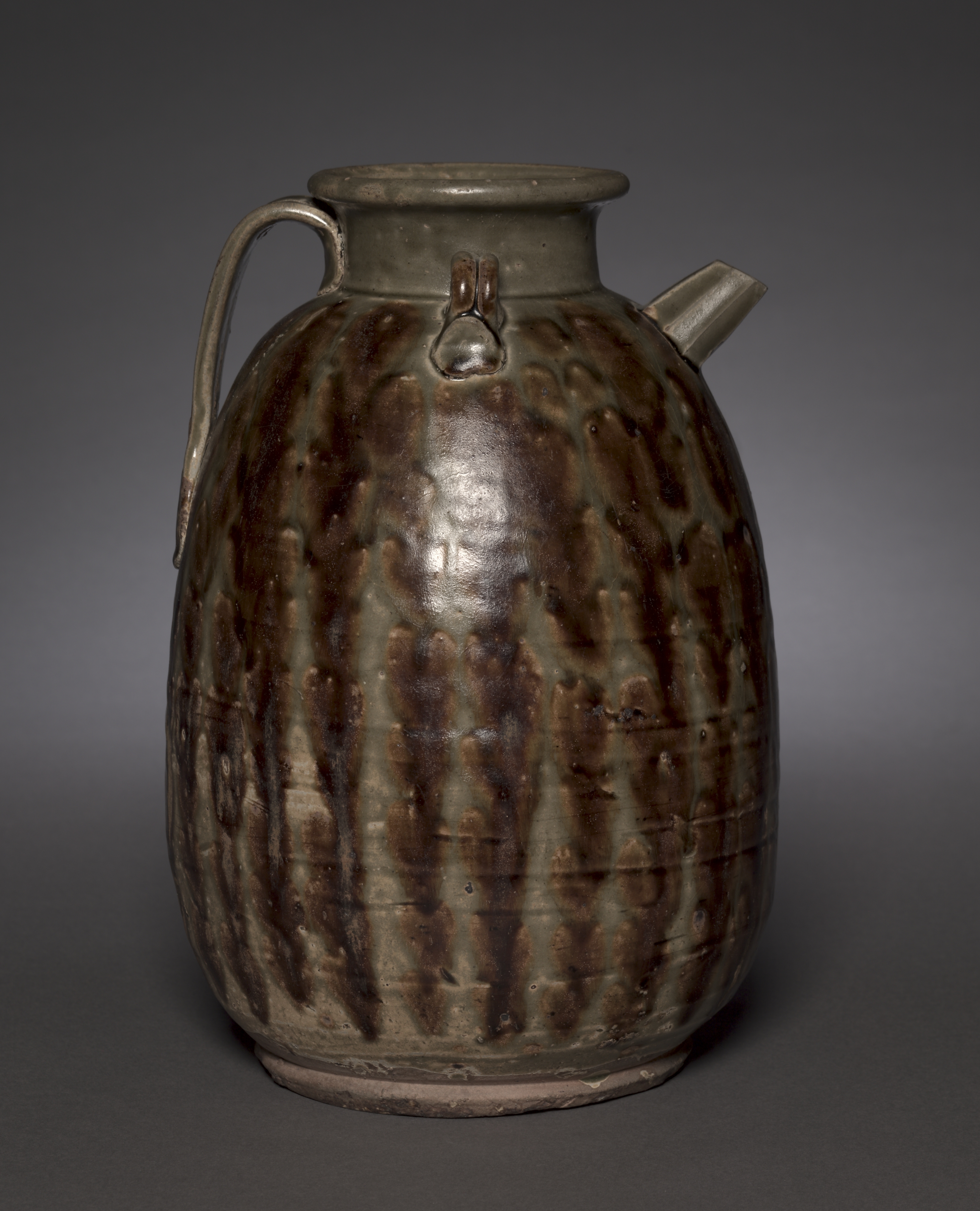
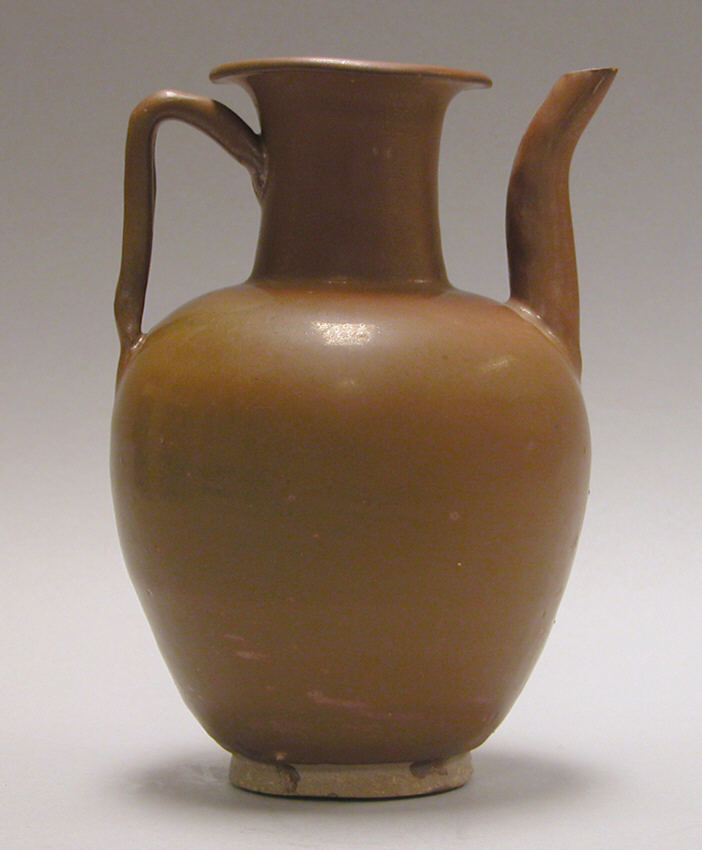
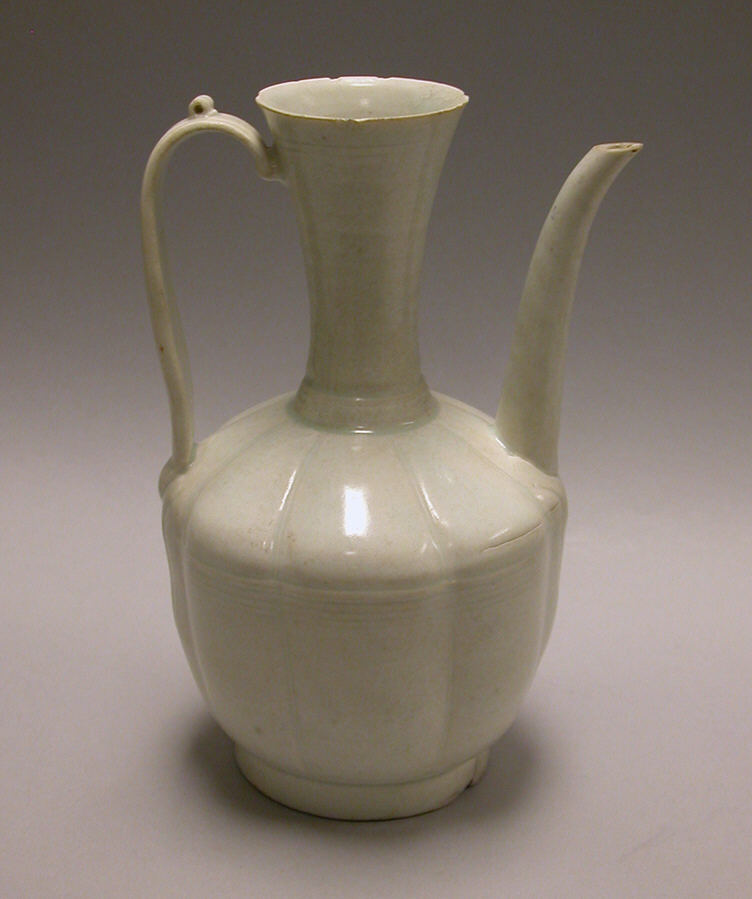
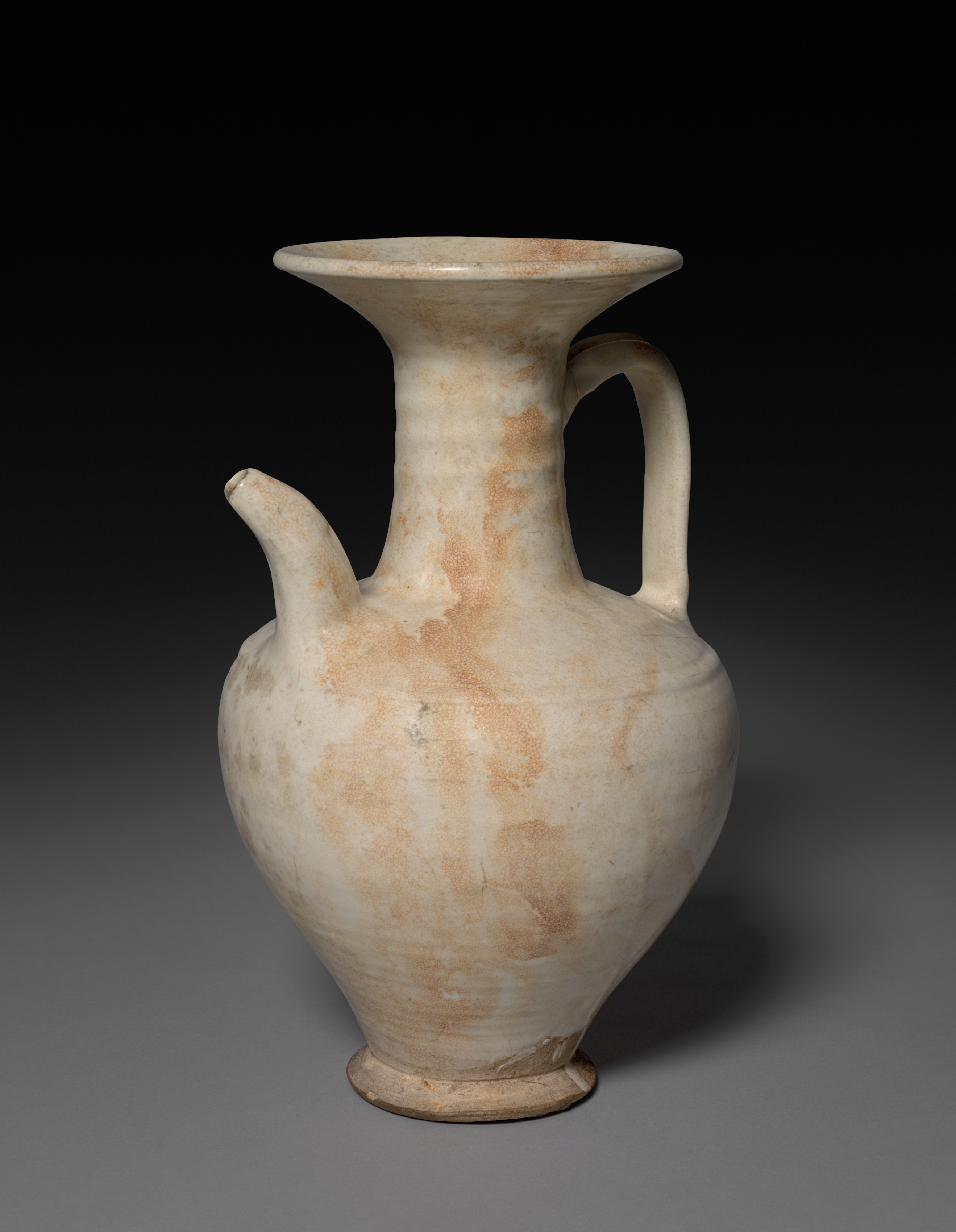
Two pieces, set side by side, make these sentences visible. This Tang ewer, which came out of the Changsha kilns, 长沙窑 Chángshā yáo, in the 9th century, stands 29.2 cm high; its spout is short and faceted, and the museum that holds it says it was made for tea or for wine. The Northern Song one, below, measures only 17.1 cm, yet its spout sets off from the shoulder, long and straight. Two objects do not make a history of forms. They only show, to the naked eye, what Huizong was asking for.
A form made of gestures
A small vessel, a closed body, a long straight spout: each feature of the ewer answers to an operation. The closed body forced people to listen closely; the small size helped in watching the water; the spout took the measure of a thread. The object keeps the trace of a skill, with its rules and its quarrels, as much as that of a taste. There remains, on the other side of the table, the hand that receives the scalding bowl.
Sources
Textual sources
- 陆羽 (Lù Yǔ), 《茶经》 (Chá jīng), “五之煮” and “四之器” — Tang (8th century). Water boiled in an open cauldron and judged by eye: the three boils.
- 蔡襄 (Cài Xiāng), 《茶录》 (Chá lù), “候汤” and “汤瓶” — Northern Song (mid-11th century). “況瓶中煮之不可辨” (reading 況, against 沉 in some editions); the small vessel, easier to watch and truer in the pour.
- 赵佶 (Zhào Jí, Emperor Huizong), 《大观茶论》 (Dàguān chá lùn), “瓶” and “点” — Northern Song (early 12th century). The geometry of the spout (readings 末 and 圆, against 未 and 园); the pour “周回一线.”
- 罗大经 (Luó Dàjīng), 《鹤林玉露》 (Hè lín yù lù), 丙编卷三 “茶瓶汤候” — Southern Song (13th century). The boils recognized by sound according to Li Nanjin, and the author’s reply.
Studies
- 郭丹英、沈国琴 (Guō Dānyīng, Shěn Guóqín), 《文献、图像、考古视野下的历代茶器演变》 (Wénxiàn, túxiàng, kǎogǔ shìyě xià de lìdài cháqì yǎnbiàn) — “The evolution of tea wares through texts, images and archaeology,” 中国茶叶博物馆 (China National Tea Museum), ihchina.cn, 2023. Typical form of the Song ewer: flaring mouth, tall neck, long spout.
Featured object
- National Palace Museum, Taipei. Attributed to Liu Songnian, 《茗园赌市图》 (Míngyuán dǔshì tú), leaf from the album 《艺苑藏真》 (Yìyuàn cángzhēn), ink and colour on silk, Southern Song. 27.2 × 25.7 cm. Number 故畫001241N000000002. NPM Open Data (CC BY 4.0).
- The Metropolitan Museum of Art, New York. Ewer, stoneware with reddish-brown glaze, northern kilns, Northern Song (11th century). H. 17.1 cm. Accession 25.219.1. Open Access (CC0).
- The Cleveland Museum of Art. Ewer, stoneware with olive-green glaze and iron-brown splashes, Changsha kilns (Hunan), Tang (9th century). H. 29.2 cm. Accession 2005.57. Open Access (CC0).
- The Metropolitan Museum of Art, New York. Ewer, qīngbái porcelain with incised decoration, Jingdezhen kilns, Northern Song (11th century). H. 23.5 cm. Accession 18.57.1. Open Access (CC0).
- The Cleveland Museum of Art. Ewer, slip-covered stoneware, Cizhou kilns, dated 1105. H. 29.9 cm. Accession 1956.717. Open Access (CC0).
Broad and straight at the base, fine at the tip, the spout traces in advance the thread of water it will pour.
MOSAÏNK · September 23, 2026