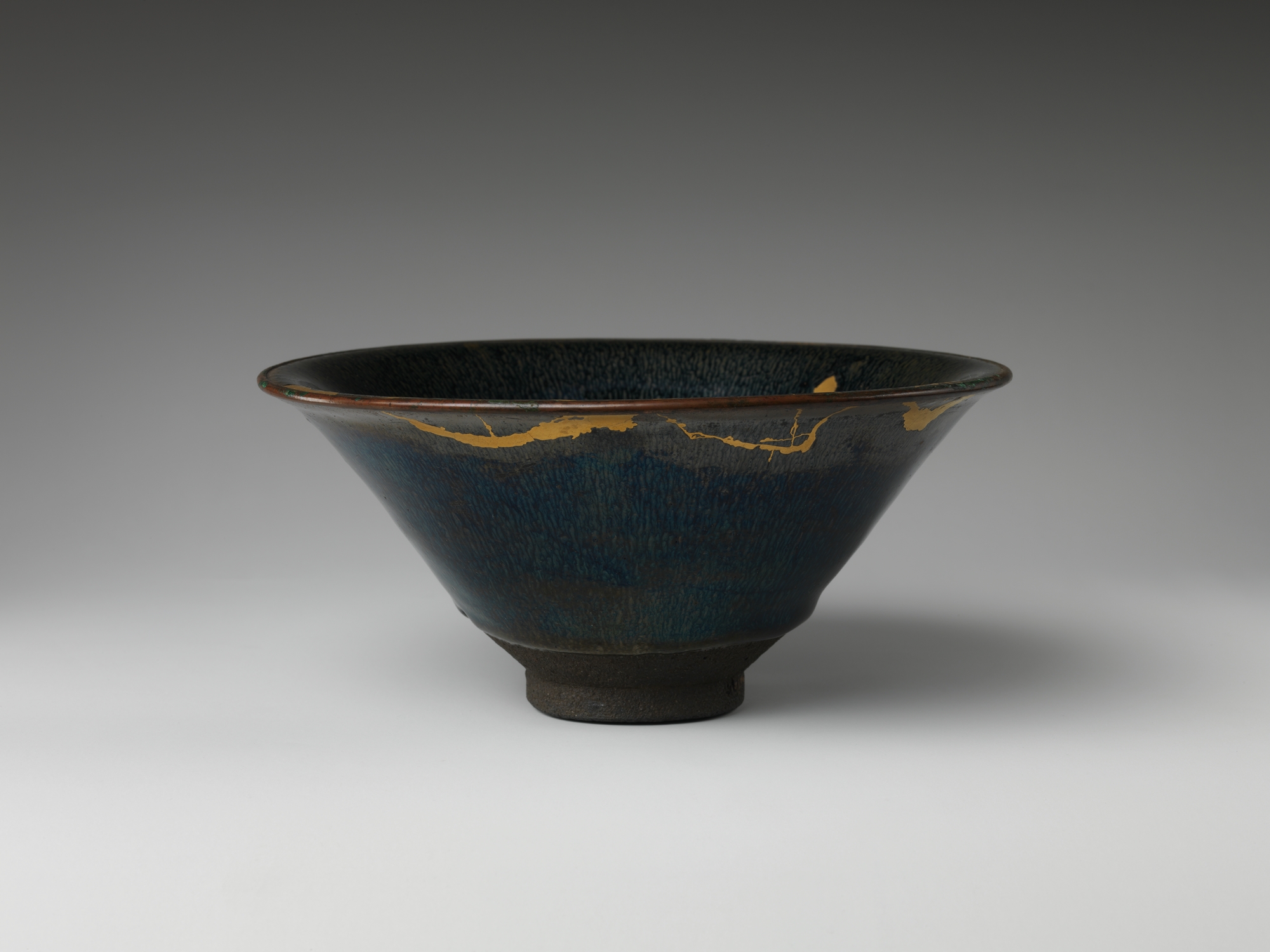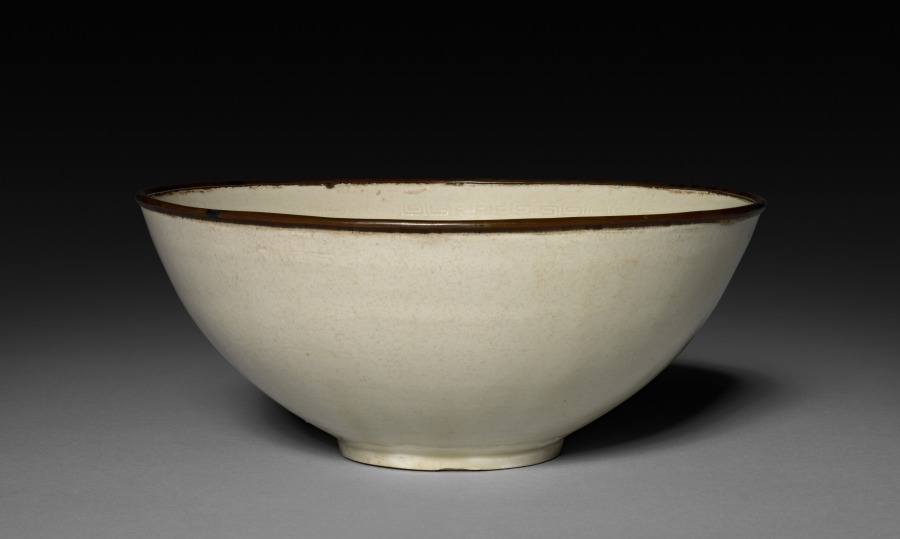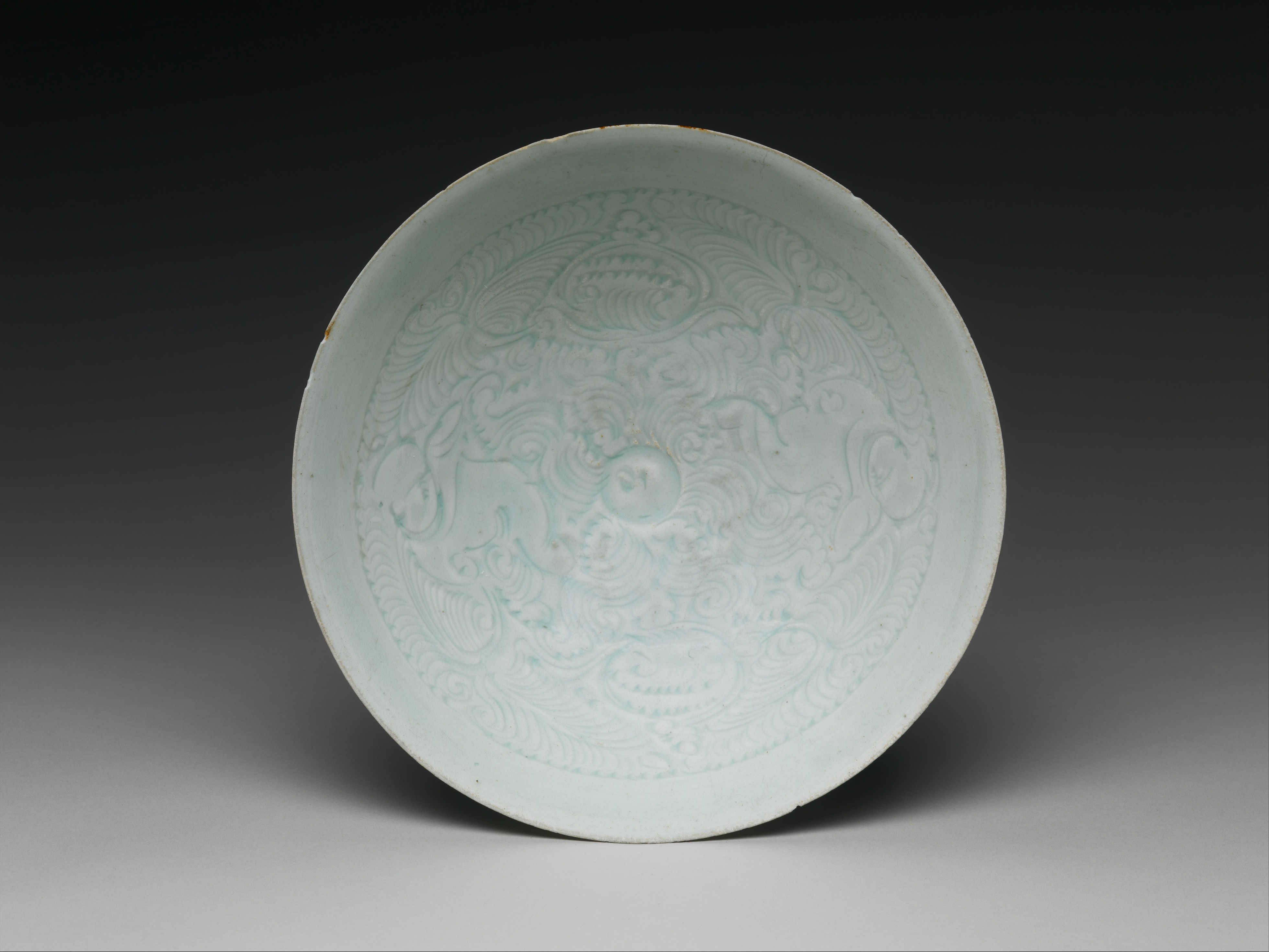
“As if by magic.” Standing before a Song blue-and-white bowl in a museum case — it hardly matters which — the peony incised on its wall seems to breathe: the colour thickens in the hollow, lightens on the crest, without any pigment having been laid down. One credits this relief by reflex to the kiln’s chance; over time, the reading hardens into consensus — Song beauty would be that of a controlled accident, and great Chinese ceramics, the art of letting matter flow. And yet this precise thickness, this turquoise contour that draws without ink, the carver had calculated weeks before firing, by tilting his blade in a particular way. Before the colour existed, he had already fixed its place.
The gesture, the chemistry, the chronology
Before reading the relief, the gesture must have a name. The word exists — 半刀泥 bàn dāo ní, “half-knife of clay.” The compiler 张东 Zhāng Dōng, in 古瓷鉴要 (Gǔ cí jiàn yào), gives the canonical definition: the blade is held at an angle (侧刀 cè dāo), tracing in the raw clay a furrow deep on one side, almost null on the other. The furrow glides along an oblique plane, never vertical. And everything that follows hangs on that tilt.
This technique is to be distinguished from two neighbouring gestures of the same century. Straight-cut incision, with two symmetrical slopes, is practised earlier and further north, in the workshops of Ding (定窑 dìng yáo, Hebei); combed decoration drawn with a toothed tool, fine parallel lines, often accompanies the bandaoni in the same stratigraphic layers of 湖田 Hútián (Jingdezhen). Both open furrows of uniform section — their drawing remains flat. The bandaoni, on the other hand, carves a volume: a hollow whose depth varies. The carver does not inscribe an image on the paste; he prepares a geometry that the glaze will fill in.
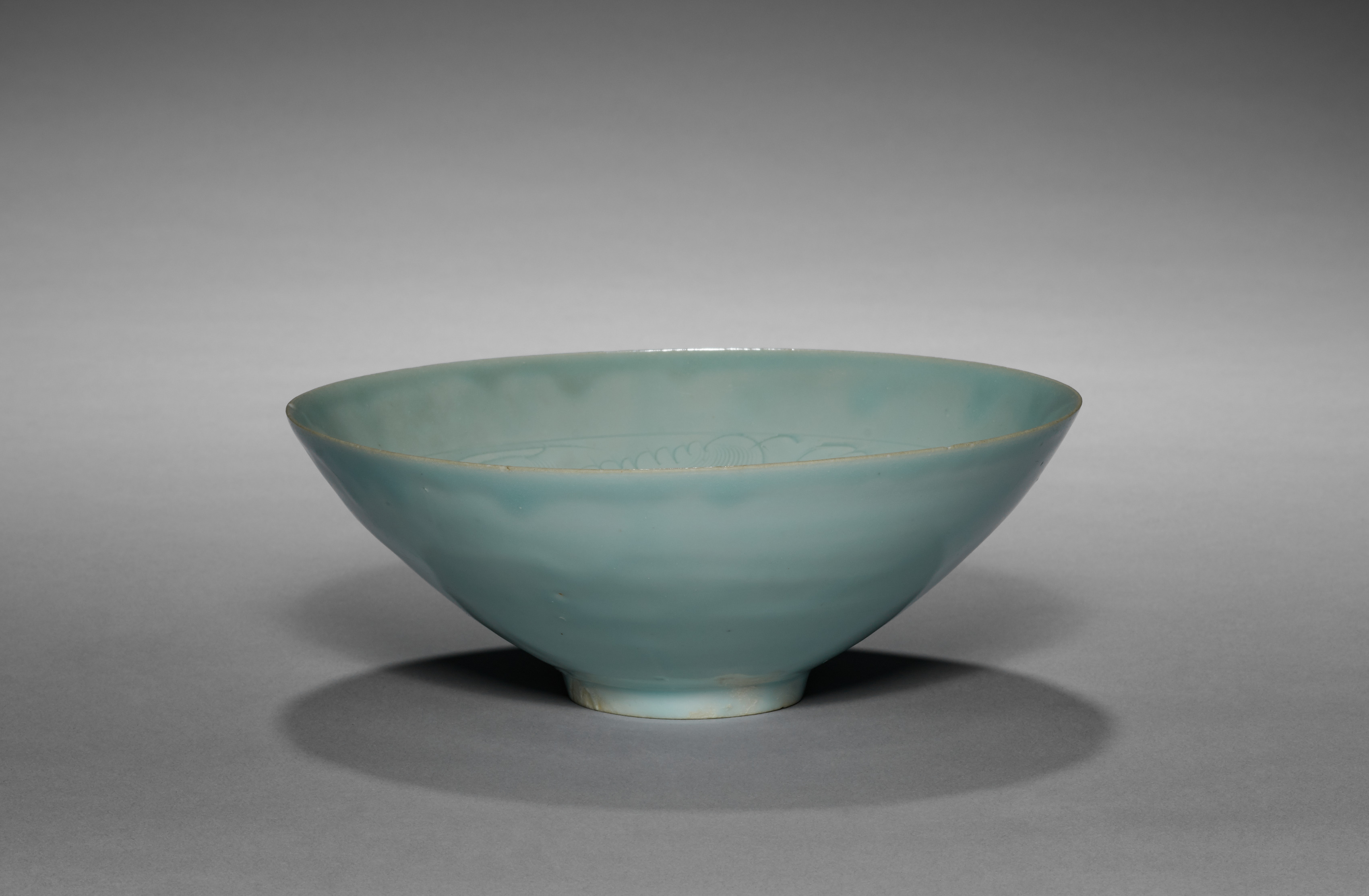
Why this technique, at Jingdezhen, at the end of the 11th century? Three conditions meet. First the matter of the glaze: the 青白 qīng bái covering — “blue-white” — is feldspathic and fluid at high temperature; around 1,280°C, it migrates, descends, accumulates in the hollows. And its thickness governs its colour — turquoise blue in a deep furrow, bluish-white on a crest. Then the body: the kaolin of Jingdezhen yields a translucent biscuit, which lets light bounce back rather than absorbing it; the glaze appears to glow from beneath. Finally a genealogy: Ding, in the north, already had the engraving; but its ivory glaze, scarcely mobile, did not allow the calculation of the filling. The oblique blade emerges in the south because the chemistry of the south allows it.
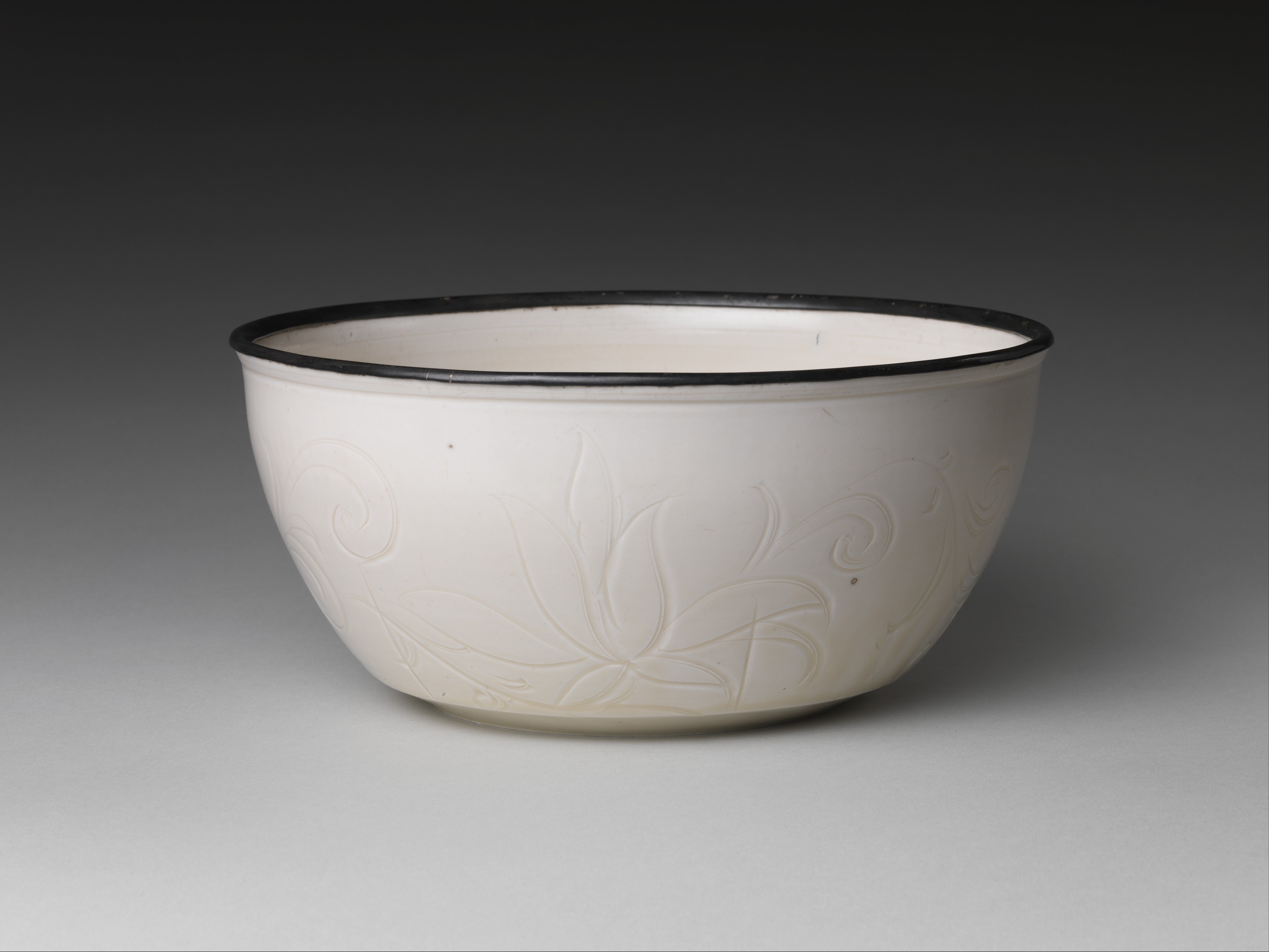
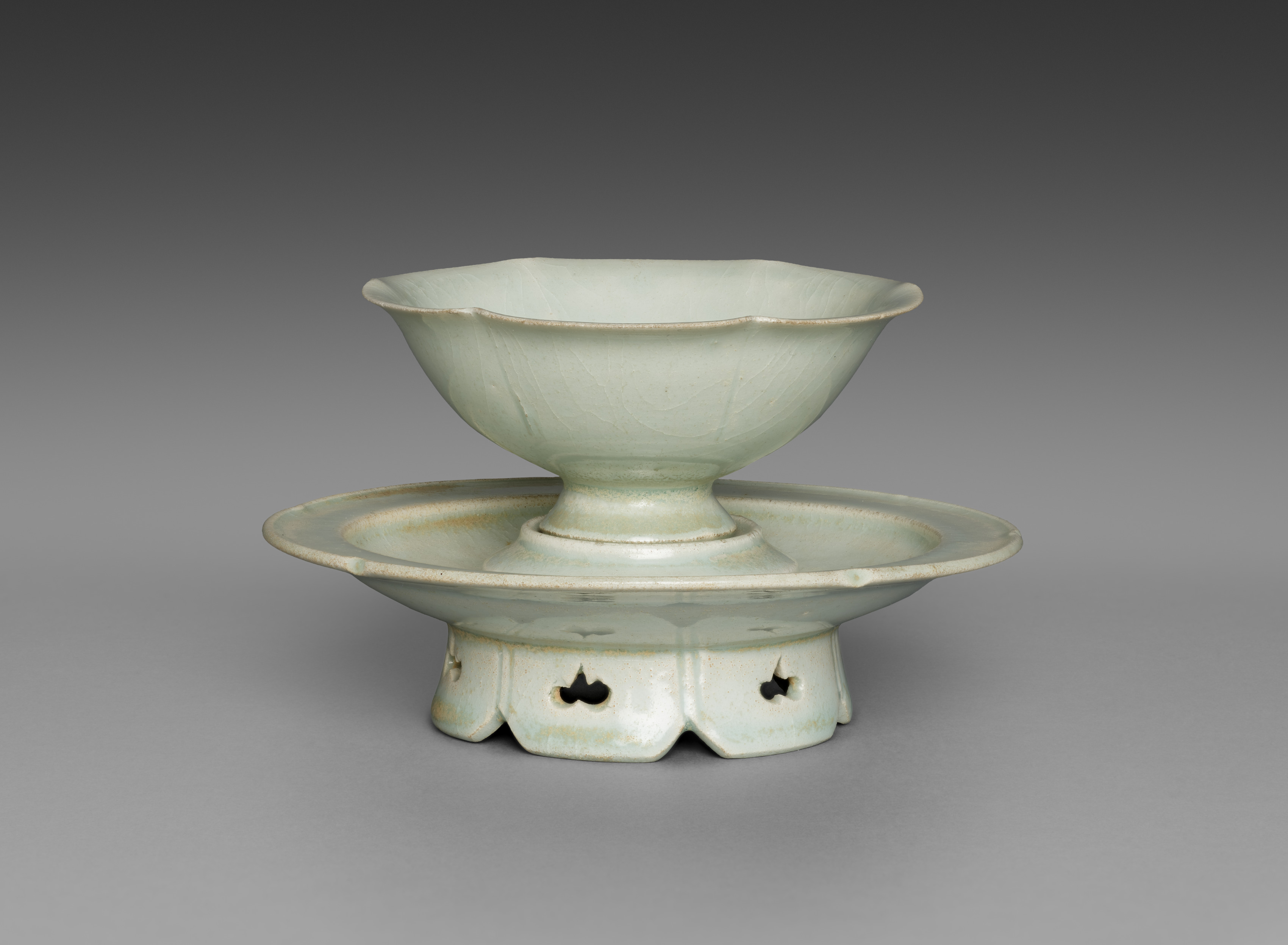
The Hutian excavation report, conducted by the Jiangxi Provincial Institute of Archaeology, reads the chronology in the stratigraphic layers: at the earliest stage, flat linear incisions, scarcely sophisticated; from the late Northern Song onward, the bandaoni settles in and diversifies; in the Southern Song, it reaches its full maturity — a trait the archaeologists describe as “fluid and free” (流畅粗犷 liúchàng cūguǎng). It is on the large bare-rimmed bowls, máng kǒu, fired upside down to keep their interior from any contact with the kiln, that the gesture gives its best: at the bottom, two fish incised in bandaoni swim in a water that exists only because the glaze, on firing, settled in the hollows the carver had prepared for it. Seen under a raking light, the contour of the scales lifts in turquoise bands; the smooth zones between them let through the translucent white of the body; the eyes are points where the colour darkens like a very diluted ink. This image that the glaze appears to have produced on its own keeps, at 1,280°C, the memory of a blade tilted several days earlier.
Giving the carver his due
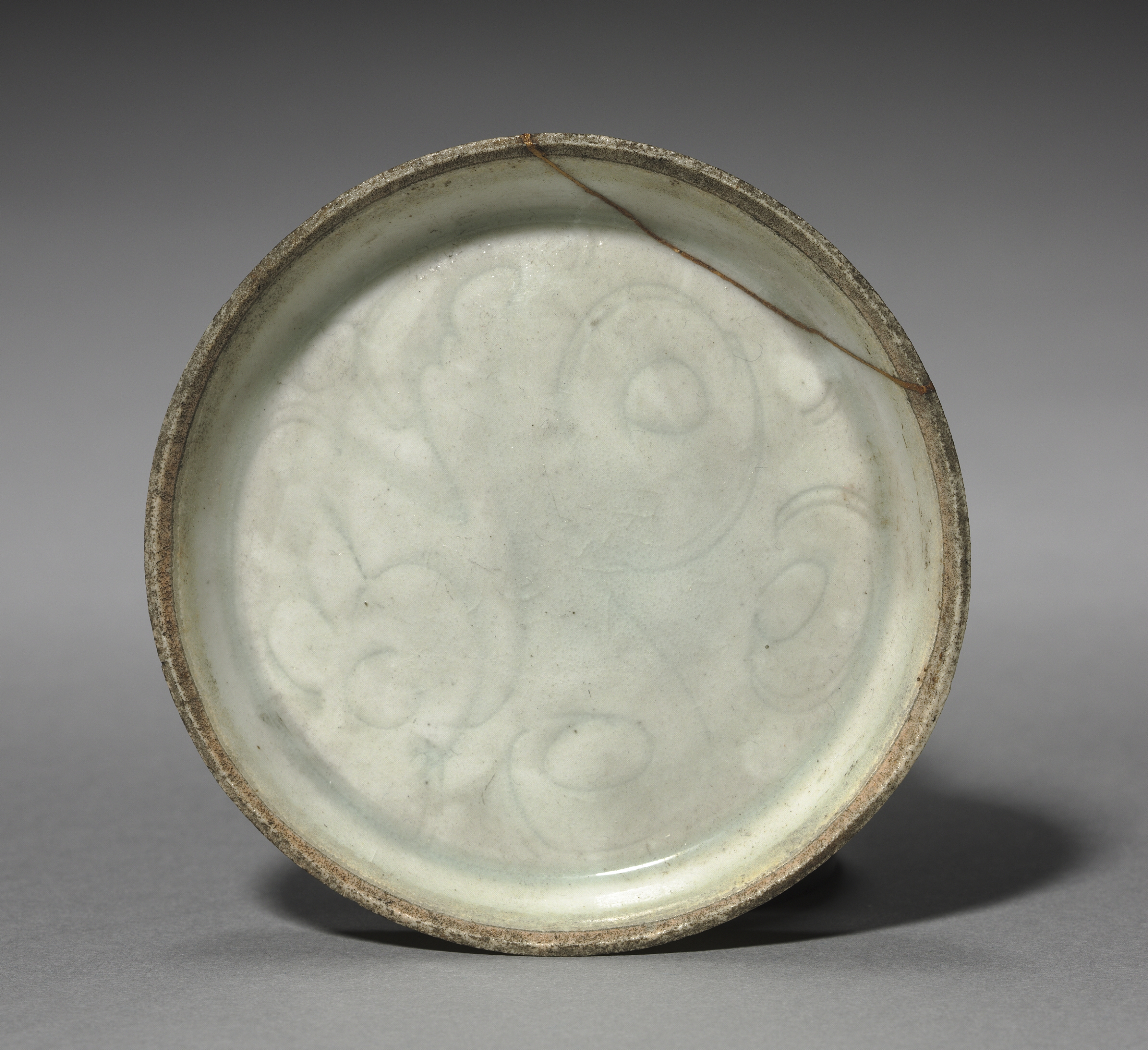
Before the peony lifted from the Song bowl, the spontaneous reading — the one that credits the glaze with all the work — does the object a strange favour: it absolves it of all intention. The oblique gesture loses its author. Yet the bandaoni is a decision taken several days before firing, at the tip of an angled blade, by an artisan who projected into the unfired clay the geometry of a colour not yet there. Restoring that decision rebuilds a chain: from the carver, to the translucent body, to the mobile glaze, to the gaze that pauses, ten centuries later, before a museum case. The animated relief credited to the kiln’s chance is, for whoever stops to read it, a workshop that goes on thinking.
Sources
Textual sources
- 许之衡 (Xǔ Zhīhéng), 饮流斋说瓷 (Yǐn liú zhāi shuō cí) — early 20th century (Republic of China). Retrospective codification of the term yǐng qīng and of the aesthetic of translucency in Song blue-and-white porcelain.
- 蒋祈 (Jiǎng Qí), 陶记 (Táo jì) — 12th century (Southern Song). Brief treatise on the raw materials and the organisation of the Jingdezhen workshops; cited as general historical context, with no direct reference to the technical gesture.
Studies
- 江西省文物考古研究所 (Jiāngxī shěng wénwù kǎogǔ yánjiūsuǒ) (ed.), 景德镇湖田窑址 (Jǐng dé zhèn hú tián yáo zhǐ) — “The Hutian kiln site at Jingdezhen — excavation report.” Stratigraphic reference for the chronology of the bandaoni (emergence, maturity, diffusion).
- 冯先铭 (Féng Xiānmíng) (ed.), 中国古陶瓷图典 (Zhōngguó gǔ táocí túdiǎn) — “Illustrated dictionary of ancient Chinese ceramics,” Beijing, Wenwu chubanshe, 1998. Comparative framework for the engraving techniques of the north (Ding) and the south (Jingdezhen).
- 张东 (Zhāng Dōng), 古瓷鉴要 (Gǔ cí jiàn yào) — “Markers for the expertise of ancient porcelains,” Zhejiang Sheying chubanshe (contemporary collection). Canonical technical definition of the bandaoni cited in §2.
Featured object
- The Metropolitan Museum of Art, New York. Bowl with two boys and foliage, qīng bái porcelain, Jingdezhen, Southern Song dynasty, 12th–13th century. Accession 2011.201, Purchase, Friends of Asian Art Gifts, in honor of James C. Y. Watt, 2011. Open Access (CC0). URL: https://www.metmuseum.org/art/collection/search/76732
- The Cleveland Museum of Art. Bowl with carved design, qīng bái porcelain, Jingdezhen, Southern Song dynasty, 12th–13th century. Accession 2020.182, Nancy F. and Joseph P. Keithley Collection Gift. Open Access (CC0). URL: https://www.clevelandart.org/art/2020.182
- The Metropolitan Museum of Art, New York. Basin with lotus decoration, 定窑 dìng yáo porcelain, Hebei, Northern Song dynasty, 11th–12th century. Accession 26.292.98, Gift of Mrs. Samuel T. Peters, 1926. Open Access (CC0). URL: https://www.metmuseum.org/art/collection/search/42461
- The Cleveland Museum of Art. Cup and stand, qīng bái porcelain, Jingdezhen, Southern Song dynasty, 12th century. Accession 1980.185. Open Access (CC0). URL: https://www.clevelandart.org/art/1980.185
- The Cleveland Museum of Art. Dish with incised scroll design, qīng bái porcelain, Northern Song period, 10th–12th century. Accession 1921.644, Gift of John L. Severance. Open Access (CC0). URL: https://www.clevelandart.org/art/1921.644
Before firing, the carver already knows where the glaze will pool.
MOSAÏNK · May 6, 2026