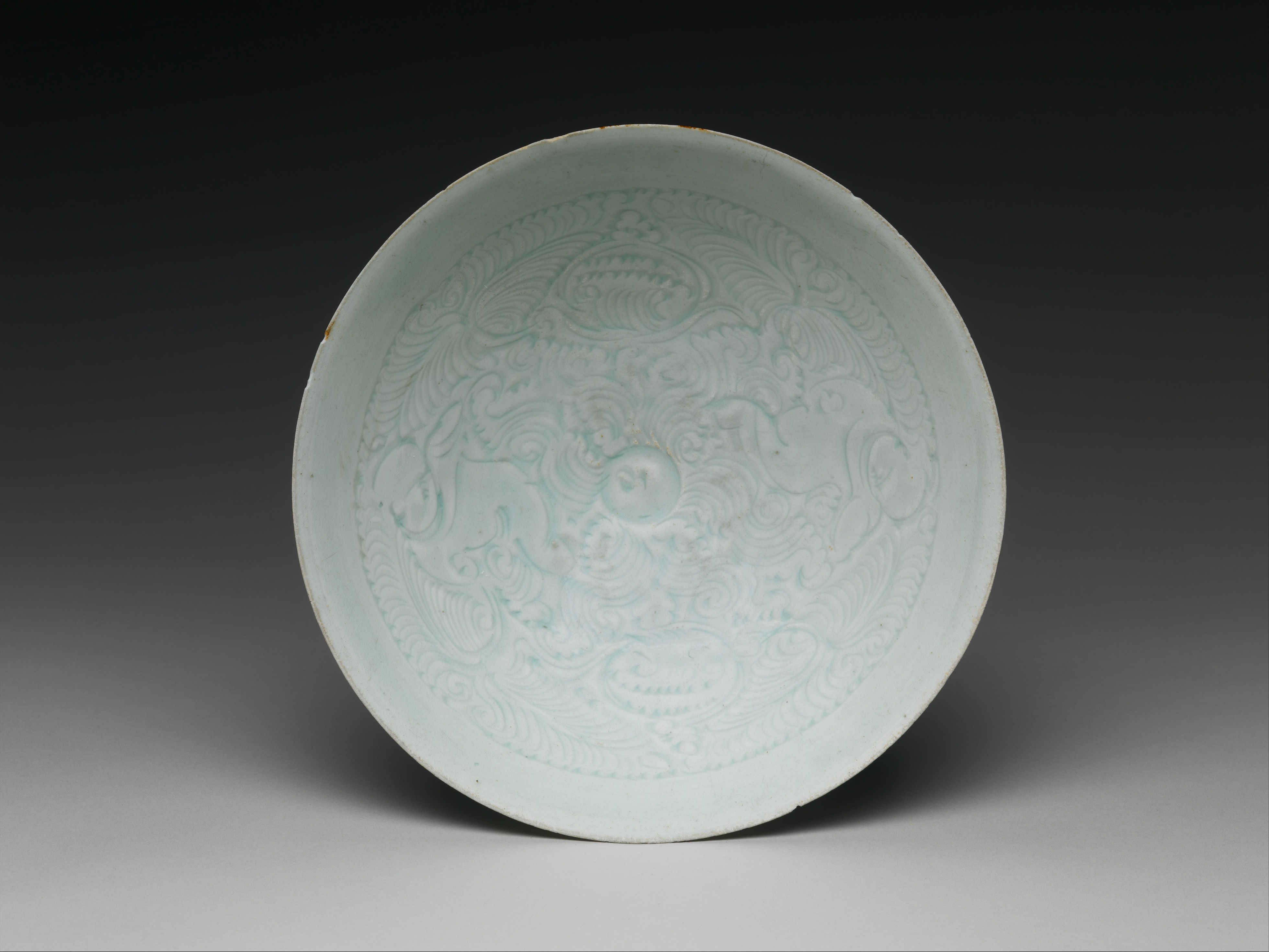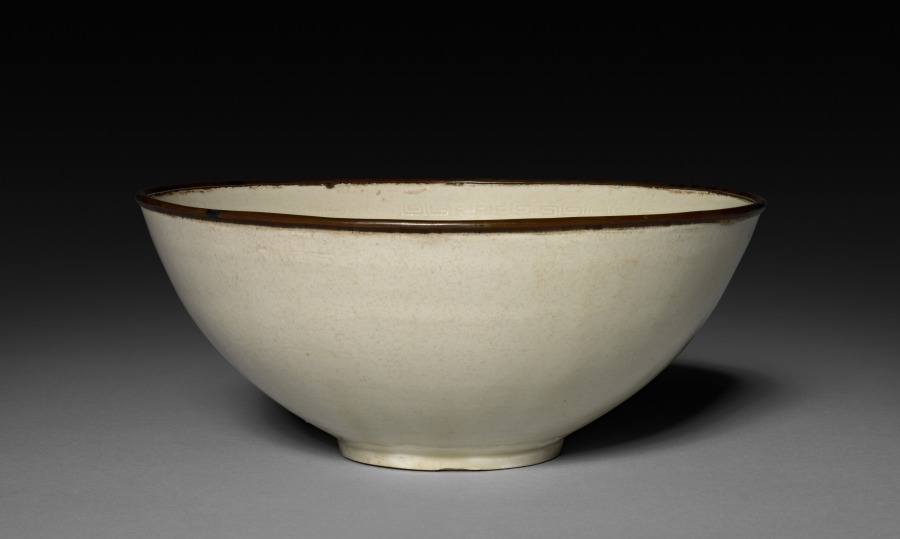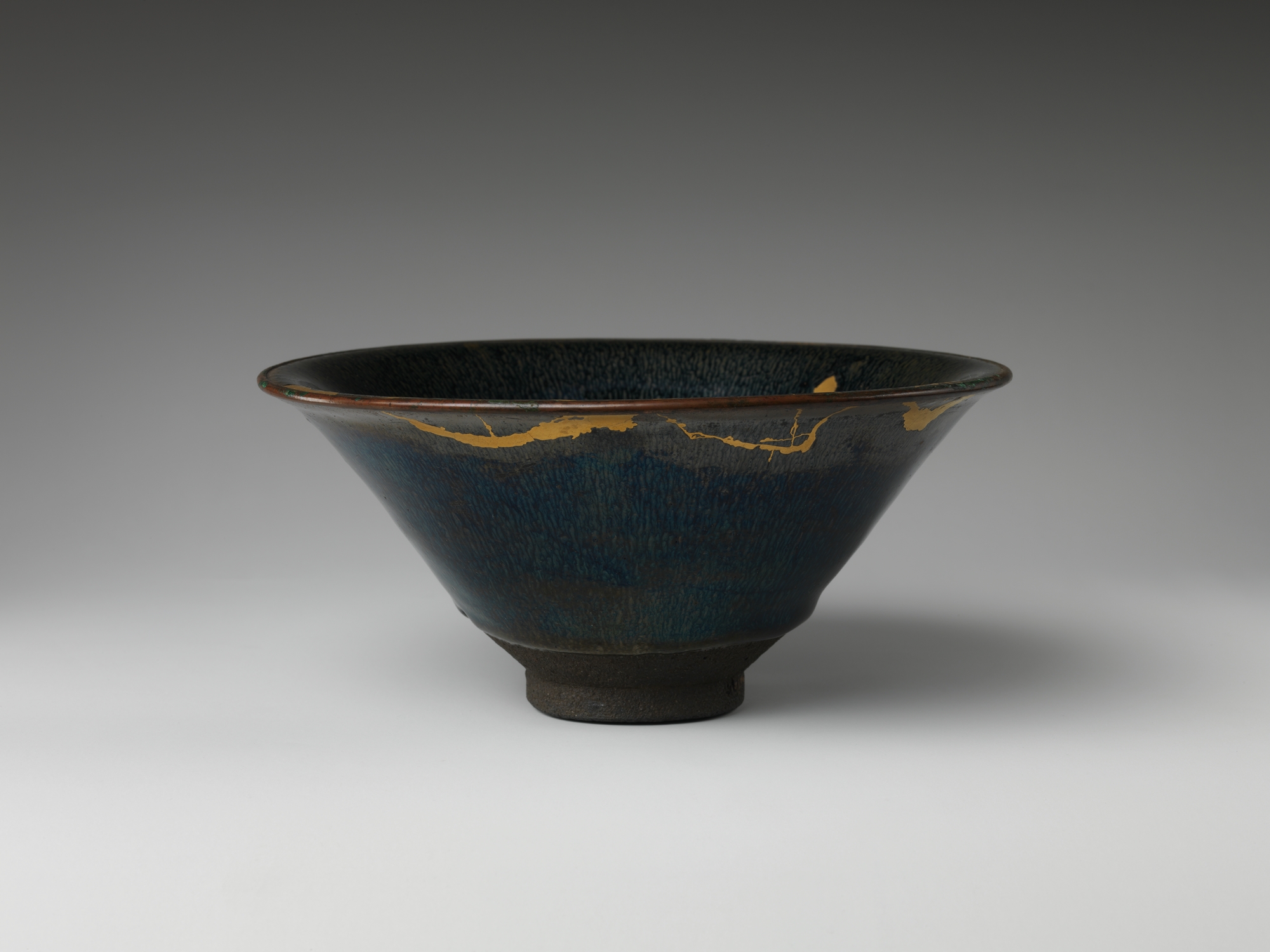
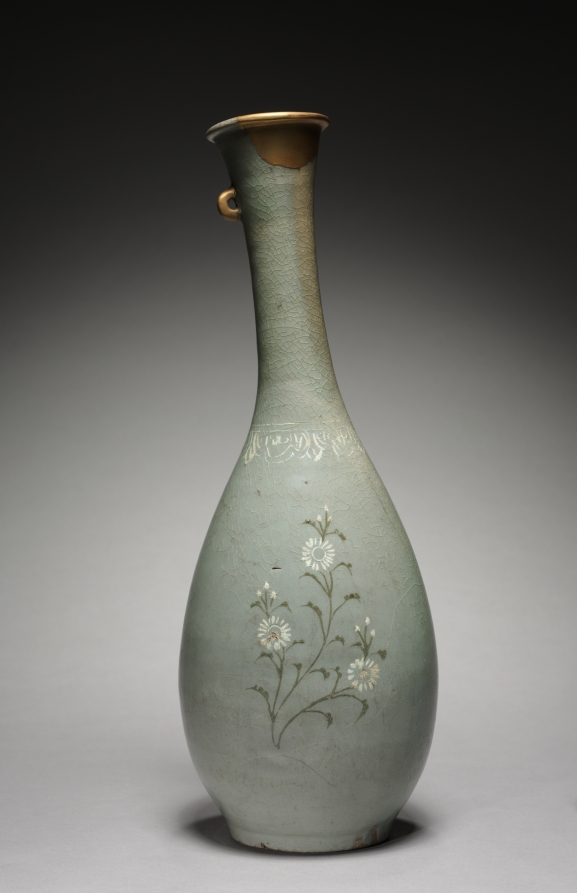
A porcelain bowl, broken then glued back together: the break has not disappeared. A thin line of lacquer follows it, hugs each shard set back into place; often, that line is heightened with gold. The object has a familiar air — it is kintsugi, which the West has turned into a small philosophy of the accepted crack.
The word is Japanese. The gesture is not only Japanese: to assemble shards with lacquer, to redraw a break, China practised it too, and today names this mending 金缮 jīn shàn — literally “to mend with gold.” But on this identical gesture, the old Chinese literate eye and the Japanese eye did not settle the same way. Where the Japanese tea ceremony raised the mended crack to the rank of precious object, the Chinese connoisseur, faced with the same operation, first saw something to denounce.
A single gesture, two verdicts. The gap is what concerns us.
Lacquer was already there
Mending a broken ceramic was, in China, nothing exotic. Authentication manuals list lacquer among the ordinary tools of the restoration workshop. 陈德富 Chén Défù, in a reference work on the authentication of ancient ceramics, describes a technique called 漆彩画 qī cǎi huà — the “coloured-lacquer painting”: on a cracked piece, one follows the line of the break and coats it with tinted lacquer. The stroke is prolonged, made into a stem, a leaf, a thread of a motif, until a painted decoration absorbs the crack and erases it within its design. The same author notes that in modern times, old metal staples have sometimes been removed from a porcelain and the holes filled with lacquer.
The technique exists, then, and it is Chinese — documented, even commonplace: a workshop know-how, not an importation. If kintsugi and jīn shàn differ, it is not that one possesses a gesture the other lacks. The divide is not played out on the technique. It is played out on the name given to it.
Mend, or deceive
“There are also those who take a broken vase, without decoration, glue it firmly with an adhesive, then, along the fracture lines, add flowers painted in hard enamels; such a counterfeit brings together an authentic body, a false glaze, and a patching — and does not let itself be unmasked at first glance. One cannot be too vigilant.”
许之衡 Xǔ Zhīhéng, a late-Qing literatus, writes these lines in the 饮流斋说瓷 Yǐn liú zhāi shuō cí — his “discourse on porcelain.” The passage is not found in a chapter on the art of mending: it is found in a chapter on fraud.
The word Xu Zhiheng uses is 作伪 zuò wěi — “to make the false,” to counterfeit. The charge must be read with precision. What he denounces is not the mending itself: it is the mending that hides itself. The fault, in his eyes, lies less in the crack than in the gesture that covers it with a decoration to pass a damaged piece off as an intact one. The wrong is done to whoever will look at the object next, buy it, classify it. In the framework of the connoisseur, where a ceramic’s value rests on its integrity and its authenticity, an invisible mend is a deception.
This is where Japan diverges. The tea ceremony does not ask the piece to pass itself off as intact: the mend is shown, its seam underlined with gold, and, declared as such, it deceives no one and can take on value. The same gesture, judged within two frameworks: fraud on one side, ornament on the other.
Not to look for Japan in China
Should one conclude from this that China stayed deaf to the beauty of the flaw? That would be a misreading. China did hold an aesthetic of the failed, but it lodged that aesthetic elsewhere.
It lodged it in the kiln. The 开片 kāi piàn, that fine network of cracks the glaze gives itself as it cools, was gathered up, classified, sought after; 马未都 Mǎ Wèidū describes it as a fully formed category of Chinese taste. But this is a crack of another nature: no one made it. It comes from the firing, without hand, without intention, and hides nothing, since it mends nothing. The crack from the kiln is received. The break from the fall, by contrast, is to be corrected — and to correct by hiding is to deceive.
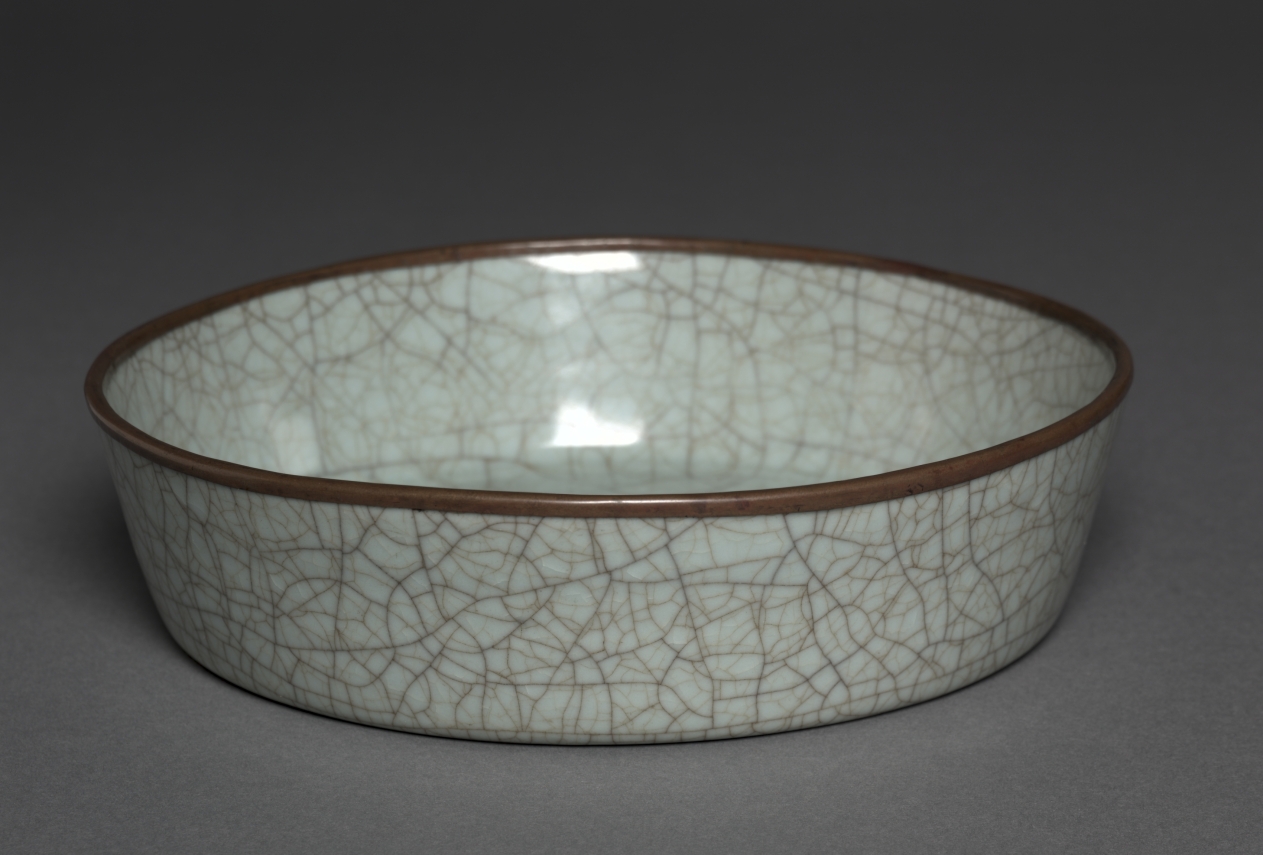
The two traditions share a gesture, not a verdict. To understand jīn shàn, then, it is better not to look there for a Chinese kintsugi. The Chinese beauty of the flaw exists — but it was born in the kiln. That is another piece, another story.
Sources
Textual sources
- 许之衡 (Xǔ Zhīhéng), 饮流斋说瓷 (Yǐn liú zhāi shuō cí), late Qing — early Republic. Passage from the chapter on counterfeits: an undecorated broken vase glued back together, then repainted with hard enamels along the fracture lines. Original text: “更有將光素破瓶用藥粘緊,復於裂痕之處加畫硬彩花繪於其上,此等作偽乃合真坯假彩及黏補兩者而一之,亦不易猝爾識破尤不可不慎者矣。“
Studies
- 陈德富 (Chén Défù), 中国古陶瓷鉴定基础 (Zhōngguó gǔ táocí jiàndìng jīchǔ) — “Foundations of the authentication of ancient Chinese ceramics,” Sichuan daxue chubanshe, Chengdu, 1993. The qī cǎi huà listed among the traditional restoration techniques; the native anchor for lacquer mending.
- 马未都 (Mǎ Wèidū), 马未都说收藏·陶瓷篇(上) (Mǎ Wèidū shuō shōucáng — Táocí piān) — “Ma Weidu on collecting: ceramics, volume 1,” Zhonghua shuju, Beijing, 2008. The kāi piàn as an aesthetic category of Chinese taste; counterpoint to the zuò wěi verdict (the Chinese beauty of the flaw, lodged in the kiln).
Featured object
- The Metropolitan Museum of Art, New York. Bowl with “Hare’s Fur” Decoration, Jian ware with Japanese gold-lacquer repair, Song dynasty (11th–12th century). Accession 25.60.32, Rogers Fund (1925). Open Access (CC0).
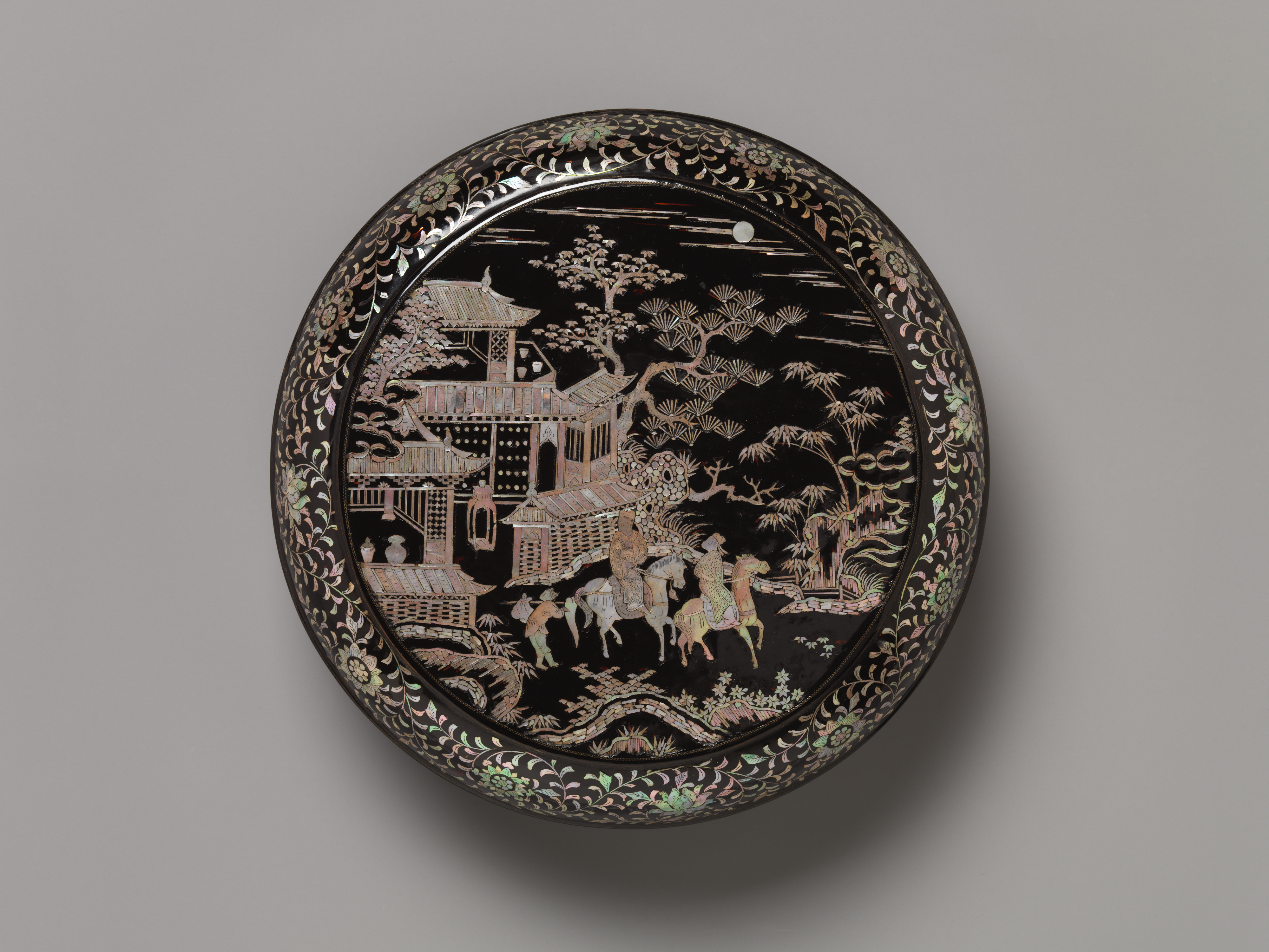
- The Metropolitan Museum of Art, New York. Box with Scenes of a Departure, black lacquer inlaid with mother-of-pearl, Ming dynasty (16th–17th century). Accession 2015.500.1.59a, b, Gift of Florence and Herbert Irving (2015). Open Access (CC0).
- The Cleveland Museum of Art. Bottle with Chrysanthemum Design, Korean Goryeo celadon with gold-lacquer repair, Goryeo dynasty (13th–14th century). Accession 1918.454. Open Access (CC0).
- The Cleveland Museum of Art. Basin, Guan ware with crackle, imperial kiln of Hangzhou, Southern Song dynasty (12th–13th century). Accession 1957.48. Open Access (CC0).
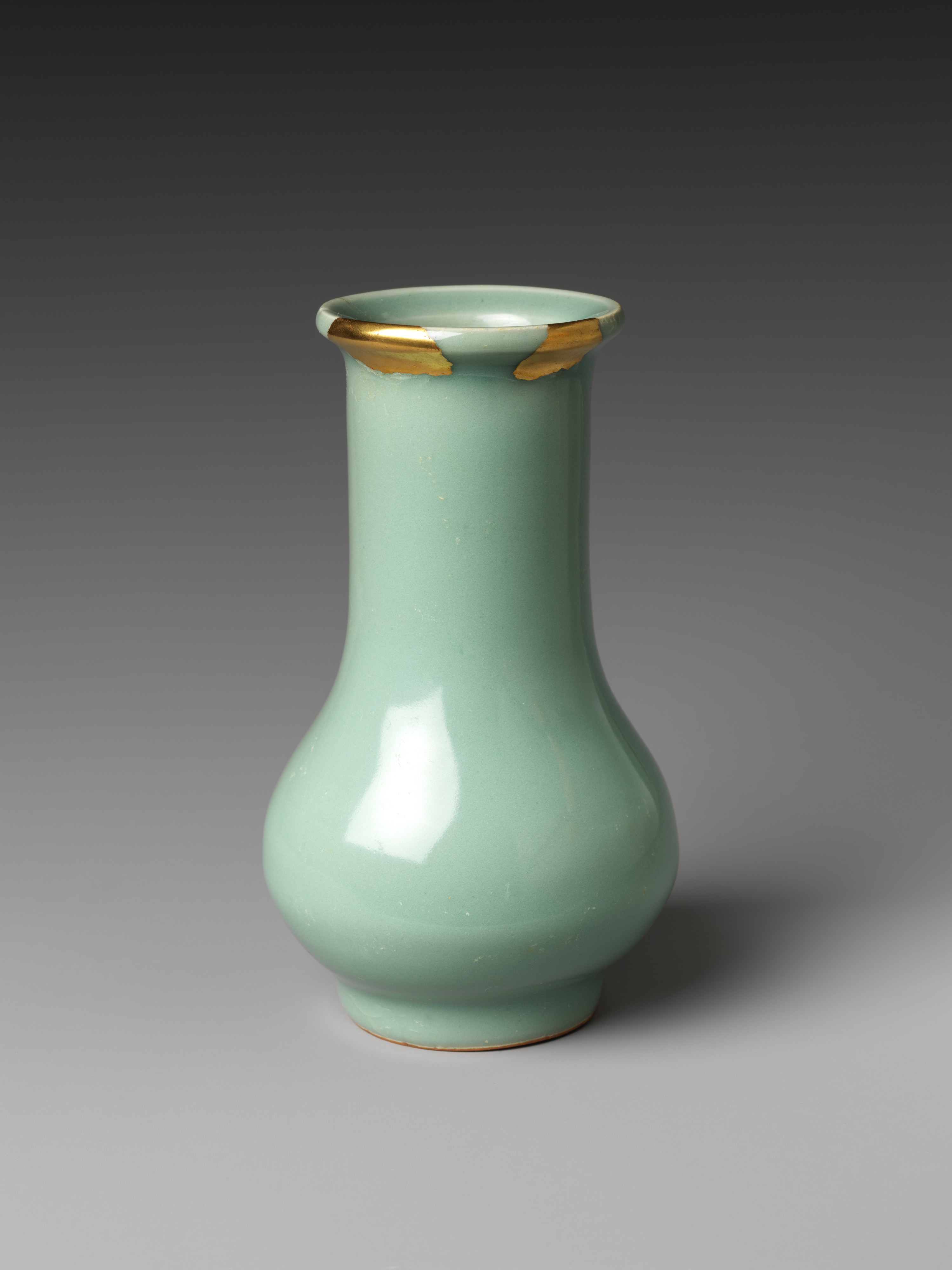
- The Metropolitan Museum of Art, New York. Vase, Longquan ware with gold-lacquer repair at the lip, Southern Song dynasty (13th century). Accession 34.113.13, Fletcher Fund (1934). Open Access (CC0).
China honoured the fault born in the kiln, never the break the hand repairs.
MOSAÏNK · May 31, 2026