It is not a window. It is a punctuation mark.
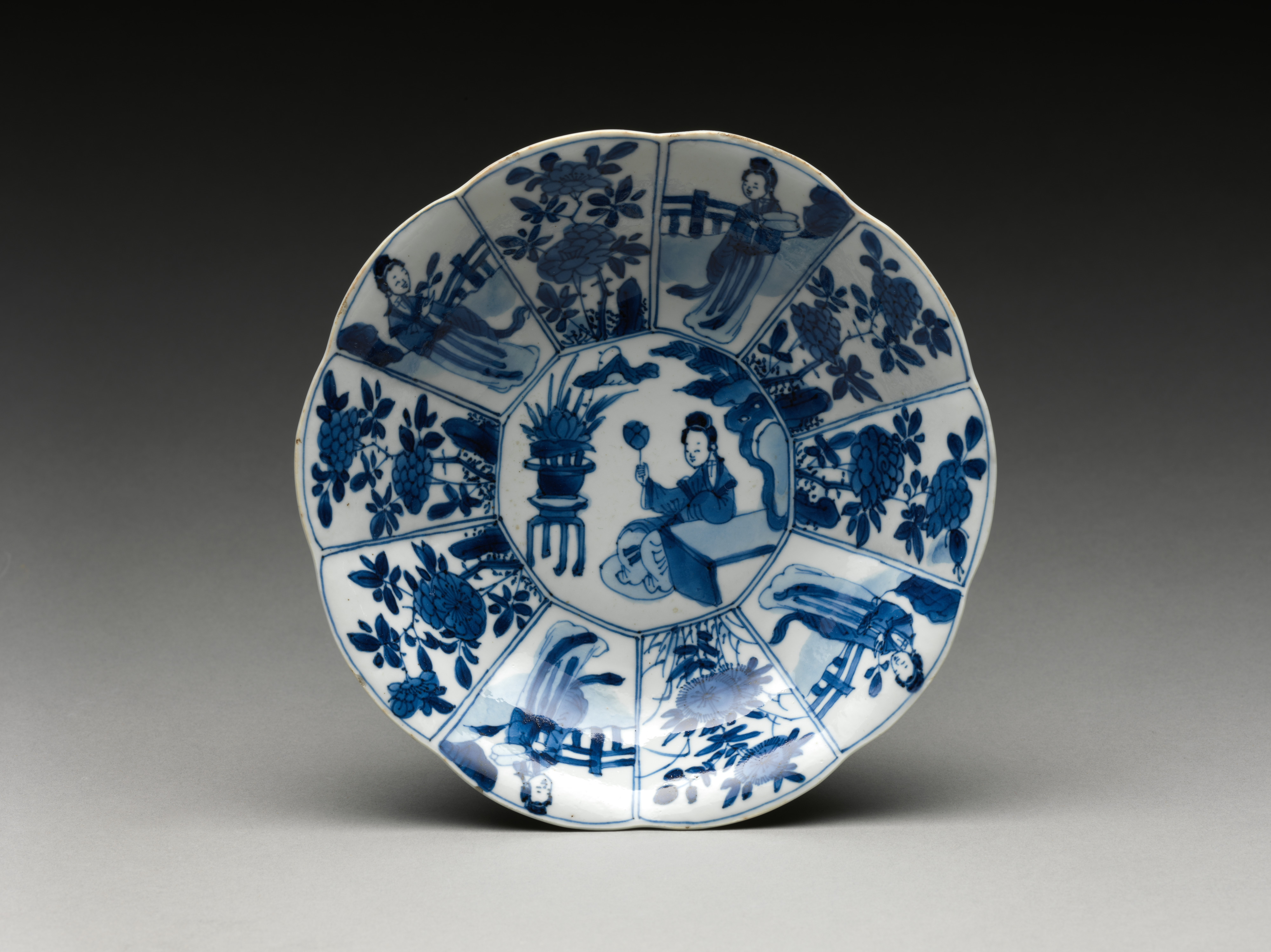
On this blue-and-white porcelain plate, a few shapes stand out from the ground: the outline of a fan, a circle, a lobe, each closed upon a small scene — here women in a garden, there a spray of flowers. Around them the decoration runs on without stopping, leaves and scrolls repeated identically. The eye darts at once to the inside of the shapes, to what they show; it does not ask what these shapes, for their part, are doing.
These frames bear a name: 开光 kāi guāng — the “reserved window,” which museums render as “cartouche.” They are usually taken for one more ornament — the most carefully worked part of the decoration, the place where the painter showed his skill. And what if it were the reverse? What if this frame added no motif at all, but only marked where to read?
A frame that cuts up the reading
Such a frame can take any form: fan, banana leaf, circle, square, lozenge, heart, peach. Set into the decoration, it fills with an image — a landscape, figures, a spray of flowers, sometimes a few lines of verse. It is also called 开窗 kāi chuāng, “to open a window”; at 景德镇 Jǐngdézhèn, the porcelain capital, the painters say 开堂子 kāi táng zi. On a jar, several of these windows answer one another all around the belly: turn the object, and the scenes follow one upon another like the episodes of a single sentence.
What such a frame does is a partition. Inside, a scene; outside, the 锦地 jǐn dì, the “brocade” ground that runs from edge to edge without ever breaking off. The outline cuts: colour, density, subject all change at once as the line is crossed. On a surface where everything flows, it sets a stop. The eye, which was following the thread of the decoration, catches on the outline and slows — long enough to look, apart, at what lies framed.
The ground is not neutral for all that. The denser it is — tight sprinkling, motifs repeated without end — the more the reserve stands out; the frame needs a continuous decoration to detach itself, as a sentence needs words for the comma to have meaning. Fullness calls for the cut, the cut organizes the fullness. Where the ground tightens, the reserve leaps out; where it loosens, it almost fades away.
A sign that figures nothing
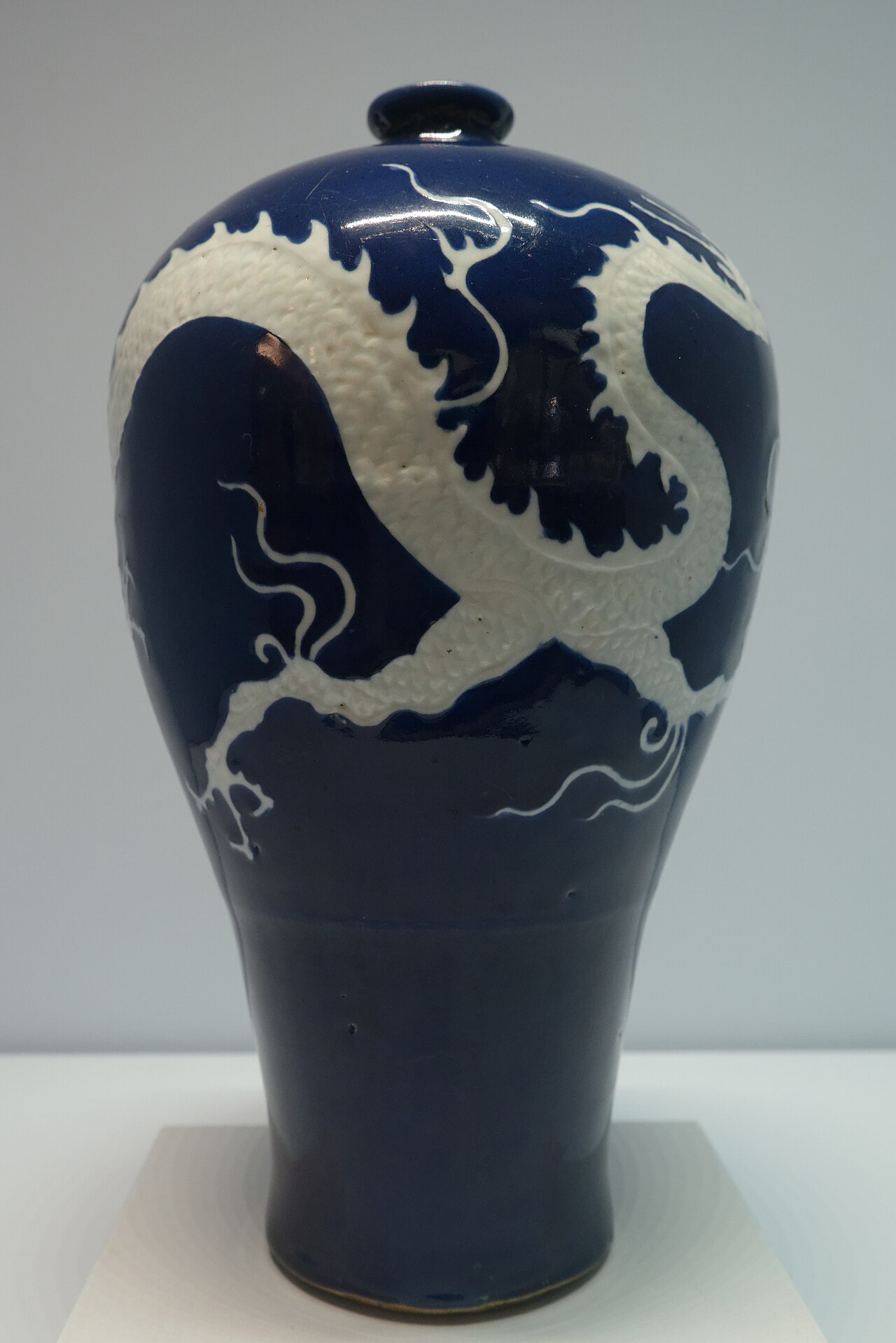
It is here that the frame parts company with the other motifs of this grammar. The dragon, the rebus of wishes, the reign mark, the children at play: each is a subject, something figured that one learns to read as a sign. The frame, for its part, figures nothing. It does not represent a thing of the world; it acts upon the other representations.
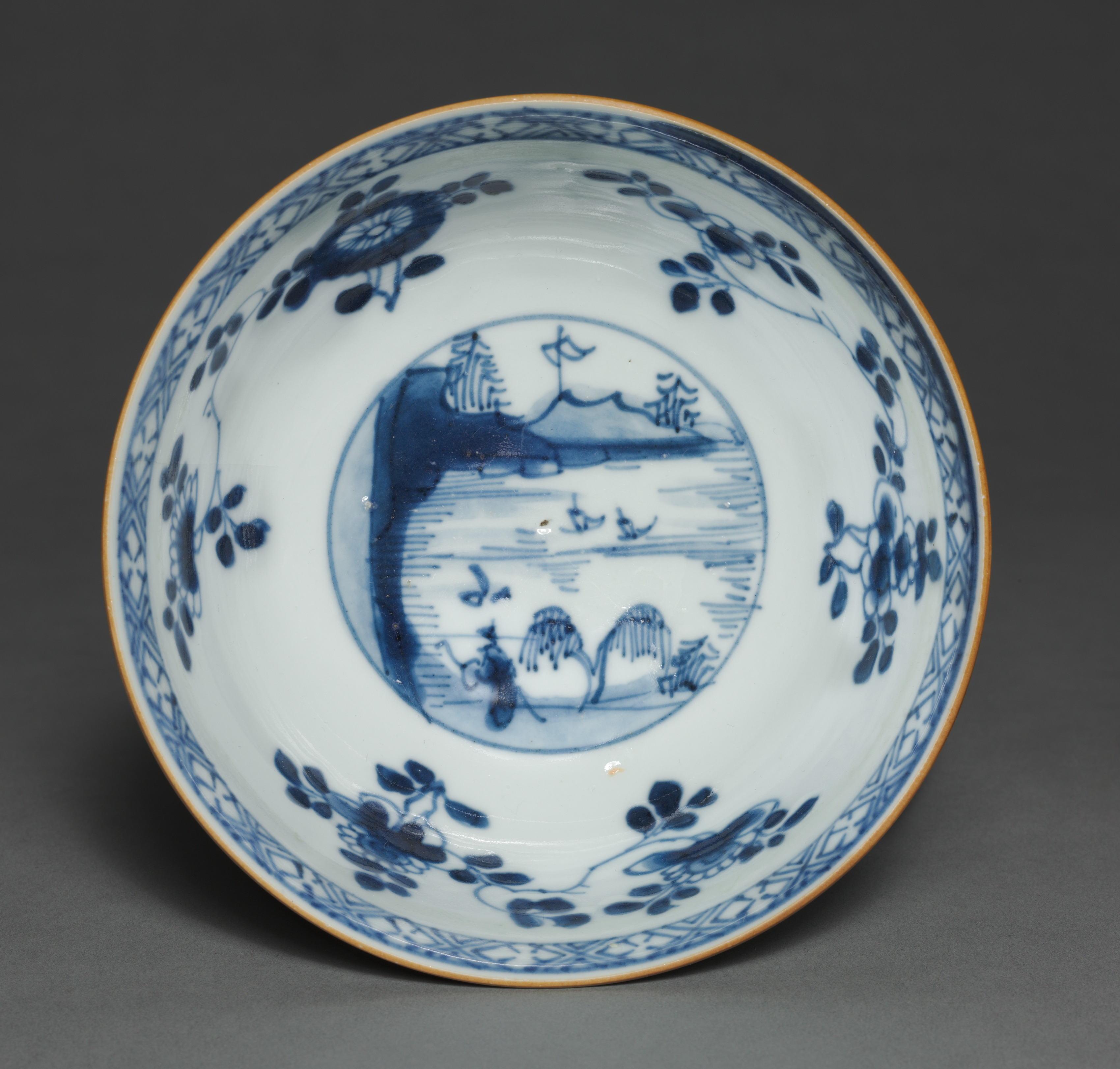
A 团花 tuán huā, a flowered medallion, remains a motif, a round and closed image; the reserve is not that. It adds no meaning: it organizes the meanings already there. It fixes the order and the pauses, where the eye enters and where it stops. To say that it is “only a frame,” and so not a true motif, is to forget that punctuation too belongs to language — and that, without it, the other motifs would never form a sentence.
This way of framing is old. As early as the Tang, stereotyped reserves begin to appear; under the Song and the Jin, the popular kilns — 磁州窑 Cízhōu yáo, 吉州窑 Jízhōu yáo, 耀州窑 Yàozhōu yáo — cover jars and bowls with them, often with a rapid brush. Under the Yuan, the Ming and then the Qing, Jingdezhen makes a system of it: the reserves range into friezes, answer one another in pairs, sometimes nest one within another.
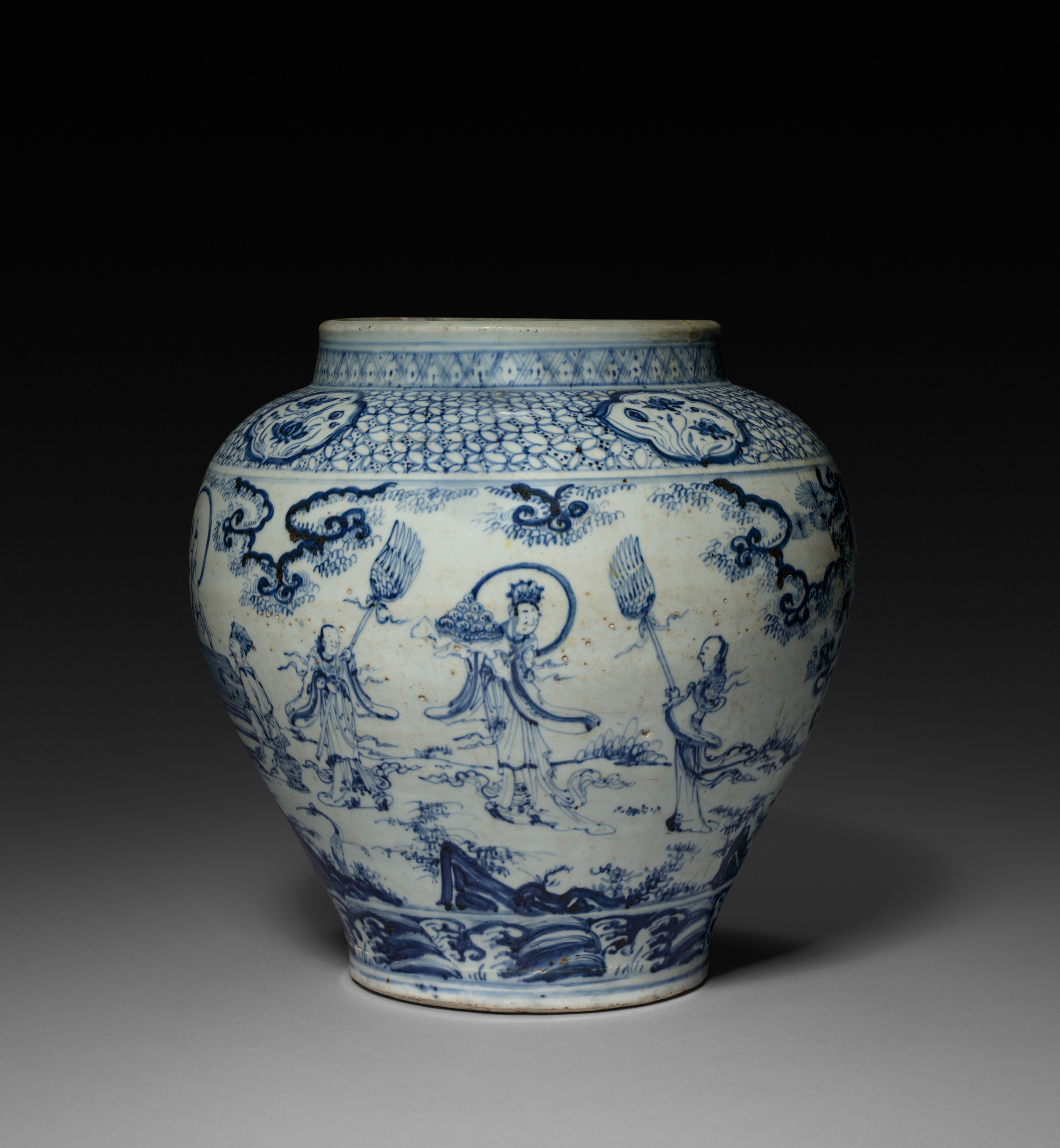
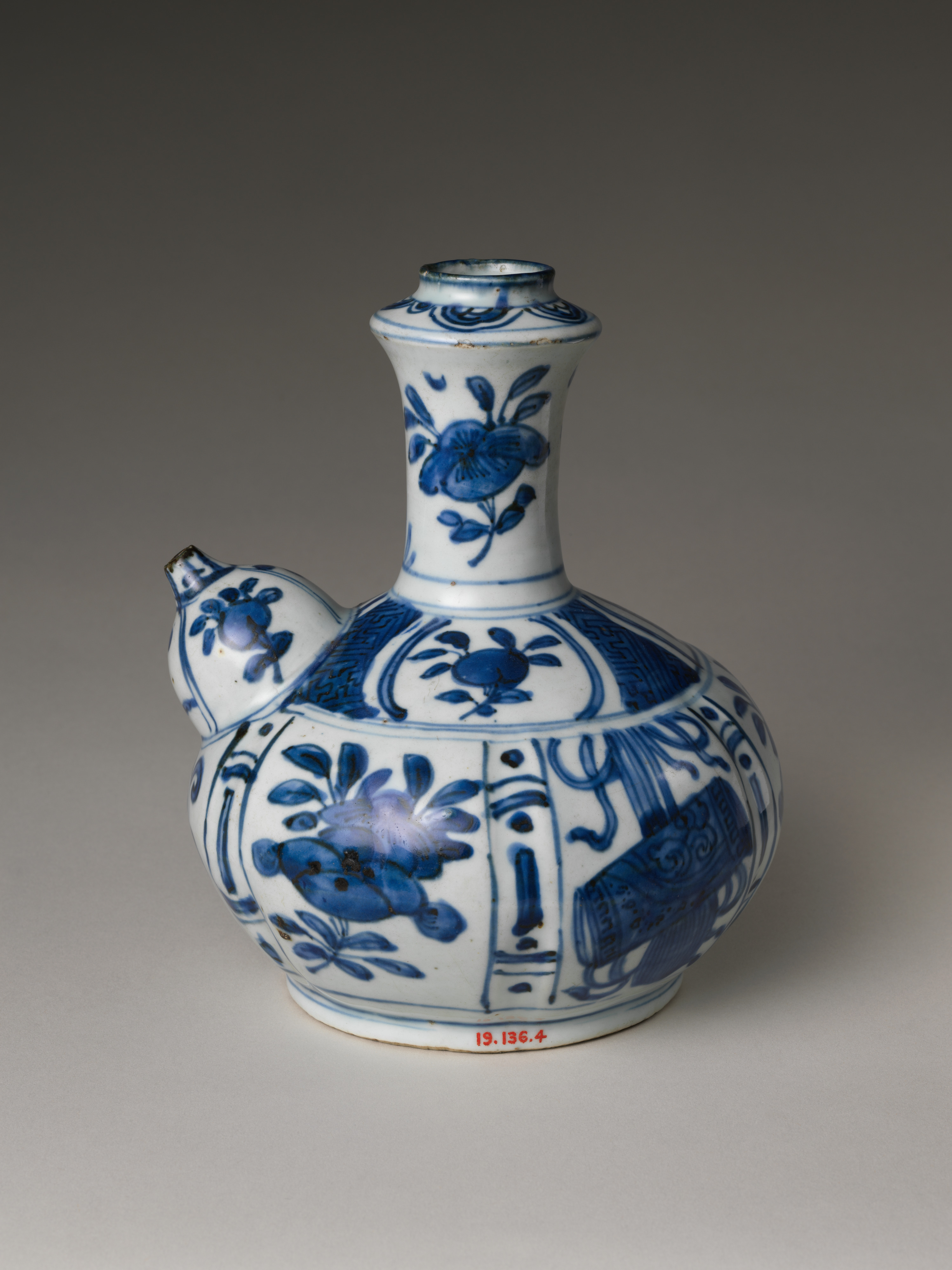
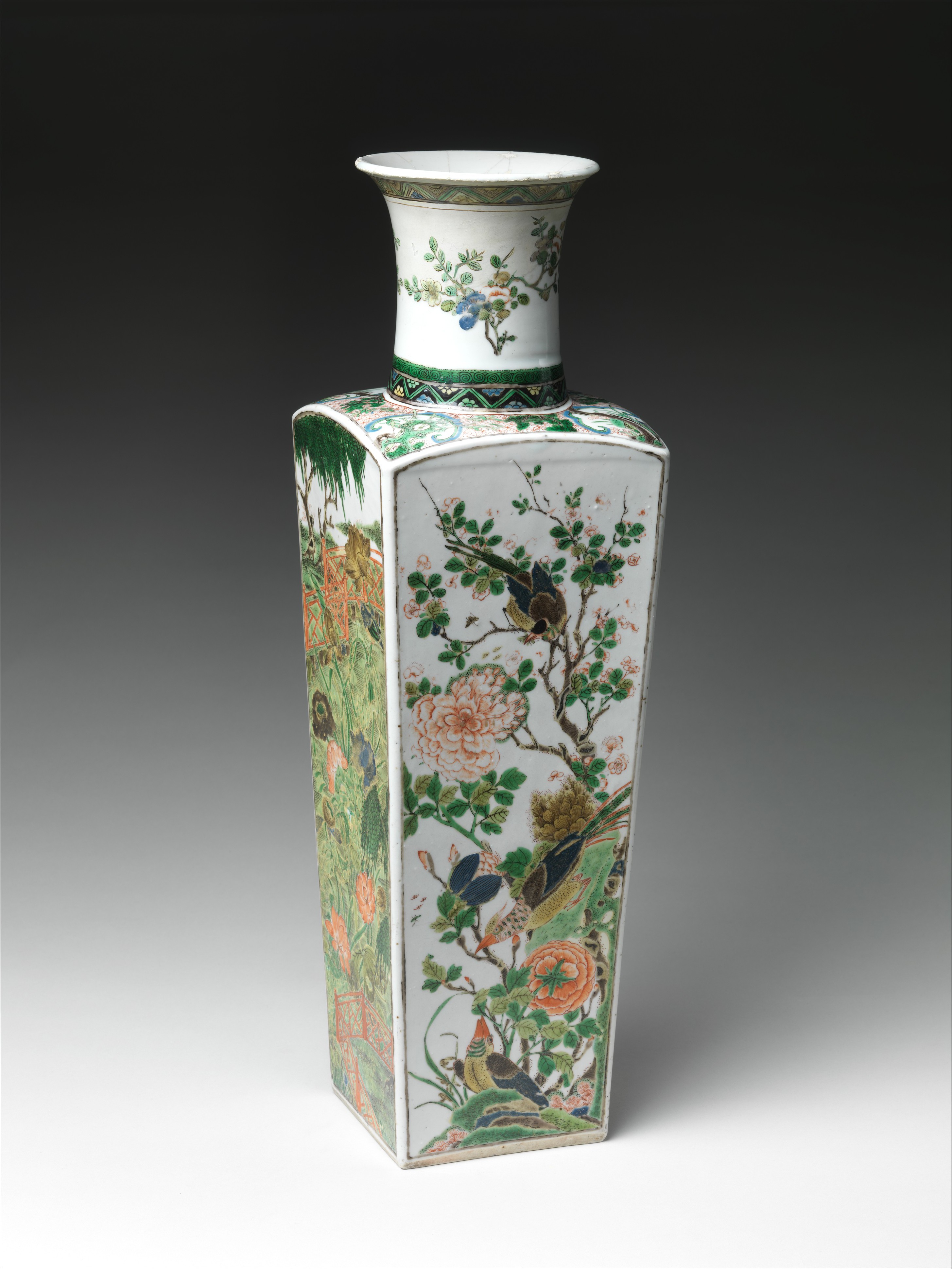
The device sometimes follows its logic to the end. On certain late pieces, what the reserve encloses is not a scene but a text: a few painted characters, framed amid the flowers. There the frame says, literally, what it has always said: here, one reads.
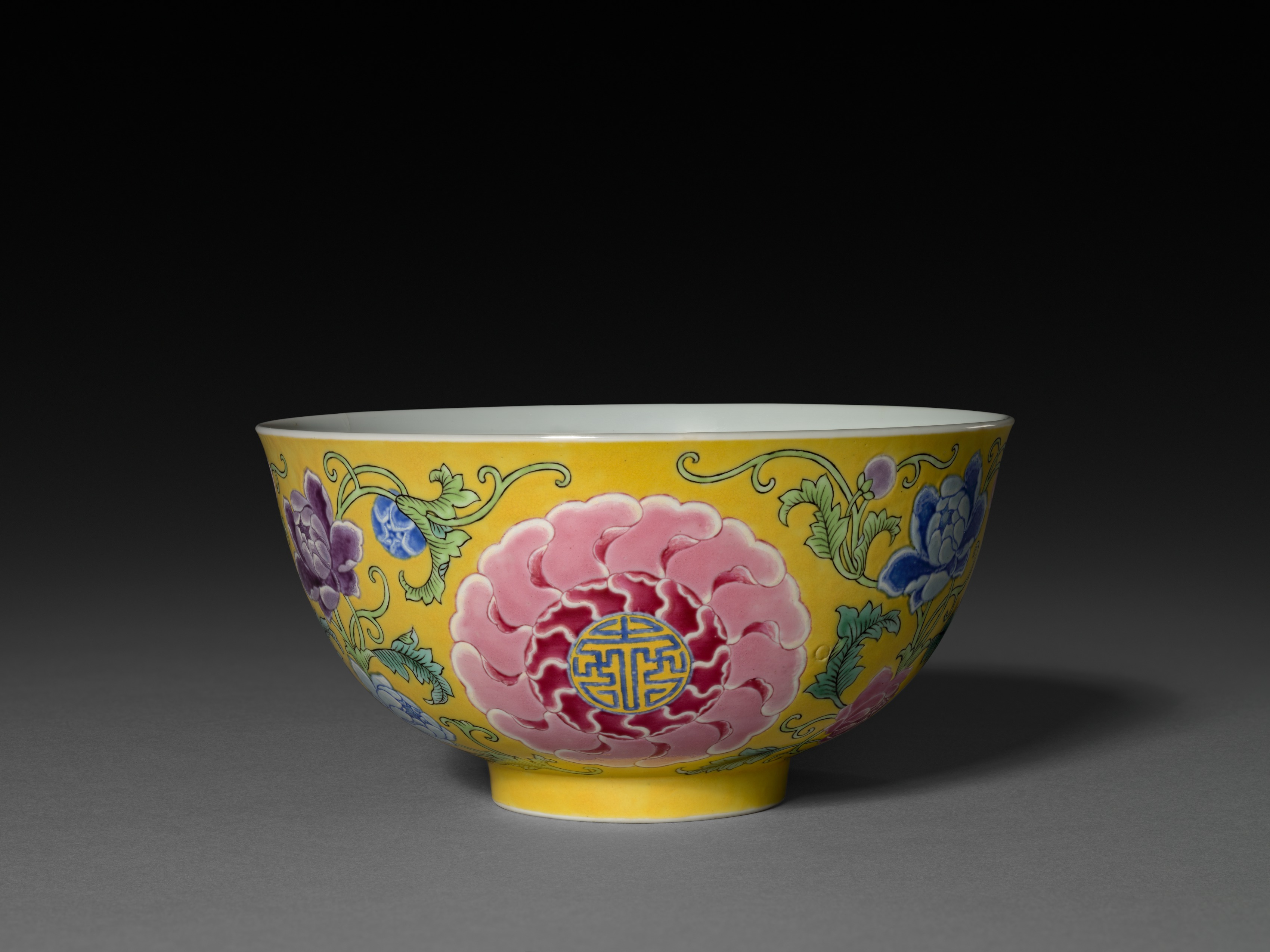
To read, not to look
Once the frame is recognized, the decoration of a porcelain changes its status. The running frieze, the sprinkling of flowers, the “brocade” ground are no longer a continuous sheet to contemplate: they are the blanks and the links between passages that the reserve has cut out. To recognize the reserve is to stop seeing a carpet of ornaments and to see a page — full zones, empty zones, a path traced for the eye. The most discreet of motifs, a simple outline, reveals itself as the punctuation of a whole visual language: it does not ask to be admired, it asks to be read.
Sources
Textual sources
- This fragment cites no ancient textual source: 开光 is a term of composition and workshop practice, whose meaning and history are established here from the studies and museum lexicography cited below.
Studies
- 广东大观博物馆 (Guangdong Daguan Museum), 《什么是瓷器”开光”?》 (“What is kaiguang on porcelain?”). Definition, forms and chronology of the device; workshop names (开窗 / 开堂子).
- 无锡博物院 (Wuxi Museum), 《瓷器的”开光”艺术》 (“The art of kaiguang on porcelain”). Its spread through the popular kilns of the north; examples of objects with reserves.
Featured object
- The Metropolitan Museum of Art, New York. Plate with cartouches of women and plants, Jingdezhen porcelain with underglaze blue decoration, Qing dynasty, Kangxi reign (1662–1722). Accession 18.61.2. Public domain.
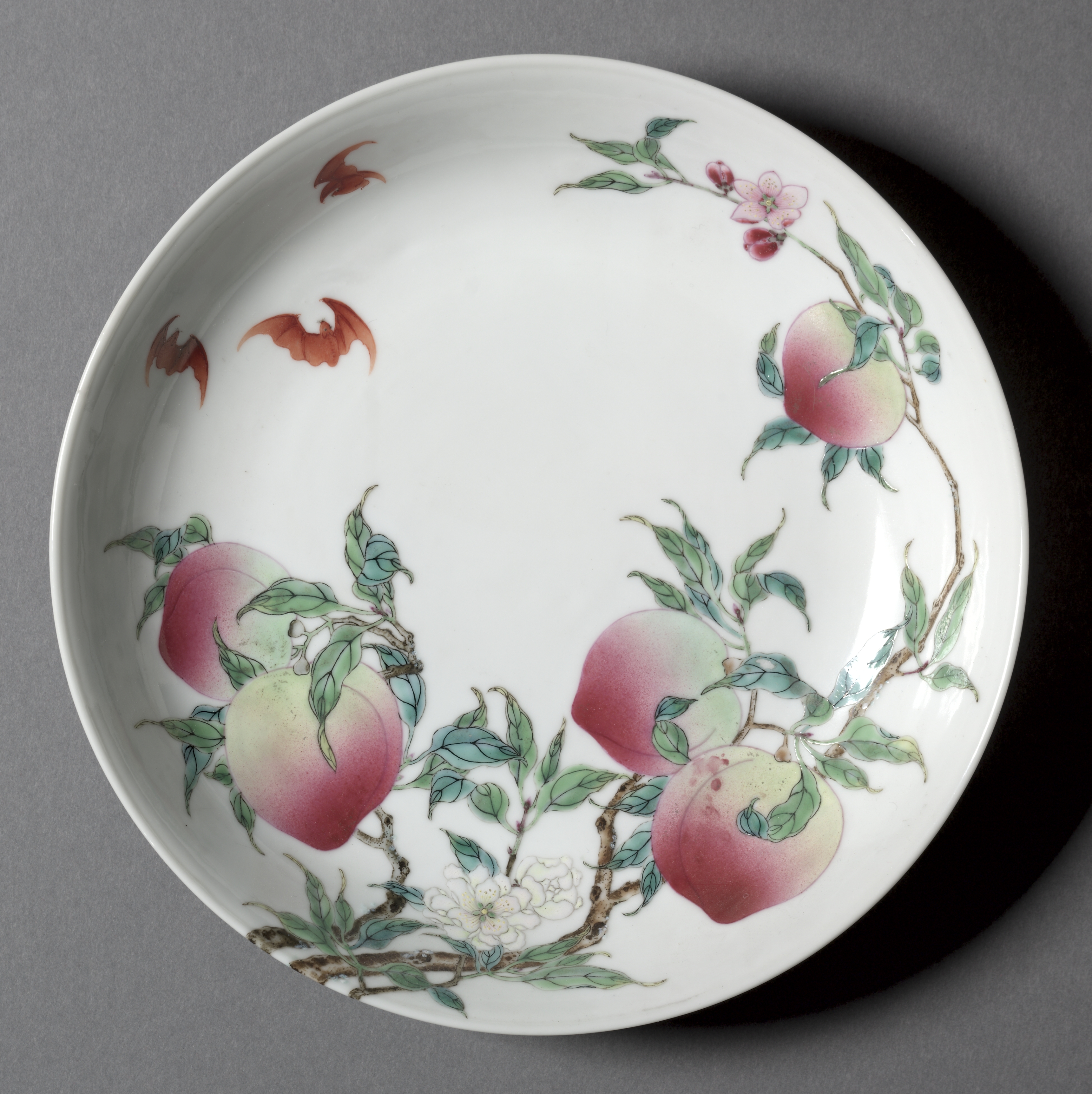
- The Cleveland Museum of Art. Bowl with Floral Sprays and Medallions with Figure in Landscape, porcelain, Qing dynasty, Yongzheng reign (1723–1735). Accession 1989.313. Open Access (CC0).
- The Cleveland Museum of Art. Jar (Land of the Daoist Immortals), blue-and-white porcelain, Ming dynasty (about 1400). Accession 1972.63. Open Access (CC0).
- The Metropolitan Museum of Art, New York. Kendi with flowers and fruits, “kraak” blue-and-white porcelain, Ming dynasty, Wanli reign (1573–1620). Accession 19.136.4. Public domain.
- The Metropolitan Museum of Art, New York. Vase with flowers and birds of the four seasons, famille verte porcelain, Qing dynasty, Kangxi reign (1662–1722). Accession 14.40.91. Public domain.
- The Cleveland Museum of Art. Bowl with Floral Sprays and Inscribed Medallions, famille rose enamelled porcelain, Qing dynasty (19th century). Accession 1964.215. Open Access (CC0).
The frame adds no motif: it says where to read.
MOSAÏNK · July 17, 2026