From Tang to Qing, a thousand years in the hand. Six dynasties, ten pieces — the bowl one holds,
the cup one lifts, the teapot one cherishes.
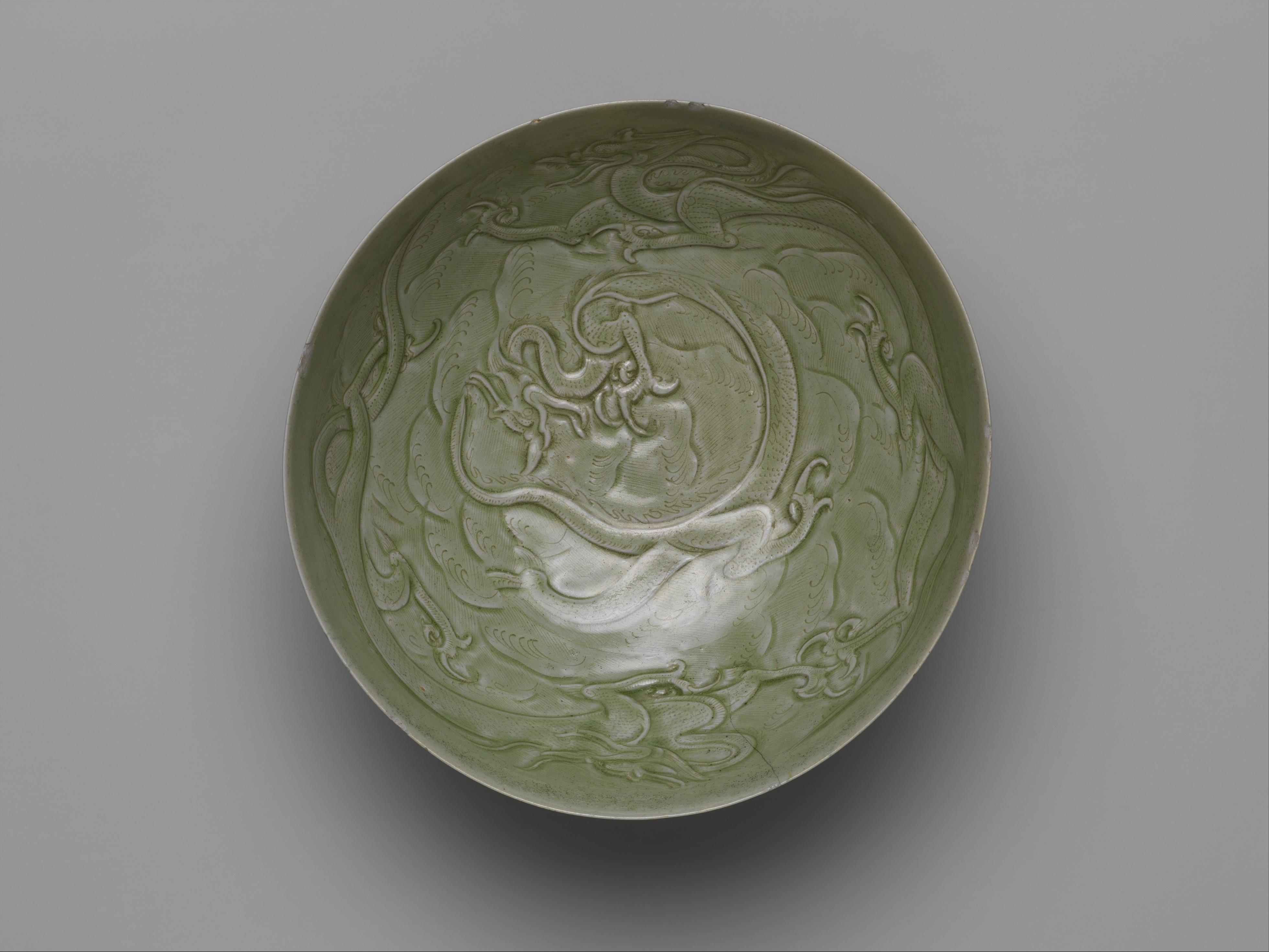
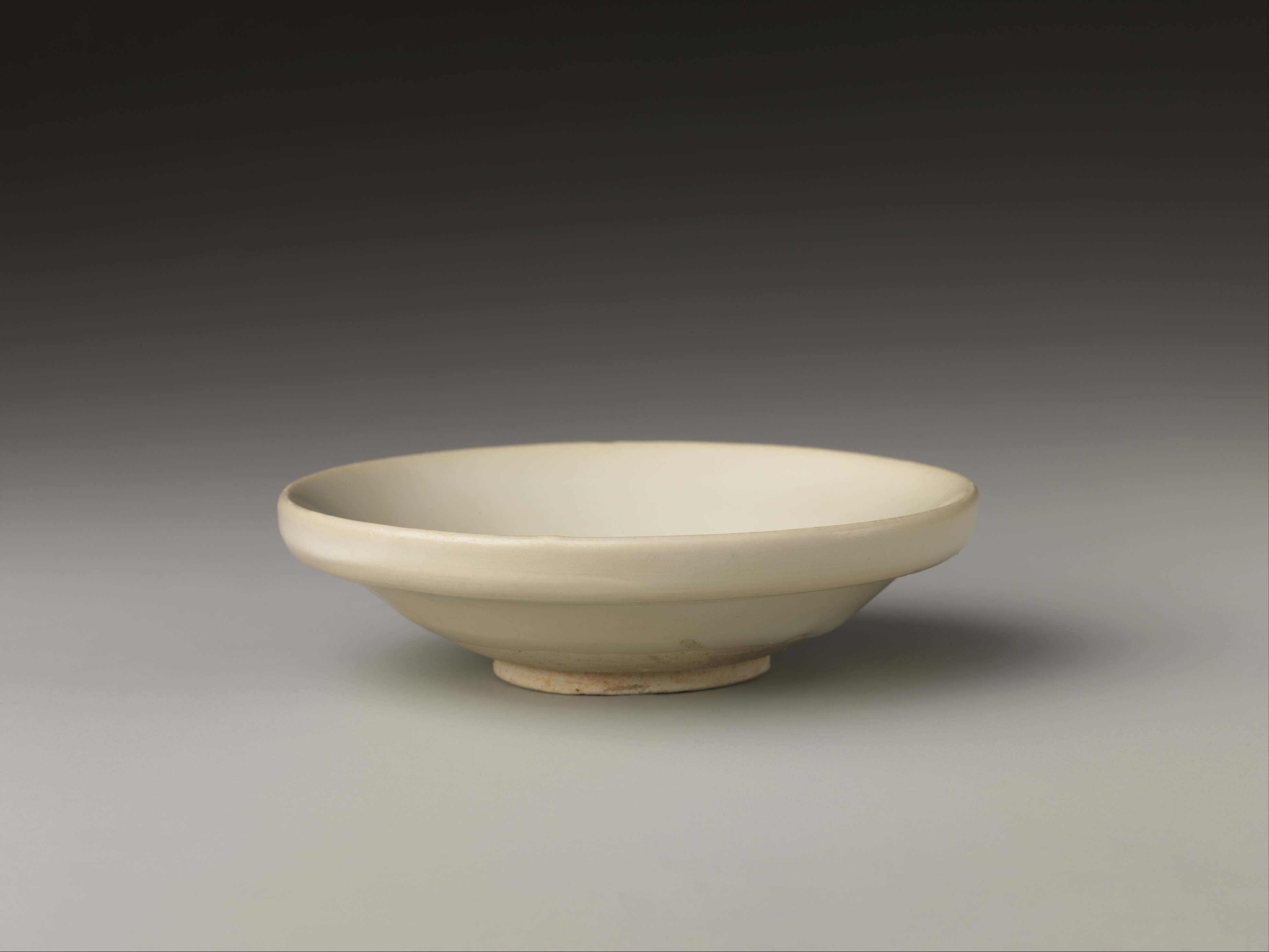
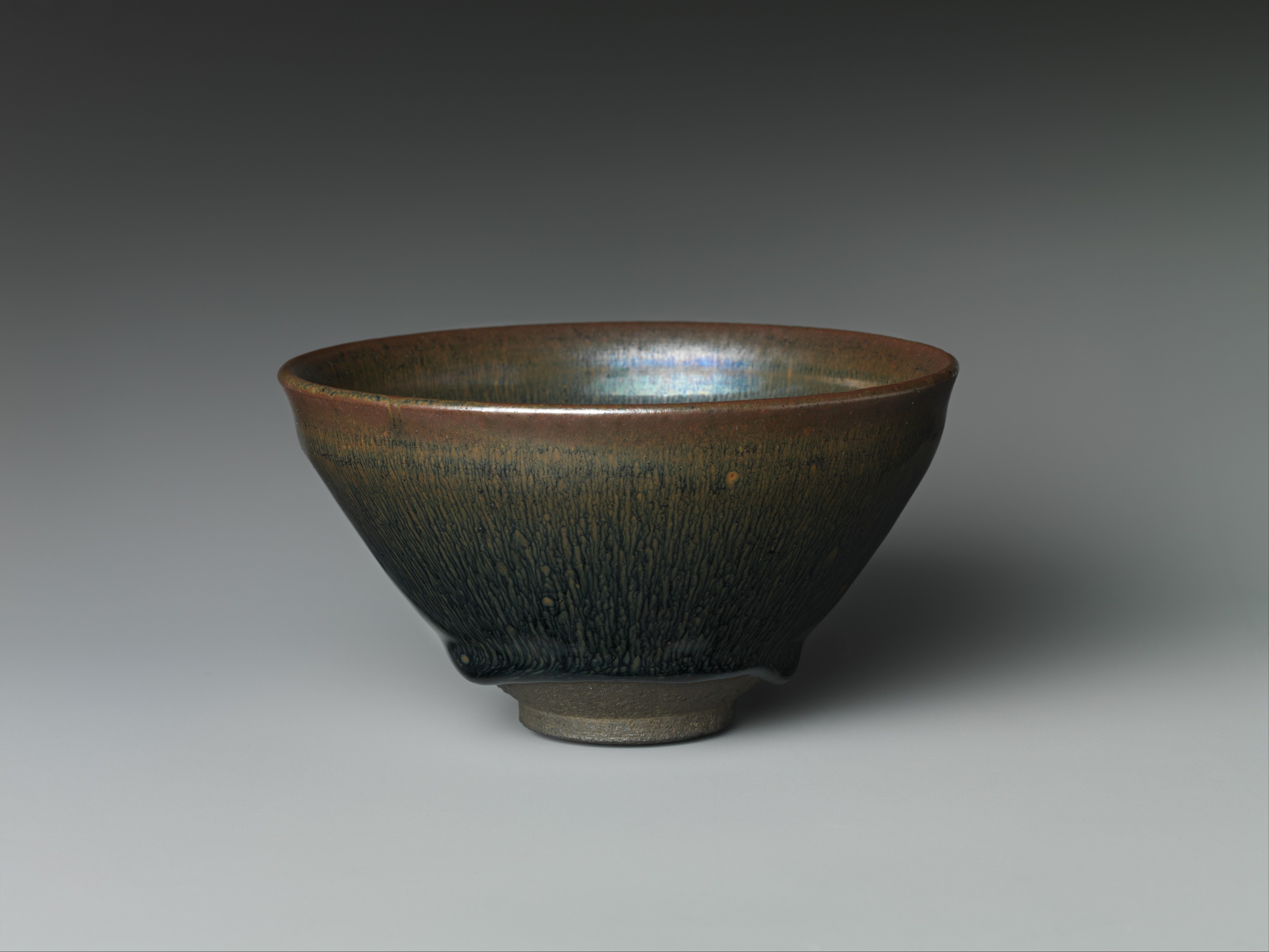
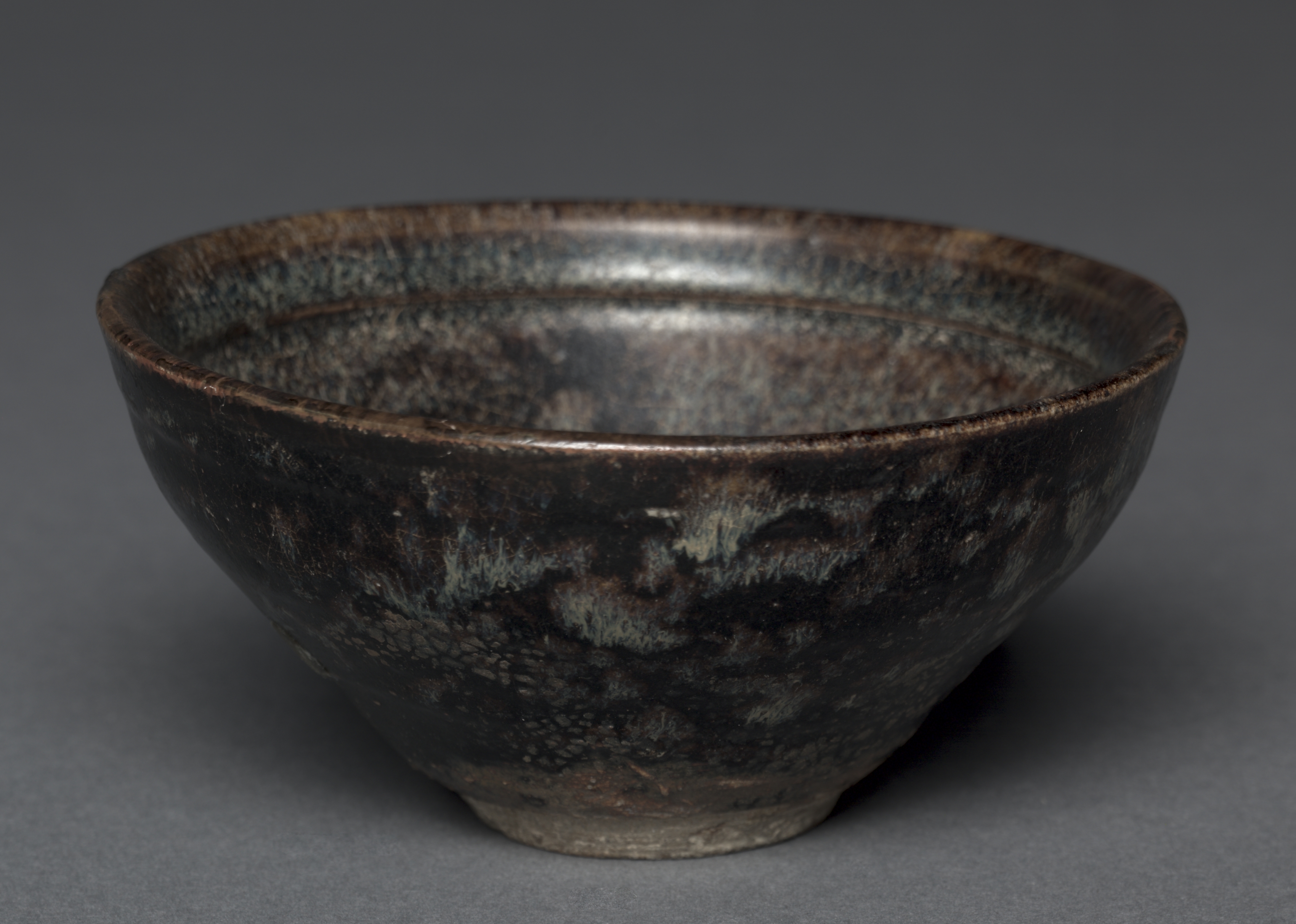
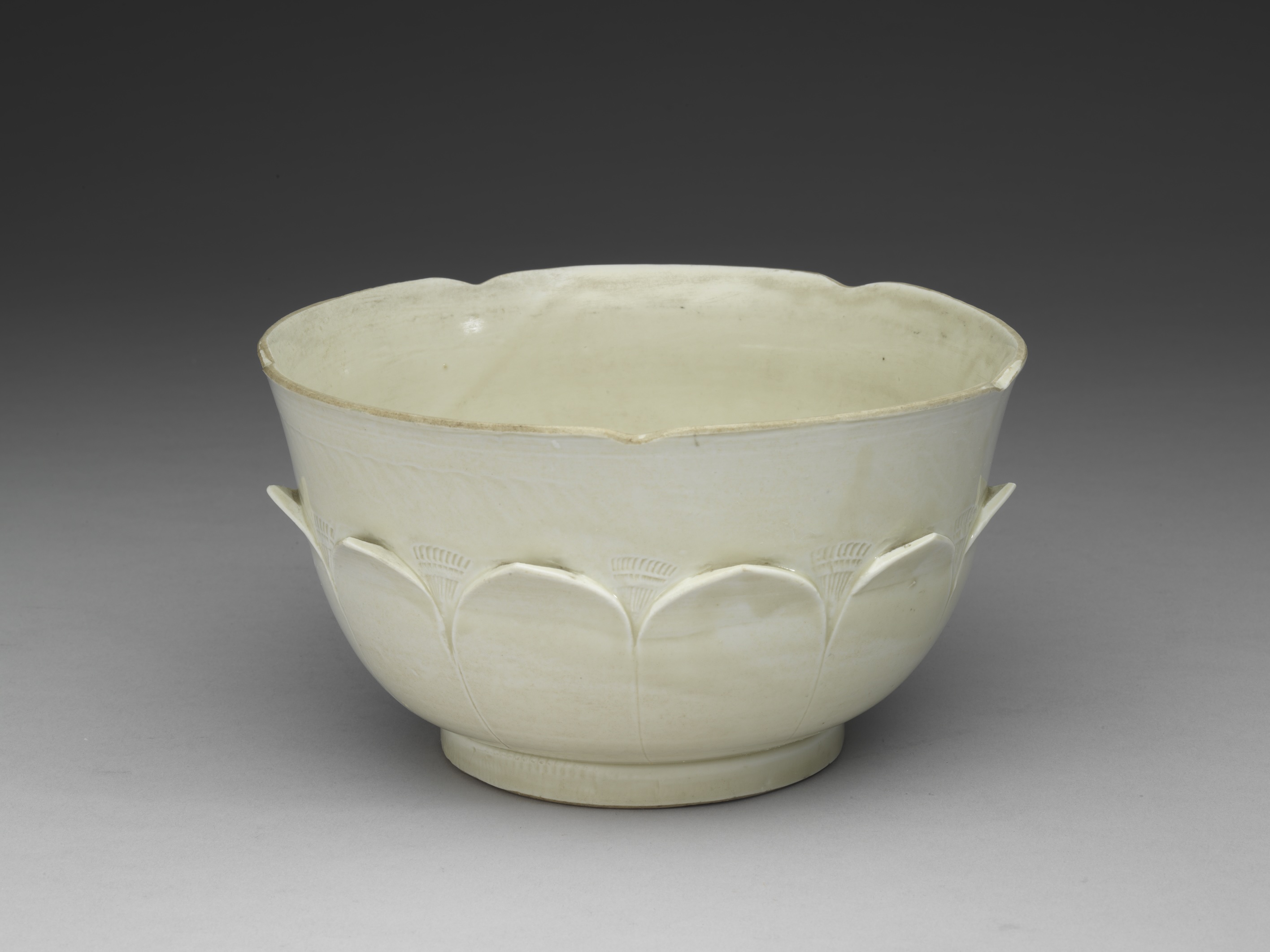
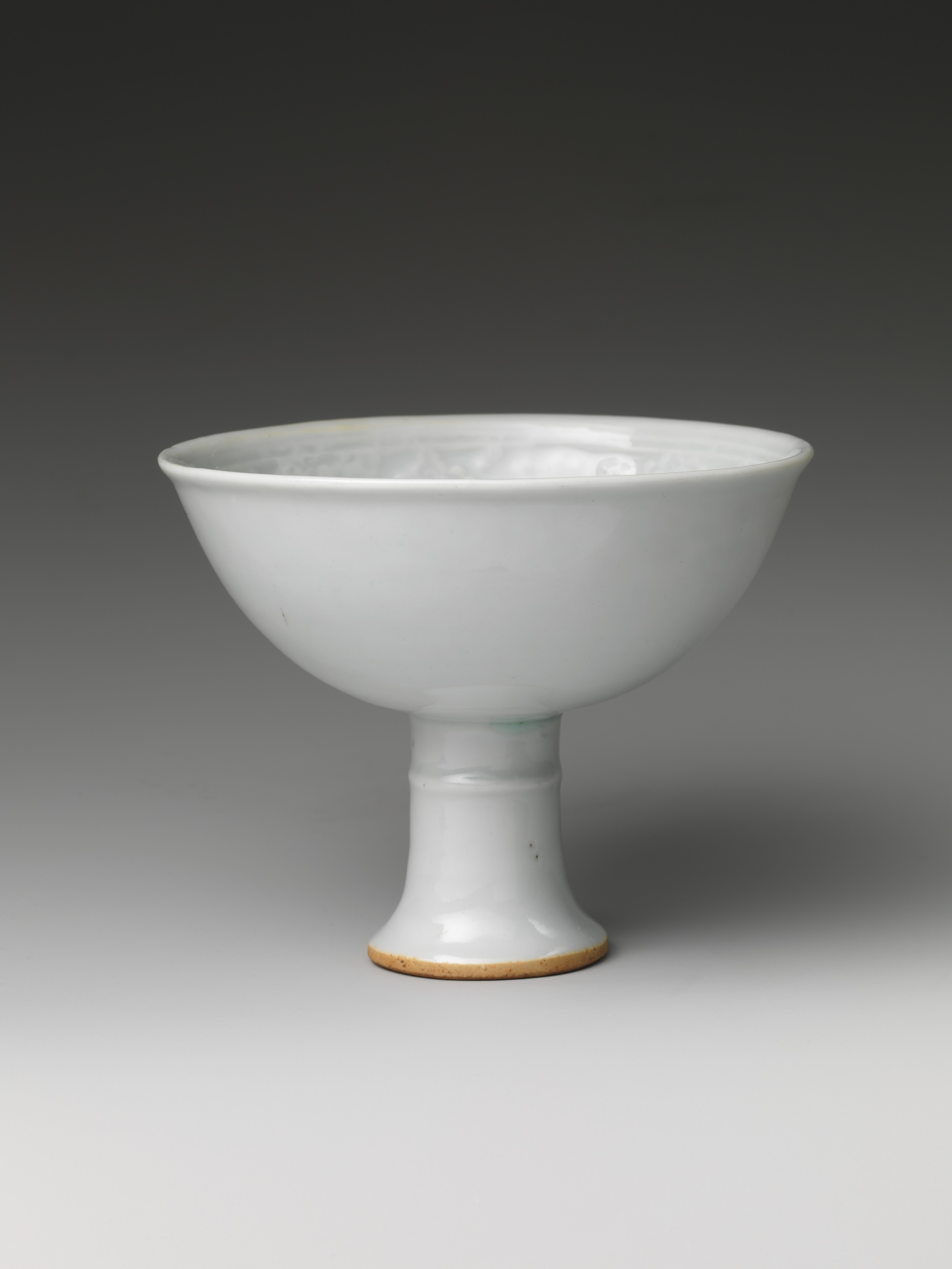
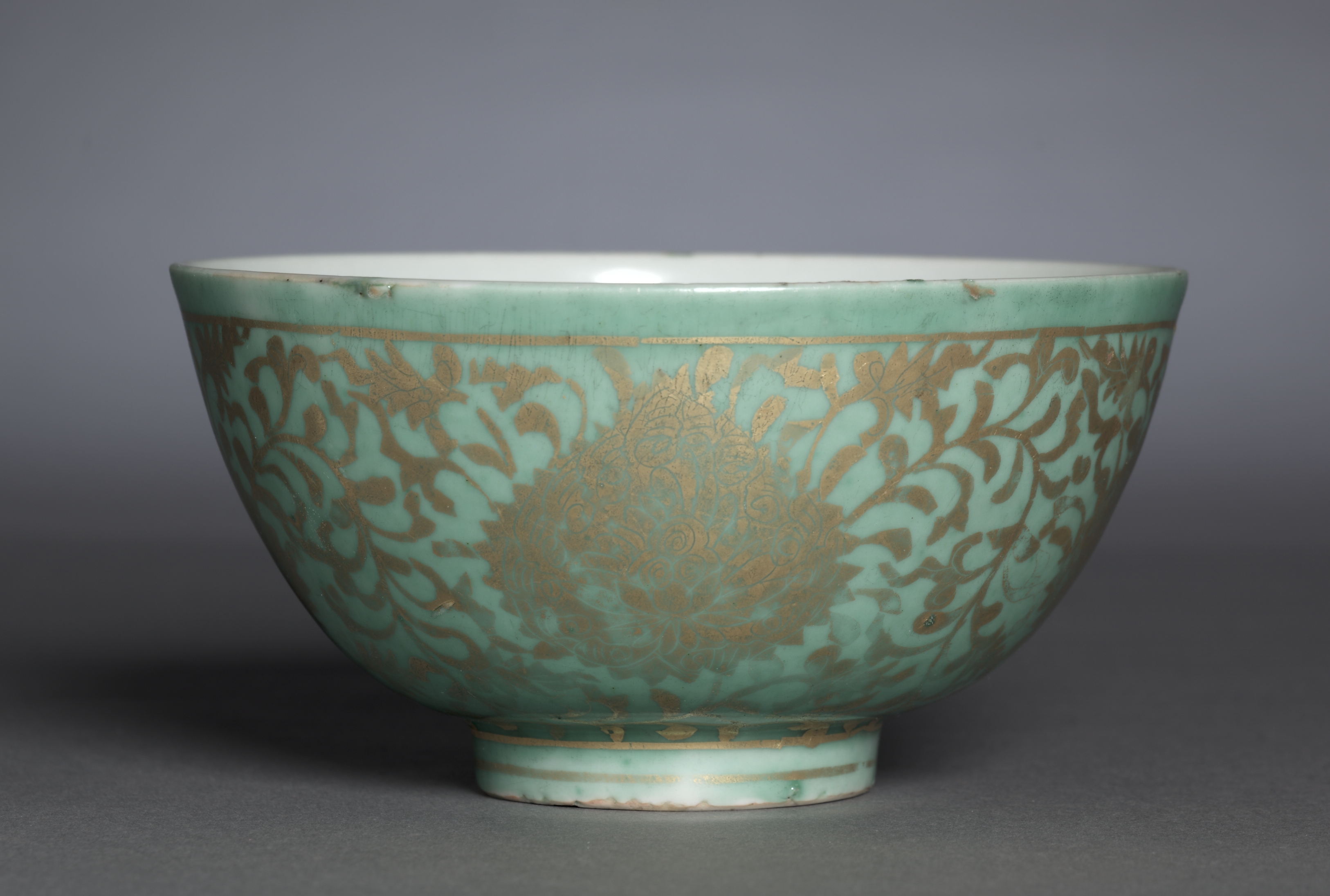
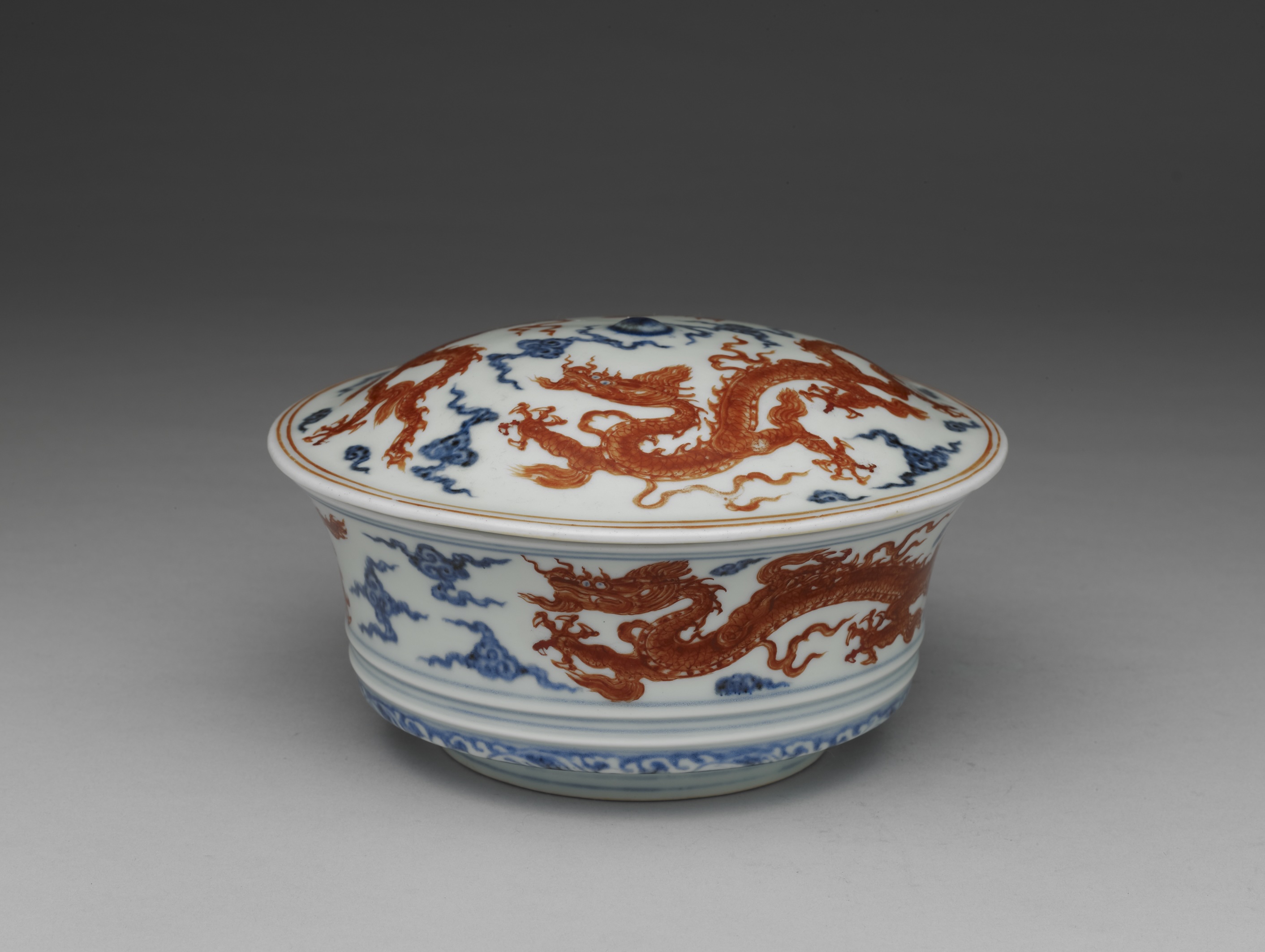
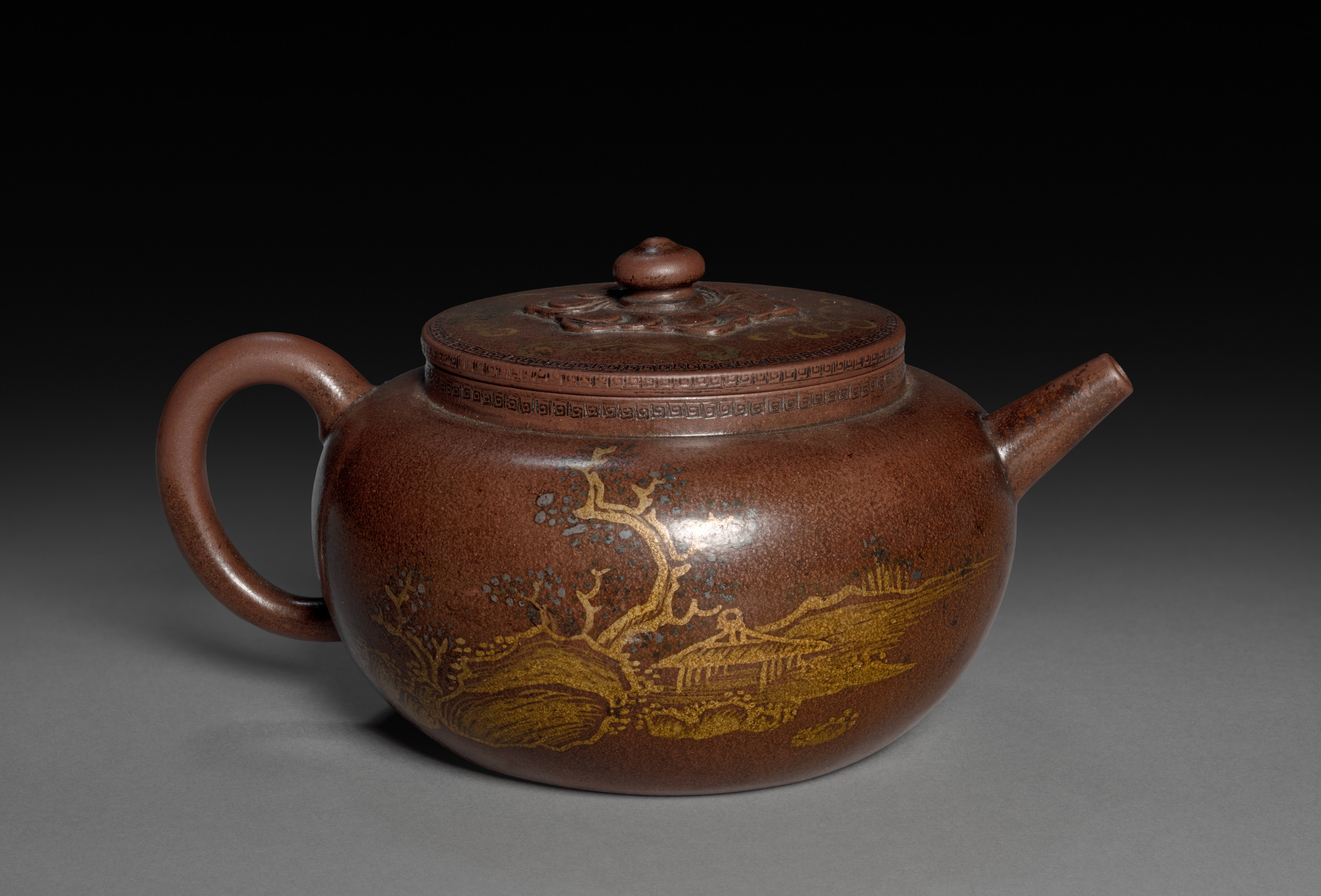
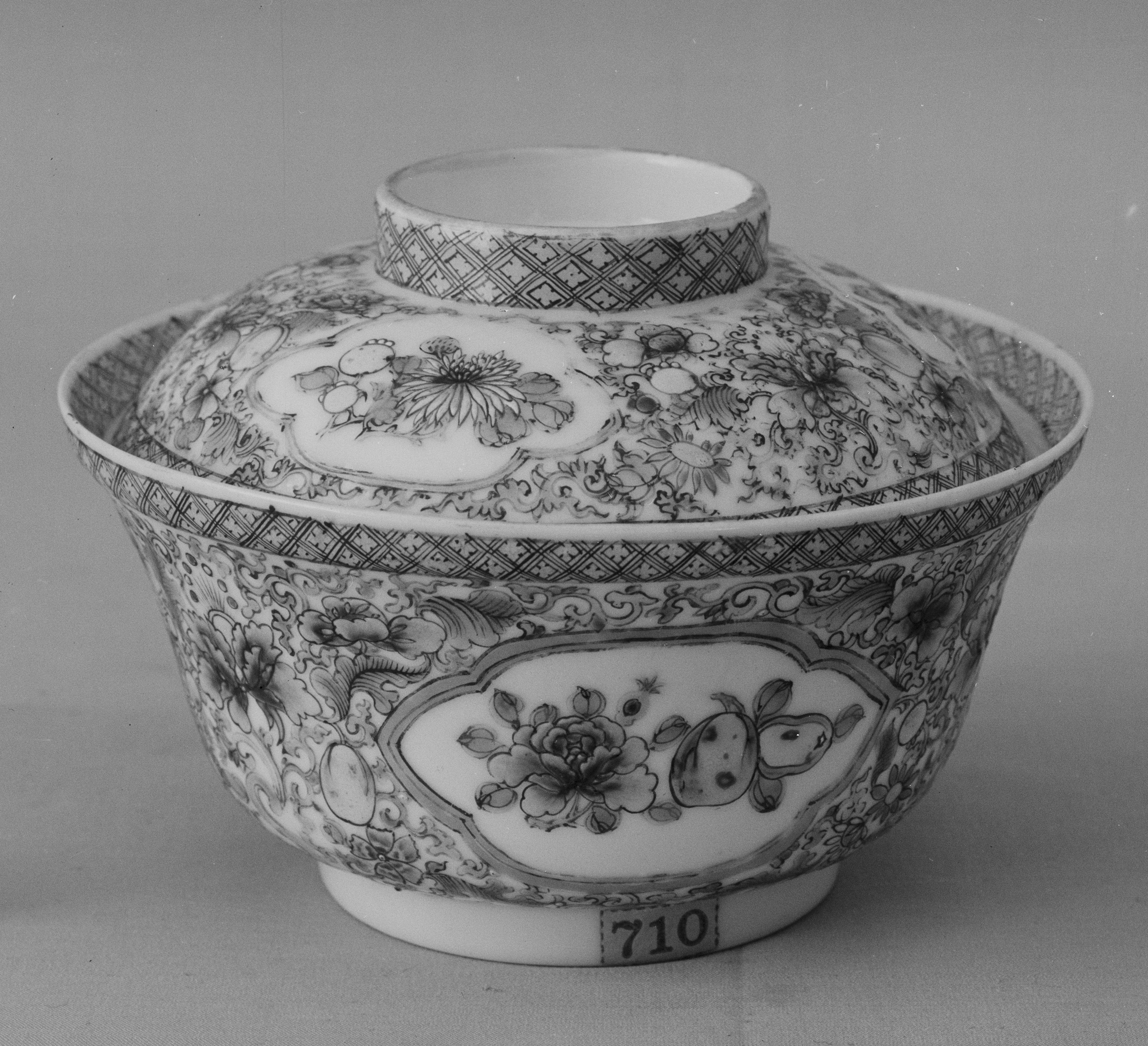
Yue bowl, Five Dynasties (907–960), stoneware with celadon glaze, incised with dragons amid waves. The Metropolitan Museum of Art, acc. 18.56.36. CC0.Tang dynasty, 9th century — bowl in stoneware with white slip and glaze, Hebei region (Xing type). The Metropolitan Museum of Art, acc. 1980.365. CC0.Jian, Southern Song dynasty (1127–1279) — tea bowl with iron-rich glaze streaked in the “hare's fur” pattern (tùháo兔毫). The Metropolitan Museum of Art, acc. 91.1.226. CC0.Jizhou tea bowl with paper-cut decoration (jiǎnzhǐ剪紙), Southern Song dynasty (1127–1279), buff stoneware with iron-brown glaze. The Cleveland Museum of Art, acc. 1923.53. CC0.Bowl with raised-relief lotus petals on the outer wall, marked “guān” (official — for imperial use, inscribed on the base), Northern Song dynasty (960–1127), Ding porcelain with ivory glaze. National Palace Museum, Taipei, acc. 故瓷 Detail/44. CC-BY 4.0.Stem cup in Jingdezhen porcelain with “egg-white” glaze (luǎnbái卵白), molded with chrysanthemum scrolls, marked “shūfǔ” (Privy Council), Yuan dynasty (1271–1368), 14th century. The Metropolitan Museum of Art, acc. 25.222.5. CC0.Tea bowl decorated with burnished gold over green overglaze enamel (jīn lán shǒu金襴手), inscribed “fùguì jiāqì” (an auspicious mark in cobalt blue under the foot, “a fine vessel for the rich and honorable”), Jingdezhen, Ming dynasty (1368–1644), 16th century, likely produced for export to the Japanese market. The Cleveland Museum of Art, acc. 1989.297. CC0.Covered bowl in Jingdezhen porcelain decorated with cloud-dragons in iron-red overglaze enamel (fánhóng礬紅) over a blue-and-white underglaze ground (qīnghuā青花), Ming dynasty, Xuande period (1426–1435). National Palace Museum, Taipei, acc. 故瓷 sNo 04011234. CC-BY 4.0.Yixing teapot in purple sand clay (zǐshā紫砂) by Chen Hanwen, Qing dynasty, Qianlong period (1736–1795), with an imperial poem in gold leaf over a landscape. The Cleveland Museum of Art, acc. 1980.27. CC0.Covered bowl decorated in famille-rose enamels (fěncǎi粉彩) over a sgraffito ground (zhādào軋道), Qing dynasty, Yongzheng period (1723–1735), Jingdezhen porcelain. The Metropolitan Museum of Art, acc. 79.2.579a, b. CC0.
With each fragment, a letter on the table.
With each fragment we publish, a long-form read on Chinese ceramics
and mosaics. No fixed schedule:
the letter follows the fragment, never the other way around.
With nothing to sell for now.
One click to unsubscribe — GDPR, no resale, no invasive tracking.